Chinese motorcycle brands no longer need to copy Europe as Europe's suppliers join them instead
The Brembo-CFMoto partnership and Ducati CEO Claudio Domenicali's recent warning point towards the same uncomfortable truth for Europe's motorcycle industry.

There was a time when seeing Brembo brakes fitted to a Chinese motorcycle meant that the manufacturer had finally arrived. The Italian calipers and master cylinders brought with them a level of credibility that many buyers still felt Chinese brands lacked, acting almost like a seal of approval from one of Europe's most respected component manufacturers.
They also, and this is probably more important for riders, added a tried and tested name to one of the most important mechanical elements of a bike. For emerging brands trying to shake off reputations built on budget commuters and questionable quality control, having a recognisable European supplier attached to the spec sheet was often just as important as the product itself.

The announcement that Brembo and CFMoto are entering into a strategic partnership therefore represents a sizable piece of news. This isn't simply a supplier selling components to a customer. The language around the agreement talks about collaboration, co-development, motorsport and future technology. Brembo isn't just putting its weight behind a Chinese motorcycle maker; it's putting some of its future alongside one of China's fastest-growing manufacturers. That may seem like a subtle distinction, but it tells us a great deal about how quickly the balance of power within the motorcycle industry is changing.

It's also why the comments made recently by Ducati CEO Claudio Domenicali suddenly carry a little more weight. When the boss of one of Europe's most successful premium motorcycle manufacturers says success can no longer be taken for granted, it's tempting to dismiss it as sensible corporate caution or executive modesty. The reality is probably less comfortable than that. Domenicali understands better than most that the competitive landscape which allowed European manufacturers to dominate the premium motorcycle sector for decades is changing at pace, and much of that change is being driven by China.
For years the global motorcycle industry operated with a fairly fixed hierarchy. Italy built the emotional motorcycles, Japan built the dependable ones, and Britain built heritage and nostalgia better than almost anyone else. China, meanwhile, built cheap motorcycles, often based heavily on existing Japanese designs and competed primarily on price. The expectation across the industry was that Chinese brands would gradually improve over time, slowly climbing the same ladder that Japanese manufacturers climbed in the seventies.
What few people expected was that China would skip several rungs altogether. That is exactly what we have seen happen in the last five years.

A good example of this is the EICMA show that takes place in Milan every November. My first year at EICMA was in 2018. Back then, Chinese bike makers and parts manufacturers were tucked away in a hall that was at arm's reach from the big-name brands. They shared the hall with wacky electrically assisted bicycle brands and Tuk-Tuk makers. That hall, to me at least, was always the hall of oddities – I even remember seeing a radio-controlled boat maker there in 2019 which made vast quarter-scale warships and aircraft carriers. My point is, less than five years ago, China was a sideshow.

Fast forward to 2025, and EICMA was awash with Chinese brands. Some names I knew, although most of them were totally unfamiliar to me. But the biggest surprise was how widespread the brands were at the event. Not only were they intermingled and quite literally rubbing shoulders with some of the biggest names in motorcycling, in some cases they outdid them in terms of stand size and model range. And another important thing that I noticed was how original Chinese bike brands are being with the products they were presenting.

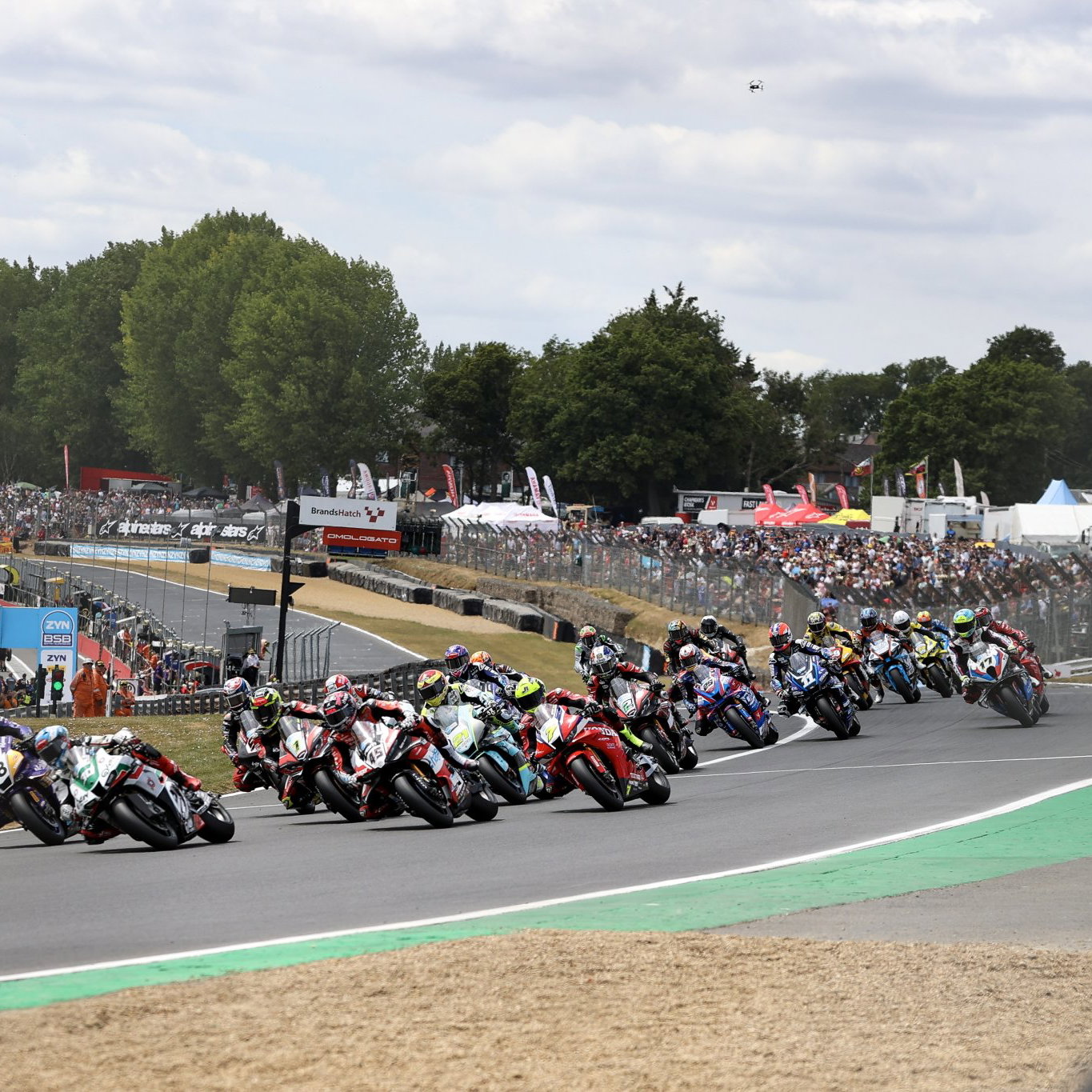
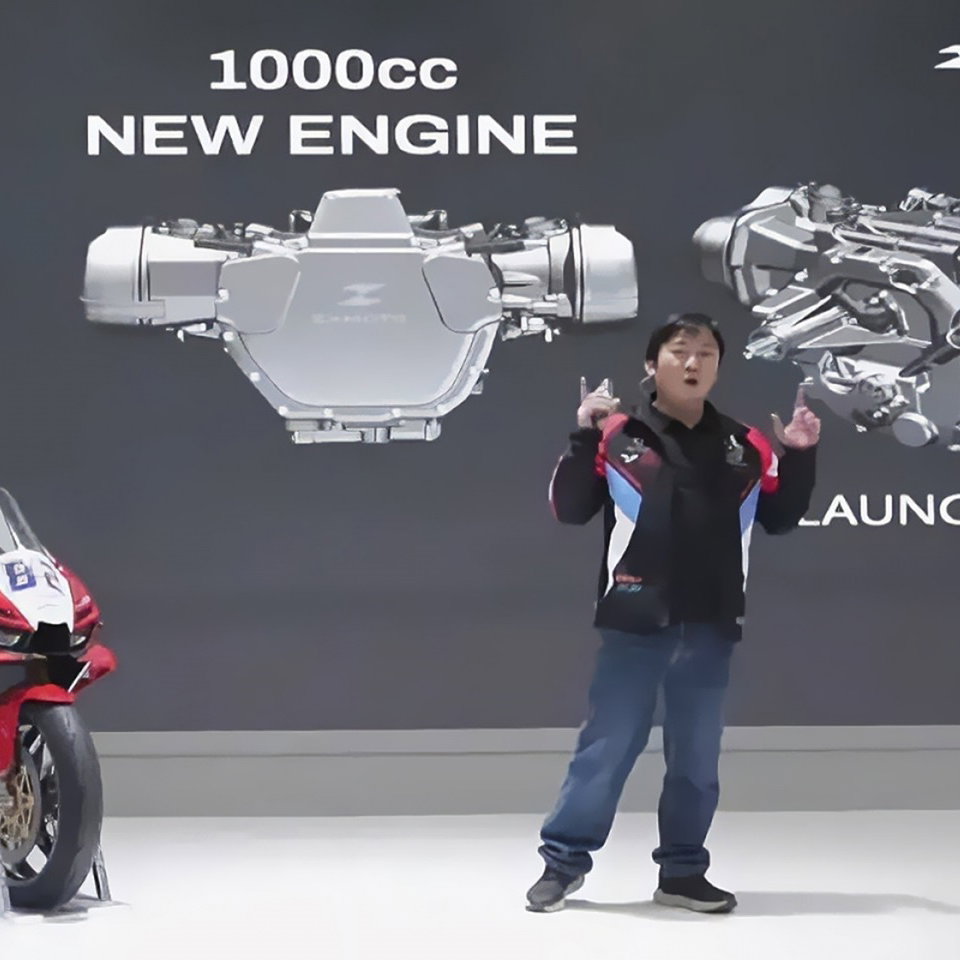
The old stereotype of Chinese manufacturers as copycats survives because, for a long time, it was broadly true. Many early products relied heavily on licensed engines, reverse engineering or blatant copying of established manufacturers. But today's major Chinese motorcycle companies are operating in an entirely different world. CFMoto builds motorcycles and engines alongside KTM, ZXMoto and QJMotor race in World Superbikes, and Kove has gone from obscurity to genuine Dakar credibility in a remarkably short period of time. Meanwhile, brands such as Voge, Zontes, Benda and more are entering European markets with products that are increasingly judged on merit rather than simply on their affordability.

The motorcycles are still cheaper than their European rivals, but the gap in quality, technology and engineering sophistication is closing much faster than many established manufacturers would have predicted. In some areas, particularly electronics integration and manufacturing scale, Chinese companies are beginning to establish advantages of their own rather than simply catching up with everyone else.
That is why the Brembo agreement matters so much. Brembo doesn't need CFMoto in the way smaller suppliers might need new customers. This is the company that supplies MotoGP, Formula One and some of the biggest names in the motorcycle industry, a business whose products sit on everything from Ducati Panigales to factory race bikes. If Brembo is prepared to invest time, engineering resources and long-term planning into a strategic partnership with CFMoto, it suggests the Italian company sees the Chinese manufacturer not as an emerging player but as an important part of the industry's future.
Ten years ago, Chinese brands were buying credibility from Europe. Today Europe is investing credibility in China.

That shift should probably make a few people uncomfortable, because it raises an obvious question. If companies like Brembo are prepared to tie parts of their future to Chinese motorcycle manufacturers, what exactly do they know that some European brands still seem reluctant to acknowledge publicly?
The answer is probably growth. European motorcycle markets are mature and, in some cases, shrinking. Regulations continue to tighten, development costs continue to rise, and the average age of riders in many markets continues to creep upwards. China, by contrast, is expanding aggressively both domestically and internationally. Its home market dwarfs most European countries individually, while exports continue to increase rapidly across Europe, South America and Southeast Asia. If you're a supplier looking at where your customers are likely to come from in ten years' time, the calculations become fairly straightforward.
This is where Domenicali's comments start to feel less like corporate caution and more like a warning. The Ducati CEO understands that the motorcycle industry may simply be following the same path the automotive industry has already travelled. Five years ago, many European car manufacturers treated Chinese electric vehicle companies as little more than an interesting side story. Today some of those same brands are fighting for market share against competitors they barely knew existed at the start of the decade.

Volkswagen's own well-documented financial struggles have only sharpened that comparison. The pressure being exerted by Chinese EV manufacturers became significant enough to reignite rumours surrounding the possible sale of Ducati in recent weeks, speculation that Domenicali himself has moved quickly to dismiss. Whether there was any truth behind those rumours is almost beside the point. The fact that analysts and commentators considered the sale of one of Europe's most iconic motorcycle brands to be plausible tells its own story about the pressures currently facing some of Europe's largest automotive groups.
None of this is to suggest that Ducati, BMW or KTM are suddenly in trouble, or that European manufacturers are about to be swept aside overnight. Heritage, brand loyalty and engineering expertise still count for a great deal in motorcycling. But heritage alone rarely protects an industry forever. British manufacturers learned that lesson the hard way when they dismissed the Japanese challenge in the sixties, and parts of the European car industry are learning it again today as Chinese electric vehicles become increasingly difficult for consumers to ignore. People aren’t just buying cars and bikes because of the name on the badge or bonnet. They are buying the ones that fit their needs and budget.

Motorcycling has always been an international business, but the next generation of premium motorcycles may look rather different to the last. A future flagship sportsbike or adventure machine may wear a Chinese badge while relying on Italian brakes, European suspension, Japanese electronics and engineering expertise sourced from several different continents. More importantly, the customer buying it may not care in the slightest where the bike comes from, provided it performs well and represents good value.
That may ultimately be the biggest change of all. Twenty years ago, "Made in China" was often treated as a warning label by motorcyclists, shorthand for compromises in quality and durability. The success of motorcycles such as the CFMoto 450MT suggests those assumptions are beginning to disappear. Riders increasingly seem willing to judge motorcycles on what they offer rather than where they are built, and once that psychological barrier falls away, geography becomes a much less powerful advantage.
China's motorcycle industry spent years trying to catch Europe. The uncomfortable possibility for some manufacturers is that Europe may soon find itself trying to catch China instead.
Find the latest motorcycle news on Visordown

Simon (AKA Toad) has been working within the motorcycle industry for more than twelve years, and a member of the motorcyclist family since birth. Growing up around British-built single and twins, it was inevitable that a life on two wheels was on the cards, from a very early age!