Royal Enfield Flying Flea C6 (2026) Review
We ride the £5,300 Flying Flea C6 to see if Royal Enfield has cracked the lightweight electric motorcycle formula.

* Punchy motor
* Impeccable build quality
* Mode button can be activated accidentally
* Seat comfort could be better
The Flying Flea is back in Europe, but unlike its predecessor, which was dropped out of aircraft to help Allied forces during the Second World War, this one has a rather less dramatic mission: getting commuters across European cities and out the other side without burning a drop of petrol.
The original Flying Flea earned its name by being small, light and tough enough to be parachuted into places where conventional transport simply couldn't go. More than 80 years later, Royal Enfield has revived the name for a completely different kind of lightweight transport.
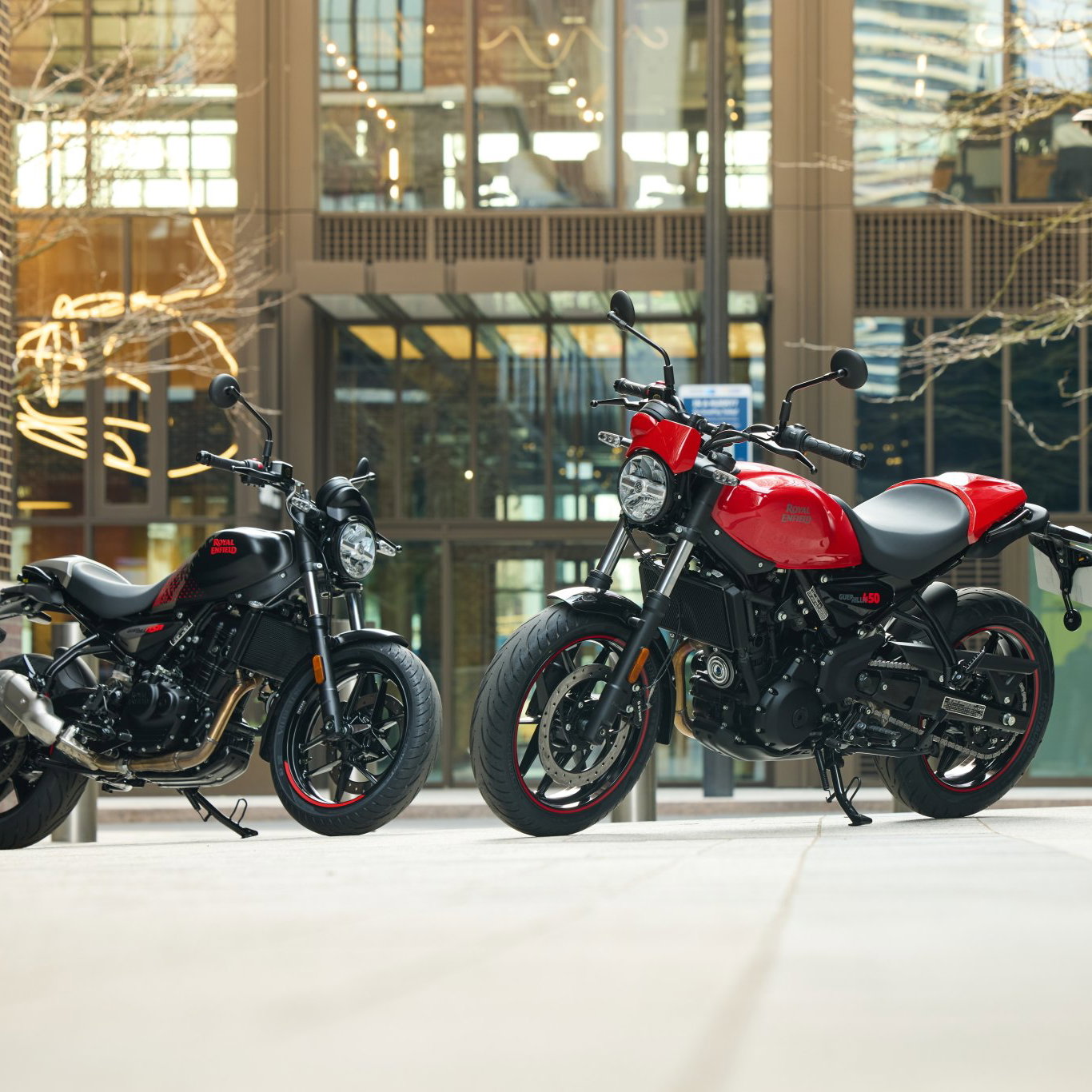
The new Flying Flea C6 is electric, city-focused and, at £5,300, aimed squarely at riders looking for something cleaner and easier to live with than a conventional motorcycle.
But here's the interesting bit. Despite being designed primarily for urban life, the C6 isn't some two-wheeled appliance that simply gets you from A to B at a shade over 30mph.

I've spent two days riding it through the city, out into the hills and along the highway, and there's considerably more to this little electric bike than its commuter credentials suggest.
At just 124kg, with 20.7bhp and a decent 44.3lb-ft of torque, the Flying Flea is an absolute featherweight.
When you combine that with 19-inch wheels, clever suspension, an electric motor and multiple riding modes, the result is a bike that's surprisingly eager when the road gets interesting.
In fact, the last thing I expected the C6 to be was sporty. Yet here we are.
Flying on the back of a Flea

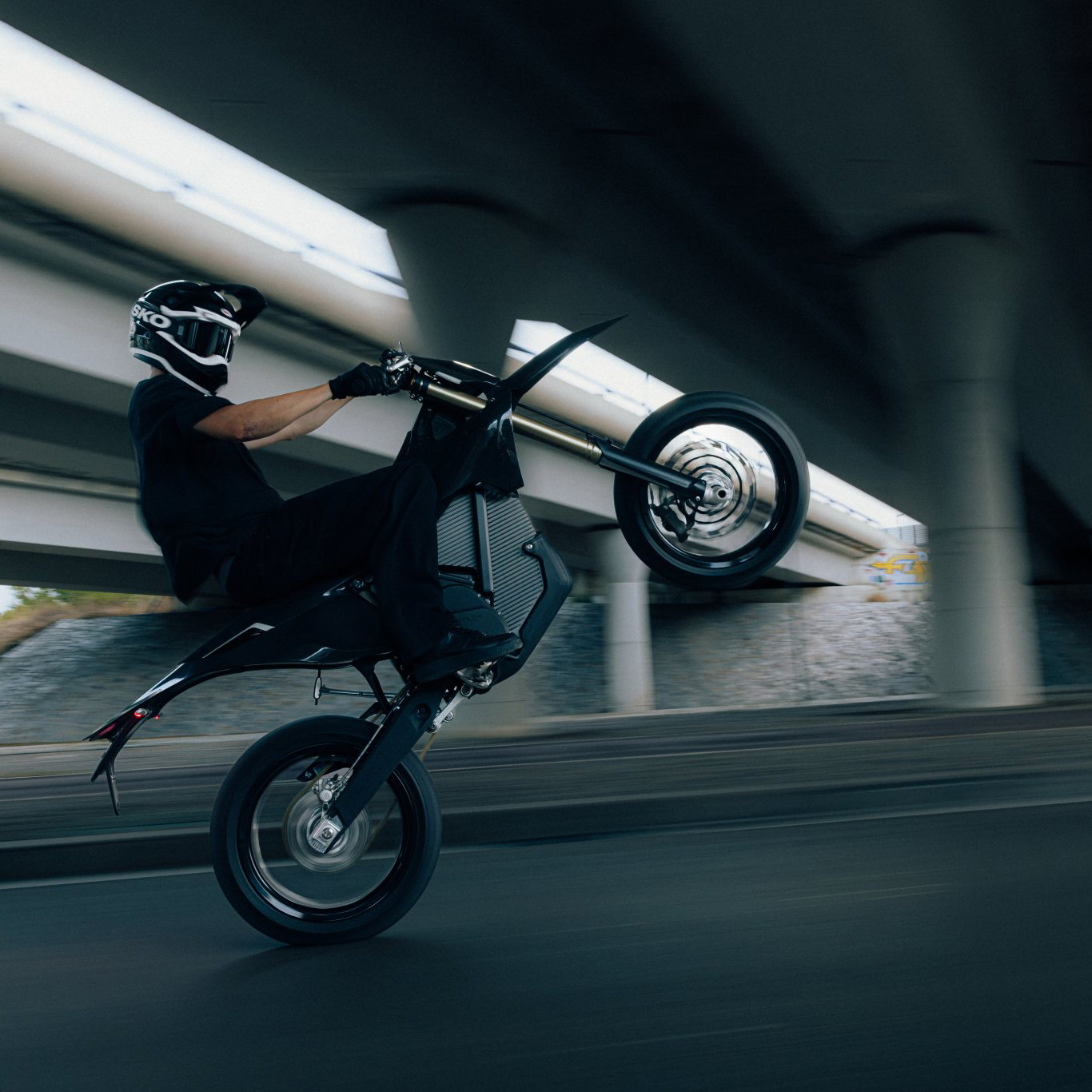
After two days on the Flying Flea, covering everything from Parisian cobbled streets and outer-urban roads, to proper twisty stuff in the hills and a stint on the Peripherique, I'm slightly surprised by just how much fun this thing is.
The 19-inch wheels look spindly on a bike this compact, but they give the C6 an almost gnat-like agility. More importantly, you can feel that lack of mass when you ride it.
The bike responds instantly to steering inputs, changes direction with almost no effort and feels wonderfully light whether you're pushing it around or picking a line through a corner.
You can actually push the C6 surprisingly hard on a twisty road, and it doesn't feel like you're asking too much of it, either. The suspension seems perfectly happy soaking up the punishment while the cast aluminium chassis lets you carry plenty of corner speed without ever making the bike feel nervous.
That combination of light weight and instant electric shove makes it a properly entertaining thing to ride. The motor produces 15.4kW, or 20.7bhp in old money, but it's the 60Nm, or 44.3lb-ft, of torque that makes the difference. There's no waiting for revs to build, so when you ask for acceleration, you get it immediately. And once you do hit the dual carriageway, the C6 doesn't run out of puff at 45mph and wheeze its way to its 71mph top speed. That's not a trick many of its battery-powered comptitiors can claim.

The brakes are equally direct, and perhaps a little too direct, particularly at the rear. This can feel quite sharp when you first get on the bike, but you get used to it after a few hours.
Flying Flea has gone with a ByBre set-up, and I suspect the combination of powerful brakes, very low weight and regenerative braking makes that initial bite feel more aggressive than it might on a conventional petrol-powered motorcycle.
And that regenerative braking is one of the more interesting things about the C6.
A third brake in your right hand
Regenerative braking isn't new, and the basic idea is simple enough. Rather than throwing away all of the energy generated when you slow down, the motor can work as a generator and put some of it back into the battery.

The Flying Flea's system is clever because of how you operate it.
Instead of using a conventional lever or switch, you turn the throttle backwards against its stop. Do that gently, and you get a small amount of regenerative braking, allowing the bike to coast to a stop.
Twist it further, and the engine braking effect increases to the point where you can use it to bring the C6 to a stop accurately without touching the brake lever.
It's effectively an extra brake, but one that behaves very differently from a traditional system.
Following a car that’s just started slowing? Add a bit of regen. Running slightly wide in a corner and need to pull the line a little tighter? Add a little regen. Coming up to a set of traffic lights, or a roundabout? Roll the throttle back and let the bike slow itself down.

It's smooth, predictable and, once you've got your head around it, surprisingly useful.
There is one slight oddity, though, in that if you're using the regenerative braking and then grab the conventional brake, you get a tiny amount of feedback through the lever as the various systems decide what's happening.
It's not a delay, and it's certainly not scary, but there's a minuscule push-back from the lever as the ABS and regenerative systems have a chat before the mechanical brake takes over.
It's one of those things you notice because it’s unfamiliar. Give it a few rides, and you'll probably stop thinking about it.
Getting out of town

The C6 is marketed as a city-focused machine, but Flying Flea calls it a City+ bike, and that little plus is important.
It's more than capable of escaping the urban sprawl and heading into the hills. Just don't expect to turn it into a miniature tourer.
We spent some time on the highway, and the C6 will happily get up to motorway speeds. I saw 114kph, which is almost exactly 71mph, and that appears to be very much where the party ends. It was absolutely determined not to go any faster.
And to be honest, that's fine. This isn't a bike designed to spend hours blasting down the M40. But being able to get up to motorway speed means you aren't trapped within the city limits, and that makes the C6 considerably more versatile.
The claimed range is 104km, or 64.6 miles, under the WMTC urban test, dropping to 81km, or 50.9 miles, on the extra-urban cycle. Real-world range will obviously depend on how you ride it, how much high-speed work you do and the temperature, but those figures give you a reasonable idea of where the C6 sits. Judging by the battery monitor on my bike, and the miles we covered, I think those numbers are wholly accurate and not just pie in the electric sky.

Charging is also reasonably straightforward. There's an onboard charger, with the supplied electronically locked C13 and C14 charging cable capable of taking a 100-270V AC input at up to 16A. Flying Flea claims a 20-80 per cent charge in around 65 minutes, or roughly 1km of range per minute.
For a bike aimed at urban riders, that's useful. You don't need to think about finding a specialist fast charger every time the battery gets low. The downside, and this is something some of the competition offer, is that the battery isn’t removable. This means that when you need to charge it, while at work or a mate’s house, you’ve got to get it within 10 metres of a three-pin plug to do it – which is the longest lead Flying Flea sells.
Living with the C6
The C6 is a very modern motorcycle in plenty of other ways, too. It starts with the 3.5-inch colour TFT, 15W wireless phone charger and an electronic handlebar lock. There's also a Share My Status and Location button, which can send your location and provide a remote tip-over alert to an emergency contact.
The technology is impressive, although the switchgear takes some getting used to.

Most of the buttons are fairly flush with the switchcube, so initially I found myself looking down at the handlebars whenever I wanted to do something as simple as indicate. That'll obviously become second nature with more time on the bike, but it isn't especially intuitive straight out of the box.
There's another slightly odd decision on the left-hand switchgear, too. The mode selector is incorporated into a rotating collar, a bit like BMW’s Wonder Wheel. It’s good on paper, but it means you can inadvertently change riding modes when reaching for the indicator. If you're riding in Rain mode and ‘click-up’ into Sport while on the fly, the bike is taking off at a fair old rate of knots without you actually asking it to.
It’s not a deal-breaker, but these are the sort of little details that become apparent after living with a bike rather than simply spending a couple of hours sitting on one at a launch. The other area that could use some attention is comfort.
The C6 feels compact, and the distance between the seat and handlebars isn't particularly generous. The seat itself is also heavily sculpted, which looks great and presumably helps keep you in place, but it means your backside needs to line up fairly closely with the shape Flying Flea has chosen. If it doesn't, the contours can become uncomfortable after a couple of hours. I'd happily sacrifice some of the visual drama for a slightly more conventional seat. Riders with larger frames or, indeed, larger bottoms may find the C6 a little restrictive over longer distances. Thankfully there is a more generous comfort seat, which would probably be on my shopping list if I were buying one.
Build quality

What is immediately obvious is how well the C6 has been put together. There are no rattles, squeaks or obvious shortcuts. Everything feels solid, the controls have a premium feel, and the whole bike looks considerably more expensive than its £5,300 price tag suggests.
Some of the bikes in this segment rattle, buzz and hum when you ride them. This doesn’t. It feels taut, and properly well put together.
The chassis is an interesting piece of engineering, too. There's a Girder-linkage front suspension system, 100mm of front travel and a hydraulic twin-suspension arrangement, while the rear gets a direct-acting monoshock with an internal floating piston and 110mm of travel.
It all sounds rather exotic for a lightweight electric commuter, but the important thing is that it works. The C6 doesn't feel cheap or flimsy. Quite the opposite.
You also get lean-angle-sensitive ABS and traction control, three ABS sensitivity settings and switchable rear ABS. That's a fairly serious electronics package for a bike of this size and price.

And there's one other advantage Royal Enfield has that some of the smaller electric motorcycle companies simply can't match.
This isn't a startup trying to establish a dealer network from scratch. You're buying into Royal Enfield's existing infrastructure, dealer support and nationwide presence.
There's an established network behind the bike, rather than a question mark over who will be fixing it in three years if something goes wrong.
Verdict
The Flying Flea C6 feels like Royal Enfield has landed this bike pretty much in the sweet spot.

Lightweight electric motorcycles equivalent to around a 125cc machine are already proving to be one of the more compelling areas of the electric two-wheeler market, and the C6 arrives right at the sharp end of that proposition.
At £5,300, it isn't bargain-basement cheap, but it is competitively priced for what you're getting. It looks fantastic, it's beautifully built and, crucially, it has the riding experience to back up the premium appearance.
The surprising thing is just how much fun it is when you get away from the city. You don't ride the C6 and spend the whole time thinking about efficiency figures and charging times. You ride it and think, “bloody hell, this is actually really good”.
If you were about to drop some money on a Maeving, a Super Soco, or a VMoto, hold on to your credit card for a moment. A Flying Flea is about to parachute into the UK, and it’s really rather worthy of a test ride.
Find the latest motorcycle news on Visordown
%20(1)_0.jpg?height=270&format=webp)
After graduating with a sports journalism degree, Robert joined Crash.net to lead the WorldSBK coverage in 2021, while also providing MotoGP coverage. Fulfilling that role for over three years, Robert was able to put his knowledge about all things racing to the test.