Suzuki SV7-GX (2026) review, spec, features and price
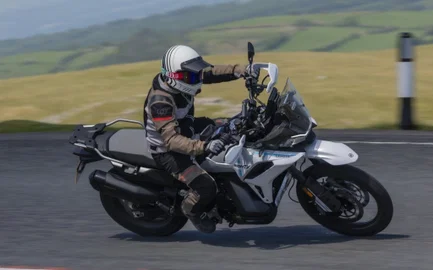
The Suzuki SV7-GX takes the familiar SV650 formula and drags it into the modern age with new technology, improved comfort and a healthy dose of practicality.

* Relatively well specced
* Great value for money
* Pegs are vibey
* No cruise control
The SV650 is one of those motorcycles that almost transcends model status. Since first appearing in 1999, it has become a go-to recommendation for everyone from new riders and commuters through to experienced motorcyclists looking for something simple, affordable and enjoyable to ride.
So when Suzuki announced the SV7-GX, there was always going to be a degree of expectation attached to it.

Thankfully, Suzuki hasn't tried to reinvent the wheel. The SV7-GX takes the proven SV650 platform and layers on the kind of features riders increasingly expect from a modern motorcycle. There's a TFT dash, smartphone connectivity, riding modes, traction control, a quickshifter and more comfort-oriented ergonomics, all wrapped around the same basic package that made the SV650 such a success.
The question is whether that is enough in a class now populated by bikes like Yamaha's Tracer 7 and Triumph's Tiger Sport 660.
Suzuki SV7-GX (2026) specification
Engine | 645cc liquid-cooled 90-degree V-twin |
Power | 72.4bhp @ 8,500rpm |
Torque | 64Nm @ 6,800rpm |
Front suspension | 41mm telescopic forks |
Rear suspension | Link-type monoshock |
Front brakes | Twin 290mm discs, four-piston Tokico calipers |
Rear brake | 240mm disc |
ABS | Two-channel ABS |
Seat height | 795mm |
Wet weight | 211kg |
Fuel capacity | 17.4 litres |
Claimed range | 250 miles |
Price and colours

Pricing for the SV7-GX starts at £6,999 in White, with the Blue, Grey and Black colour options all carrying a £400 premium, taking the price to £7,399. That positions the Suzuki comfortably below many of its closest rivals, continuing the brand's long-standing reputation for offering plenty of motorcycle for the money.
Of course, that lower asking price doesn't come without compromise. The SV7-GX gives away some horsepower to key rivals, while its chassis specification remains relatively basic and its electronics package isn't as comprehensive as the one found on Yamaha's Tracer 7. Even so, Suzuki has been careful to spend money where it matters most to its target audience, resulting in a bike that feels well equipped and competitively priced without chasing spec-sheet bragging rights.
Technology and features

Compared with the old SV650, the SV7-GX takes a sizeable step forward when it comes to technology. A 4.2-inch colour TFT display now sits in front of the rider, bringing smartphone connectivity via Suzuki Ride, while a USB-C charging port ensures devices can stay topped up on the move. There's also traction control, Suzuki's Easy Start and Low RPM Assist systems, plus a standard-fit quickshifter and auto-blipper – a feature notably absent from the previous SV650.
Riders can also choose between three riding modes, each tailored specifically to the SV7-GX. Mode A delivers the sharpest throttle response, Mode B acts as the default everyday setting. Mode C reduces peak output to 60bhp, making it a useful option for poor weather, urban riding, or for those still building confidence. Rounding out the package is a conventional two-channel ABS, which, while lacking the sophistication of an IMU-based setup, keeps the electronics package straightforward and easy to use.
What's new?

While the SV7-GX carries over much of the SV650's DNA, Suzuki has made a series of updates aimed at improving refinement, comfort and usability.
The 645cc V-twin receives revisions to its internals, intake and exhaust systems, although peak power remains largely unchanged. Suspension settings have been revised, while the frame itself is carried over from the SV650.
Comfort is enhanced with an additional 10mm of seat padding, while a redesigned rear subframe can carry more weight. The fuel tank grows by 2.9 litres to 17.4 litres, helping deliver a claimed range of around 250 miles.
A manually adjustable screen, which required removing and screwing back on in the new positon, offers 50mm of movement between its lowest and highest settings.
The biggest changes, however, are electronic. The TFT display, smartphone connectivity, riding modes and standard quickshifter drag the old SV platform firmly into the modern era.
Riding impressions

Swinging a leg over the SV7-GX for the first time, the immediate impression is just how small it feels. At 5ft 7in, I'm flat-footing the bike with ease, something that doesn't happen particularly often on motorcycles wearing even the slightest touring aspirations. Despite the compact dimensions, though, the upper half of the riding position feels surprisingly roomy, with a natural reach to the bars and enough space not to feel folded up.
Thumb the starter and the familiar V-twin bursts into life.
Suzuki may have revised the internals, intake and exhaust systems, but within seconds it's obvious this is still very much an SV at heart. The character, feel and soundtrack remain reassuringly familiar, and that's no bad thing. The good bits reveal themselves almost immediately, too.

The clutch is feather-light, the ride-by-wire throttle connection is clean and crisp, and the gearbox is simple but effective. It's the sort of motorcycle that takes almost no time at all to get comfortable with. One thing I did notice straight away, however, was the footpeg position.
They're surprisingly high and fairly far rearward, almost sportsbike-like in their placement. It's not an issue for shorter riders, but anyone nudging six feet tall or above may start wishing for a little more legroom after an hour or two in the saddle.
Engine and performance

The SV7-GX's 645cc V-twin won't win any horsepower shootouts, but that misses the point entirely. With 72.4bhp and 64Nm of torque, it's more than capable of making brisk progress, but it's the way the engine delivers its performance that matters.
There's a friendliness to it that many modern middleweights struggle to replicate. The power arrives predictably, the throttle response is clean and the motor never feels intimidating.
Whether you're filtering through town traffic, short-shifting along a country road or making progress on faster A-roads, the V-twin always feels like it's working with you rather than demanding something from you.
The quickshifter is also a welcome addition. It isn't the slickest system on the market, but compared with the outgoing non-quickshifter-equipped SV650, it adds a noticeable layer of sophistication.
Likewise, the riding modes don't fundamentally alter the bike's character, but they provide enough variation to be useful. Mode A offers the sharpest response, Mode B is likely where most owners will spend their time, while Mode C's reduced 60bhp output could prove useful in poor weather conditions.
Handling and ride quality

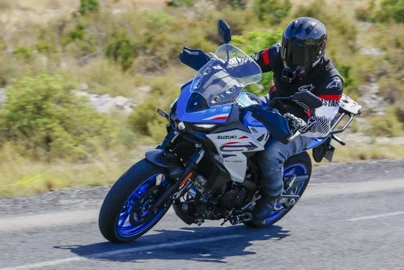
Our route begins with a mixture of urban riding before opening out onto a selection of narrow, bumpy and surprisingly quick back roads. In town, though, is where the SV7-GX excels.
It's light on its feet, easy to manoeuvre and impressively agile at low speeds. The soft suspension setup also does a commendable job of soaking up speed bumps, potholes and the general abuse that comes with commuting. Things become more interesting once the roads open up.
The suspension remains on the soft side and, as a result, the bike does pitch and squat under acceleration and braking more than some of its rivals. Mid-corner bumps can occasionally unsettle the chassis too, particularly when pushing on. That said, it never really becomes unruly.

Point the SV7-GX at a corner, and it generally goes where you ask it to. It may not have the precision or composure of something like a Tiger Sport 660, but it's predictable and confidence inspiring, which arguably matters more to the sort of rider Suzuki is targeting.
The brakes are similarly honest.
Twin 290mm discs and four-piston Tokico calipers provide enough stopping power for the bike's performance level, while lever feel is perfectly acceptable. The two-channel ABS system is hardly cutting edge in 2026, but it's also not particularly intrusive.
Grip from the Pirelli Angel GT tyres is excellent throughout, offering plenty of confidence even on rougher road surfaces.
Comfort and practicality

We started the day on standard bikes fitted with the regular seat and the screen positioned in its middle setting. At lunch I asked the Suzuki technicians to move the screen into its highest position and also switched to the optional comfort seat.
Adjusting the screen is one of the bike's weaker points. While there are three positions available, covering 50mm of adjustment from lowest to highest, changing it requires tools and a few minutes of effort. That's not ideal on a bike designed to blend commuting and touring duties, and being able to adjust the screen on the fly is a big plus point for most riders.

Even in its highest setting, I still found the screen a little low. Riders planning to spend significant time on faster roads may want to consider Suzuki's taller accessory screen, which offers an extra 50mm of protection.
The comfort seat proved more successful, as while the extra padding is noticeable, the bigger benefit is actually the additional 25mm of seat height, which creates noticeably more legroom and makes the lower body ergonomics feel less cramped.
Vibration levels are also impressively low, with very few noticeable vibes through the bars, tank or seat, although a small amount creep in through the non-rubber-damped footpegs at certain engine speeds.
Technology

The technology package is one of the clearest indicators of how far Suzuki has brought the SV formula forward. The 4.2-inch TFT display is easy to read, smartphone connectivity comes as standard and the USB-C charging port is a genuinely useful addition.
Traction control, riding modes and the quickshifter add further value without making the bike feel overly complicated.
There is, however, one glaring omission; cruise control. Suzuki spent a considerable amount of time during the technical presentation discussing the new throttle body arrangement and the actuators built into each unit. Knowing that, it's difficult not to feel that cruise control should have made the cut. On a bike designed to bridge the gap between commuting and light touring, its absence feels like quite a big missed opportunity.
Should you buy a Suzuki SV7-GX?

If you're looking for the most exciting motorcycle in the segment, probably not. Likewise, if cutting-edge electronics and premium suspension are high on your wish list, some rivals do better on that front. But that's not really what the SV7-GX is trying to be.
Suzuki has built a motorcycle that's approachable, unintimidating and easy to live with. It offers enough comfort for longer rides, enough practicality for daily use and enough performance to keep things entertaining without ever becoming overwhelming. Most importantly, it does all of that at a very competitive price.
Verdict

The SV7-GX was never going to be the motorcycle that set the motorcycling world alight in 2026, and that's perfectly okay.
Instead, Suzuki has taken one of the most proven platforms in motorcycling and given it a modern update. The result is a tidy little commuter-cum-tourer that does an awful lot of things well, without being showstopping incredible at any one thing.
Against the Yamaha Tracer 7, it lacks some of the Yamaha's aspirational appeal. Against the Triumph Tiger Sport 660, it can't quite match the Triumph's sweeter handling or charismatic triple-cylinder soundtrack. It's also missing cruise control, which feels like a genuine oversight. But the Suzuki counters with a lower price tag and a level of accessibility that neither rival can match.
From its low seat height and friendly engine to its forgiving chassis and light controls, this is one of the easiest motorcycles in the class to ride. Newer riders will love it, returning riders will feel instantly at home and experienced riders may find themselves appreciating just how effortless the whole experience is.
In a market increasingly obsessed with performance figures and technology arms races, the SV7-GX succeeds by keeping things simple.
The question is whether accessibility alone is enough to win buyers away from more glamorous rivals.
For plenty of riders, it just might be.

Simon (AKA Toad) has been working within the motorcycle industry for more than twelve years, and a member of the motorcyclist family since birth. Growing up around British-built single and twins, it was inevitable that a life on two wheels was on the cards, from a very early age!