2027 Royal Enfield Himalayan 750 review
The Royal Enfield Himalayan 750 takes the adventure bike in a new direction, with a 743cc twin-cylinder engine and more touring potential.

* Accesible
* Premium fit and finish
* Engine runs out of puff at higher revs
* CEAT tyres aren't confidence-inspiring
Back in 2019, a weirdly wonderful Franken-bike was tearing across the Midlands and Mid Wales. With barely a badge in sight and a distinctly Heath Robinson mix of retro and adventure-scrambler styling, it looked like something cobbled together in a shed, and that’s probably because it was.
Known internally at Royal Enfield as ‘The Pig’, thanks to its P1G prototype designation, it was actually Royal Enfield’s first big-bore Himalayan.
It was built by a secretive team of engineers in their own time and off the books, part passion project, part proof of concept. The team believed they were on to something, despite Royal Enfield’s top brass having repeatedly insisted the brand would never build a bigger-capacity Himalayan. But they kept going, doing their best to keep the project under wraps.
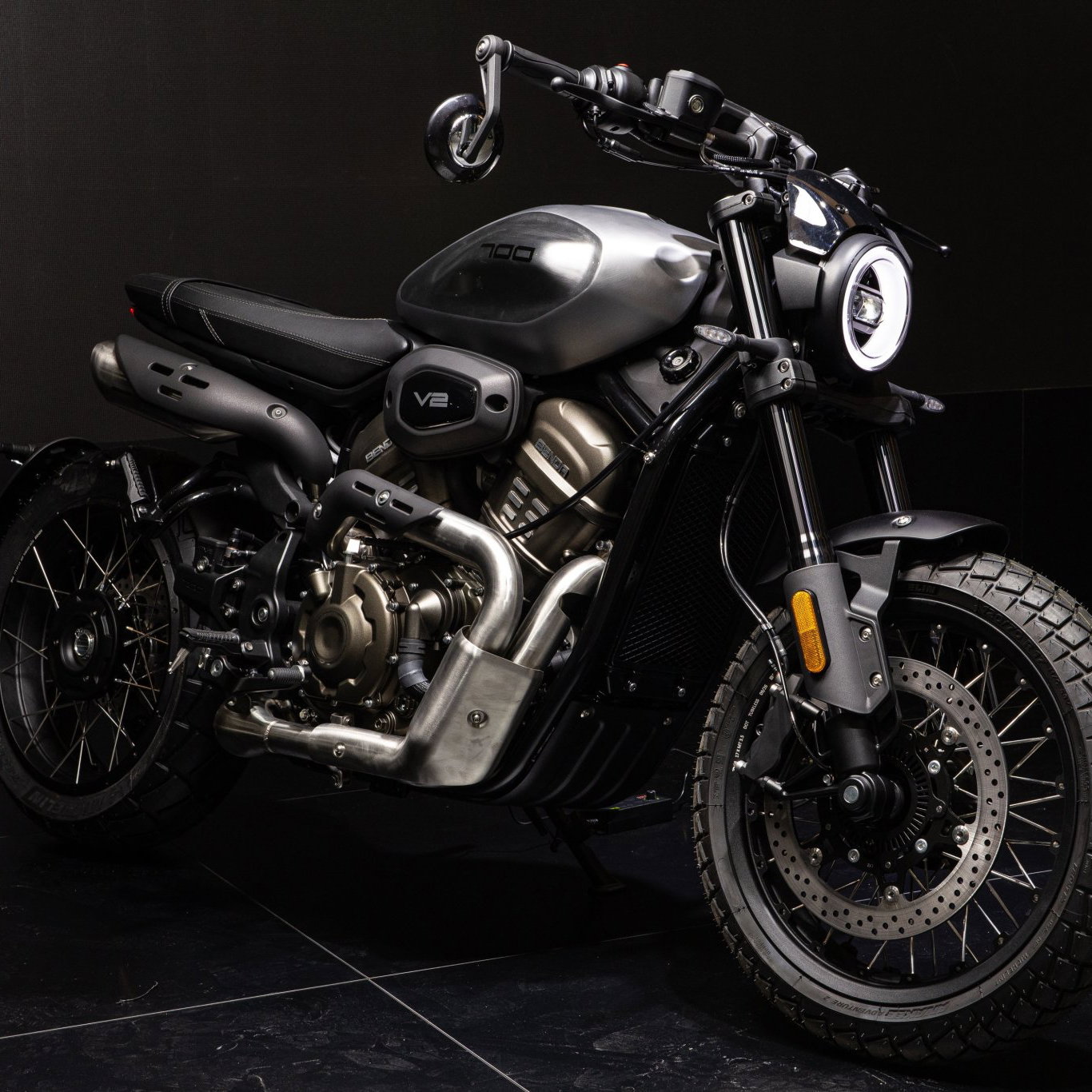
Fast-forward to today, and the Himalayan 750 is a rather more official proposition. Its 743cc parallel-twin might not have the visual similarity of that original prototype, but it represents the same basic idea: a bigger, slightly more touring-focused Himalayan with the ability to cover serious distances without abandoning the adventurous spirit of its smaller siblings.

New engine, same easy-going nature
On paper, the numbers aren't going to set the world alight. The 743cc parallel-twin produces 54.2bhp at 7,000rpm, with 46.5lb-ft of torque arriving at 5,000rpm. That's a useful increase over the existing 650 twins, but the real story here isn't about chasing bigger peak figures. Instead, Royal Enfield has concentrated on making the engine more effective where adventure riders are likely to spend most of their time, and that decision makes a noticeable difference out on the road.
If you've spent time on a Continental GT 650 or Interceptor 650, the Himalayan 750 won't feel like a night-and-day departure from what you already know. The basic character is still there, with an approachable parallel-twin that doesn't demand much from its rider, but the extra capacity brings more of the good stuff in the places where it matters.
The biggest improvement is the low- and mid-range torque. The engine pulls strongly from tickover, and overtaking in second and third gears is noticeably easier than it is on the smaller twins. You don't have to work the gearbox quite so hard to get the bike moving, which is particularly welcome when you're carrying speed through a series of bends or looking for a quick overtake in a B-road.
You don't really feel the extra horsepower at the top, though, and the rev limiter seems to call time rather early. Then again, this isn't a bike that needs to be thrashed to get the best from it. What matters more is the way the engine delivers its performance, and Royal Enfield has been careful to preserve the character and easy-going nature that make its twins so appealing.

The fuelling deserves particular praise, and the ride-by-wire throttle is beautifully judged, making it easy to meter out power without any of the snatchiness or hesitation that can spoil an otherwise decent engine. It's not often that I come away from a launch particularly keen to praise a throttle, but this one is a pleasure to use.
Compared with the Himalayan 450, the 750 feels considerably less frantic. The smaller bike is a cracking little travel enduro, capable of covering a surprising range of terrain, but it has a busier, more energetic character. The 750 is calmer and more composed, making it feel better suited to riders who want to spend long days in the saddle without having to work quite so hard.
That's particularly apparent if your idea of adventure riding includes a fair amount of motorway mileage between the interesting bits. The Himalayan 450 can do the job, but the 750 feels like a more natural fit. The engine is smooth, the vibes are very low, and at motorway speeds the 750 twin will lope along at a shade over 4,000rpm.
There is one minor disappointment, though, and it concerns the exhaust note. From the saddle, the engine is remarkably quiet, particularly at low and medium speeds. Ride behind another Himalayan 750, however, and there's a very pleasing baritone bark to it. It’s a shame the rider doesn’t get to enjoy it too. Perhaps Royal Enfield could find a way to direct a little more of that sound towards the rider for the next iteration.
The easy-going adventurer

One of the most unexpected aspects of this bike is its handling, both on and off-road. I knew from the outset that this was going to be accessible and easy to get along with. What I didn’t expect was how sweet the handling and how capable it was going to be.
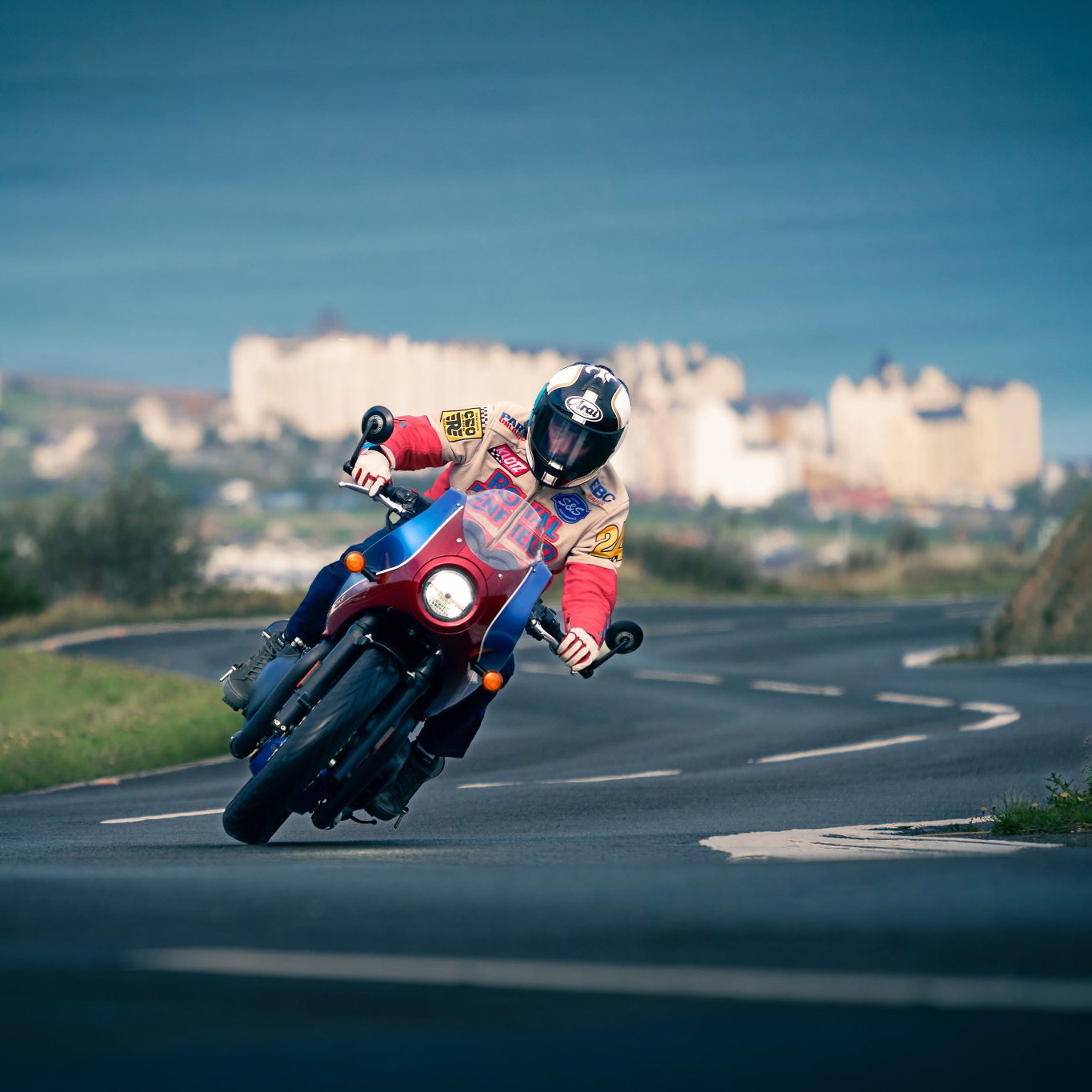
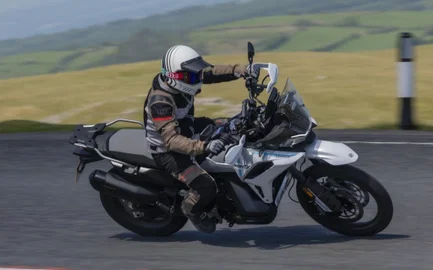
On the road, the chassis has got a really nice balance to it. It turns in nicely, is composed over bumps and doesn’t mind being pushed hard in a set of fast sweepers or tight switchbacks. The suspension, which is adjustable and from Showa, strikes a nice balance between comfort and control, giving the chassis a distinctly premium feel to it when you push on. You can, once you learn to trust the CEAT hoops (which I’m not really a fan of) carry a surprising amount of corner speed, transforming this ruggedly-retro adventure bike into a curve-carving backroad scratcher.
If there is one area of the chassis that I see as a bit of a weak spot, it’s the brakes. The front end comprises a pair of ByBre two-piston sliding calipers and 280mm discs. For me, they lack bite, giving me the impression that when fully loaded with luggage, and possibly carrying the weight of a passenger, the brake will be right on the limit of its ability.
I questioned Royal Enfield’s engineers on the decision and it seems to stem from twin discs looking more premium. Personally, I think a slightly larger front disc and perhaps a more substantial four-piston caliper might give a little more bite and feel.
The rear brake is stronger, as is the case with most of Royal Enfield’s models, and comes in handy if you need to tighten your line in a hairpin. It’s not enough to make up for a front, though, which is underpowered and quite progressive.

The Himalayan spirit is preserved
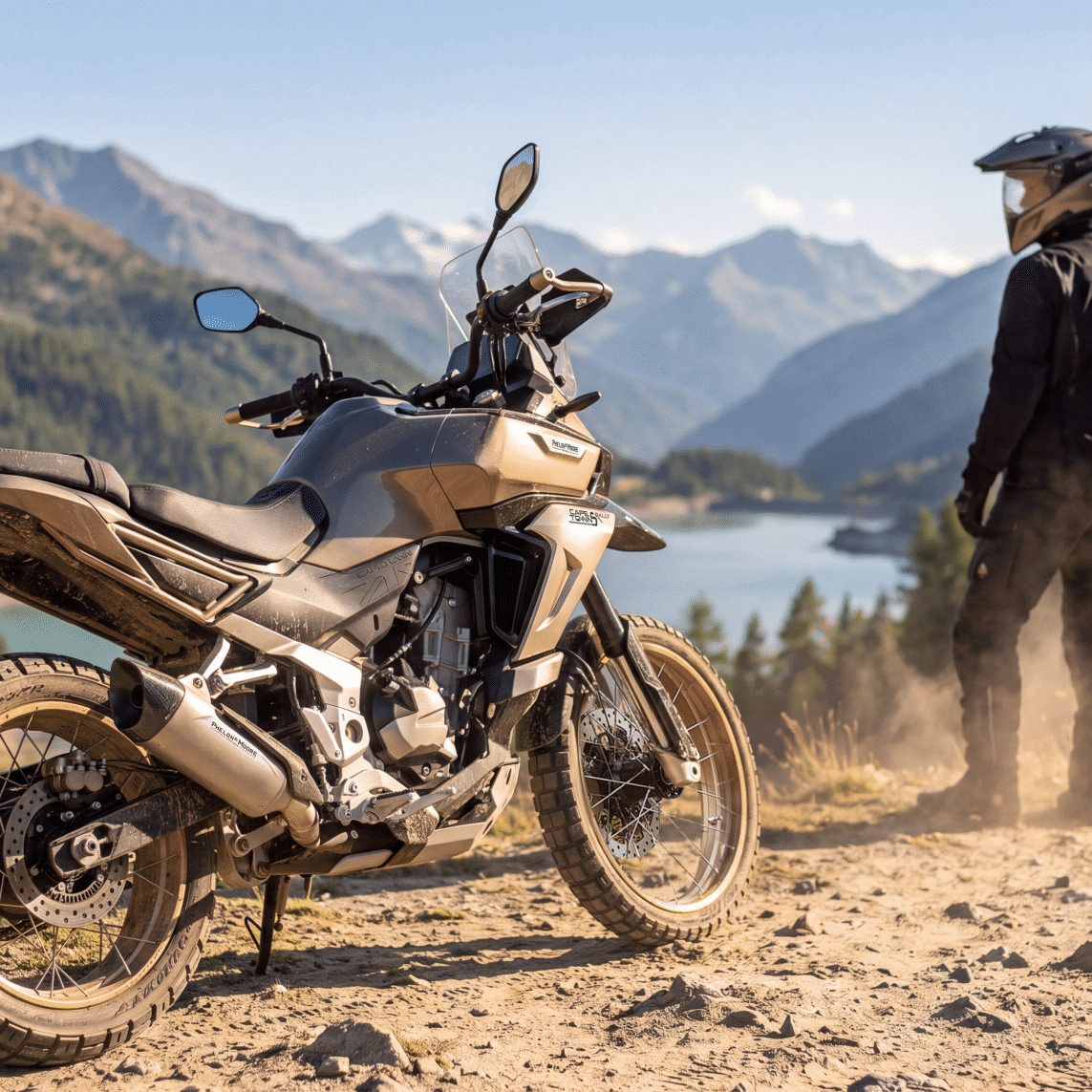
We also sampled the new Himalayan on some wide and open fire trails, which is about as far off-road as most people, myself included, would stray on this kind of adventure bike.
For this part of the event, we mainly rode the spoked-wheel model, which retains the cast bike’s 19-inch front and 17-inch rear sizes but swaps its CEAT road tyres for more adventurous Vredestein Centauro XR 80/20 road-trail rubber. We also took the cast-wheel bike off-road briefly, and while the Vredesteins offered better grip on the dirt, I’d still want something more dirt-focused if off-road riding was going to feature heavily.
Once up on the pegs, it becomes immediately obvious that, like its smaller siblings, the new 750 is extremely forgiving to ride off-road. The suspension is plush and the chassis has a lovely benign handling characteristic to it that makes it very predictable and extremely easy to ride.
The trails we rode ticked off a loose gravel, rockier ruts and smaller rain-cut gullies and softer mud and sand sections. I had no issues whatsoever. It tracks through mud and softer sand nicely, gets over bigger rocks with ease and most of all, it doesn’t feel nervous or twitchy, and just goes where you want it to.

This is all helped massively by the riding position, which is spot on for getting up on the pegs. The bike has a very narrow waist, with nicely positioned pegs and bars that mean you can stand up without feeling hunched over the headstock of the bike. That narrow waist really plays to the bike’s strengths, and means you can load up the pegs and help it change direction nicely. At a shade over 220kg ready to ride, it’s not the lightest in the class, but it’s not a heifer either, and most of the weight is carried quite low, despite the bike’s lofty silhouette.
The new 750 engine has got more than enough power and grunt to get the rear wheel sliding out sideways, and for inexperienced riders, the Trail riding mode will help you explore this with a significant safety net. In this dedicated off-road mode, the TC is backed off considerably, and it’ll allow the bike to have a safe amount of rear wheel movement, without it going so far as to catch a newer rider out. For more experienced riders, I’d advise turning the system off altogether - which is relatively simple to do via the TFT.
One positive feature is the rear ABS which can be deactivated with a dedicated button on the top of the left switchcube. You have to be at a standstill to turn it off, which is understandable, but having the ability to do that while switching from road, to off-road, and back to road again without having to dig into the TFT menus is very welcome.
Comfort without the caveats
We spent a full day on the road and trail with the new bike, and while there was a fair bit of standing around waiting for things to happen, it has to be said the new Himalayan is a very comfortable bike.

The riding position is incredibly relaxed, the pegs feel roomy and the seat is very plush, supportive and comfortable. The seat has quite a bit of uplift at the back, which does mean shorter riders, like myself, will likely slide forward into the tank quite a bit, but for normal sized humans it should be a problem.
Keeping with the comfort, vibes are basically non existent. There’s a bit of a rumble from the engine when you up the pace, but that’s pretty normal for a 750 twin and importantly, you get nothing coming through the bars or pegs.
The screen works well too, and I’m normally the first person to moan about them being sub-standard. The screen is adjustable by 50mm, which you can do on the fly by pushing it away from you and pulling it upwards. I can personally vouch for this one because on the ride back to the hotel, after the schedule had overrun thanks to a complication, I had to take my goggles off as it was now pitch black - my goggles are quite heavily tinted. With the screen on its highest setting I was sat in a little bubble of still air, with no streaming eyes or moths in my teeth.
2027 Royal Enfield Himalayan 750 Verdict
If the Himalayan 750 feels like it’s been a long time coming, let’s face it, it has. But there’s a good reason they didn’t want to rush this thing and send it out into the world half cocked. The adventure segment is hotter than ever, and to succeed, you have to deliver a product that ticks a great number of boxes.

What I like about this bike is that it isn’t the total number of boxes the team have ticked off that’s important, but more the ones they have focused on. They’ve added the tech and kit that matters, but not gone overboard on the electronics front and turned what has always been a rugged, dependable and easy to live with bike into a tech fest. It’s got the TFT and riding modes, and turn-by-turn navigation and an IMU. But they haven’t ladled on a further bucket load of tech that for the most part will be mainly redundant.
They have also stayed close to the DNA that makes the Himalayan 411 and 450 so appealing to riders around the world. It’s got the accessible and easy-going character, just with a bit of extra muscle and touring ability to make longer journeys feel less like an exercise in endurance. It’s still a bike you can get on and ride without having to think too hard about what you’re doing, but now there’s more in reserve when the road opens up or the route takes you the long way home.
What makes the 750 work is that it hasn’t lost sight of what a Himalayan should be. This isn’t an adventure bike that needs to prove itself with big power figures or a long list of electronic tricks, and its ability to tackle rough trails without intimidating the rider is every bit as important as its composure on the road. That versatility is what gives it a purpose beyond simply being a bigger alternative to the Himalayan 450.
It isn’t without room for improvement, and the front brake could do with more bite, while riders planning regular off-road excursions will want to think carefully about their tyre choice. But those are compromises to weigh against the bike’s broader ability, rather than flaws that undermine the overall package.
Ultimately, the Himalayan 750 feels less like Royal Enfield chasing the adventure bike market and more like the company working out what its own version of a larger-capacity adventure tourer should be. It’s approachable without being dull, capable without being intimidating and comfortable enough to make the long way home an appealing prospect. For riders who want to travel further without losing the freedom to turn down an unpaved road, that could be precisely the point.
Find the latest motorcycle news on Visordown

Simon (AKA Toad) has been working within the motorcycle industry for more than twelve years, and a member of the motorcyclist family since birth. Growing up around British-built single and twins, it was inevitable that a life on two wheels was on the cards, from a very early age!