Yamaha R7 (2026) review
The 2026 Yamaha R7 builds on a proven formula with smarter chassis tweaks, improved throttle response and a more rounded riding experience.

Vote for Visordown 2026 Bike of the year Awards in Association with Carole Nash

Carole Nash are delighted to be announced as the proud sponsors of the 2026 Visordown Awards. With over 40 years of experience in the motorcycling industry, their aim is to get riders out on the road with suitable bike insurance cover for their pride and joy. There couldn't be a better alignment with the Visordown Awards 2026.
* Hugely entertaining on road and track
* Revised chassis boosts ability
* No UK A2 option
Since its launch in 2021, the R7 has cemented its status as one of the best entry-level sportsbikes for riders seeking on-road manners and on-track ability. For 2026, the Yamaha R7 has received its most significant update since its launch, honing the CP2-powered sports bike and steering it in a slightly sportier direction.
For this press launch, we headed to Seville for a day of riding the roads to the east and into Portugal. Here we rode the little-known Circuit do Sol, a 1.2-mile track with lots of blind corners, flowing sections and more tight, twisty elements.
2026 Yamaha R7 price and colours

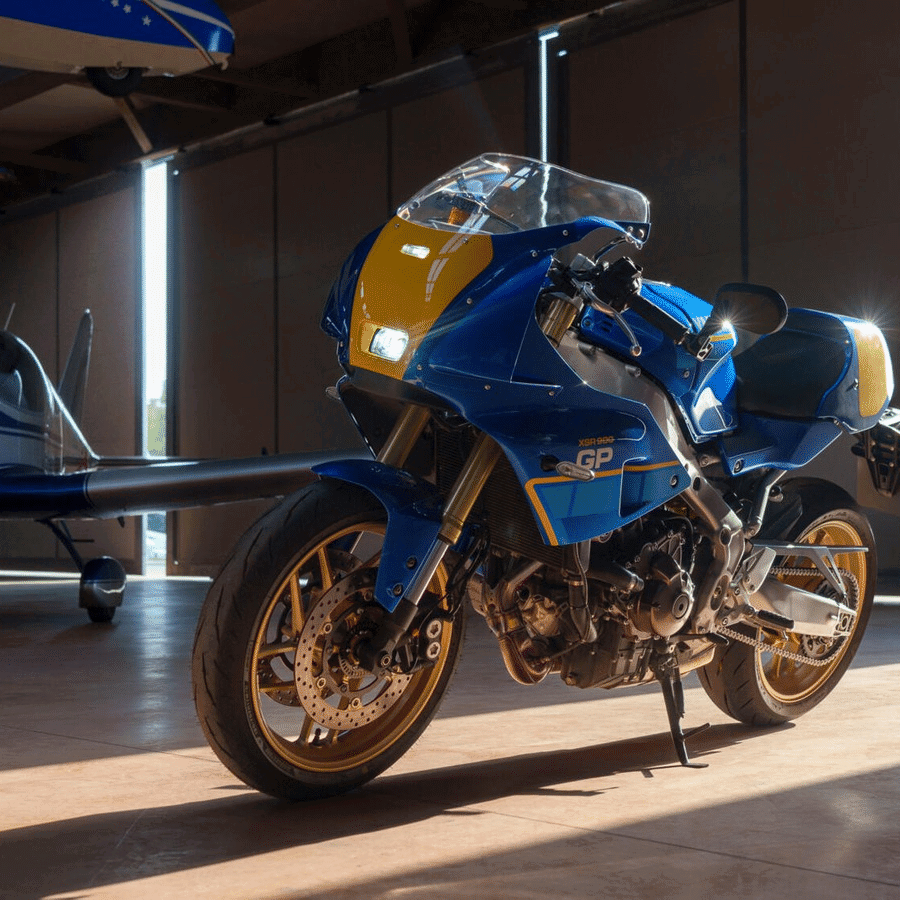
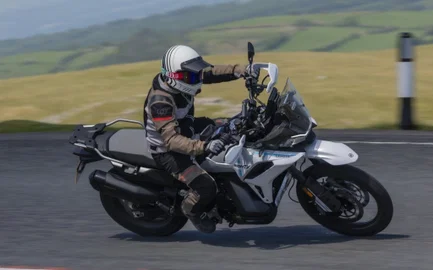
The 2026 R7 will be dropping into dealers in the UK from early May, with the base model (the Icon Blue model) priced at £9,504. The 70th Anniversary Edition (as ridden on the road) will be landing at the same time, with a price of £9,704.
A PCP deal on the Icon Blue bike would see you paying £87.99 per month for 36 months, based on a £3,500 deposit and an optional final payment of £4,271.25. T&Cs apply, and for up-to-date rates and deals, it’s best to speak to your local Yamaha dealers.
What’s new with the 2026 R7

On paper, the updated Yamaha R7 doesn’t scream revolution, but when you dig into the spec sheet, a fair bit is going on under the skin. A revised main frame and swingarm bring a tweak in torsional rigidity, while a new rear linkage and updated 41mm forks (now with revised internals and lighter springs) aim to sharpen feel without sacrificing the bike’s forgiving nature.

It also rolls on new spin-forged wheels, shedding around 550g of unsprung mass, and comes shod with Bridgestone Battlax S23 rubber. That combo alone should hint at improved agility and feedback.

The CP2 motor hasn’t been left alone either. Yamaha’s engineers have fettled the intake, airbox and mapping to boost low- and mid-range torque, while also smoothing out the throttle response. There’s now IMU-assisted traction control and ABS in the mix, bringing the electronics package up a notch without overcomplicating things.
Ergonomically, the bars are now higher, wider and slightly further back, paired with an 830mm seat height and a 14-litre tank. In theory, it’s a more usable, less punishing take on a middleweight supersport.
One more change for 2026 is the removal of an A2 option, which is, in my mind at least, a bit of an own goal. It's clearly a decision Yamaha has made based on sales of the original model, and while the old phrase 'if you don't use it, you'll lose it' still stands true, taking away the A2 route to ownership seems like a strange step - given how relatively simple it is to convert to A2 spec.
Power still comes from the hugely popular CP2 engine, which, in 2026 R7 spec, produces 72 bhp at 8,750 rpm and 50 lb ft of torque at 6,500 rpm. The diamond frame is mated to suspension from KYB and a braking system that features Advics calipers with a Brembo master cylinder at the front end. The new bike boasts a 14 litre fuel tank, an 830mm seat, and an 189kg wet weight.
On the road

The launch format was a proper double-header – around 75 to 80 miles on the road in the morning before heading over the border into Portugal for an afternoon session at Circuito do Sol.
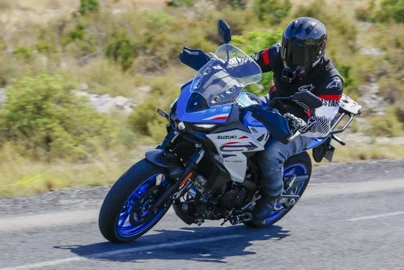
Out on the road, the changes didn’t jump out and slap you me in the face, but they did stack up in a way that makes the updated R7 feel noticeably sharper. The biggest difference comes from the engine, which feels punchier than the first-gen bike, especially in the low- to mid-range, exactly where you want it on the road.

The throttle connection is spot on, too. It’s direct without being abrupt, and the fuelling is as clean as you’d expect from Yamaha’s CP2 platform. It’s one of those engines that just gets on with the job without any fuss, and here it feels like it’s had a subtle but worthwhile polish.
The brakes back that up nicely too, with plenty of power and a reassuringly solid lever feel. You’re never left wanting more, whether you’re scrubbing off speed for a tight bend or just managing your speed in traffic.

Suspension-wise, it’s still on the softer side, especially compared to a traditional 600cc supersport bike, but that’s no bad thing. As we headed into Portugal, the roads deteriorated fast, and the compliance actually became a bit of a highlight. It ironed out the worst of the bumps without unsettling the bike, which suits real-world riding far more than a rock-hard setup ever would.
The comfort of the new R7 is… well, about what you’d expect. It’s fine for a couple of hours, but there’s still weight on your wrists, and you’ll know about it if you’re out all day. That said, one thing that does impress is how smooth and refined it feels at a cruise. Sit it in sixth on the motorway and it’ll just lope along with barely a vibration creeping through – not something you always get from bikes in this class.

Taken individually, the updates might feel subtle, but out on the road, they combine to give the Yamaha R7 a noticeably sharper edge. The revised CP2 motor does most of the heavy lifting here, delivering a stronger, more immediate punch through the low- and mid-range, backed up by a clean, direct throttle and typically polished fuelling. Add in powerful brakes without being grabby, and you’ve got a bike that feels intuitive and confidence-inspiring pretty much from the off.

What really seals the deal, though, is how well it all translates to real-world riding. The softer suspension might not scream track weapon, but on imperfect roads it comes into its own, taking the sting out of rough surfaces without upsetting the chassis. It’s not the last word in long-distance comfort, but it’s manageable, and unlike a lot of sports bikes of this capacity, it is supremely accessible and very easy to get along with.
On track

Turning up at a brand-new circuit for a bike launch is always a bit of a gamble. You’re learning the bike and the track at the same time, which can either click quickly or feel like hard work. With only three sessions to play with, there wasn’t much margin for error.
But once things started to gel, the little R7 came alive.
Quite simply, it’s an absolute riot on track. It’s the kind of bike that flatters you, encourages you, and occasionally makes you think you’re better than you actually are. If you ever get the chance to take one out at somewhere like Donington Park, don’t think twice.

A big part of that comes down to the engine. The torque is exactly where you need it, and it’s incredibly forgiving. Miss a gear, and it’ll still drive forward cleanly, something a traditional screaming 600 would punish you for - all the way down the next long straight!
The chassis plays its part too. The revised rigidity figures might be hard to quantify from the saddle, but the overall balance is easy to appreciate. The suspension on the bikes we rode on track was tweaked for a stiffer set-up, but it was still on the softer side of a true ‘track’ set-up. Even so, it gave the bike a composed, predictable feel, even when you start pushing harder. Yes, it’ll move around a bit, and you’ll feel it working underneath you, but it never feels out of control. When the bike dives on the brakes, it does so with composure, and overall, the suspension feels plush and premium.

If anything, the biggest limitation on the day wasn’t the bike; it was the rider. With so many blind corners, there was a lot of time left on the table, and it’s clear there was significantly more pace to be found - as was evidenced by some of Yamaha’s R7 racers who were setting blistering lap times! The upside is that the R7 made that learning process far less intimidating than it might otherwise be.
It’s the sort of bike that doesn’t just tolerate mistakes, it actively helps you recover from them. And that, whether you’re on the road or the track, is exactly what makes it so appealing.
Verdict

The latest Yamaha R7 doesn’t try to reinvent the formula, and that’s probably its biggest strength. Instead, Yamaha has taken what was already a very usable, very likeable middleweight and sharpened it in all the right areas. The extra urgency from the CP2 motor, the cleaner throttle response, and the subtle chassis tweaks all add up to a bike that feels a little more focused, without losing the accessibility that made the original such a hit.
It’s still not a full-fat supersport in the traditional sense, and it doesn’t pretend to be. But it is probably all the better for it. What it is, though, is a genuinely versatile sports bike that works just as well on a fast B-road as it does on track. For newer riders, it’s unintimidating and forgiving; for more experienced ones, it’s engaging in a way that doesn’t rely on outright speed. In short, it’s a bike that’s easy to ride, hard to outgrow, and now just that bit better across the board.
Find the latest motorcycle news on Viordown.com

Simon (AKA Toad) has been working within the motorcycle industry for more than twelve years, and a member of the motorcyclist family since birth. Growing up around British-built single and twins, it was inevitable that a life on two wheels was on the cards, from a very early age!