Omoway OMO-X self-balancing scooter launches into production
Omoway’s self-balancing OMO-X turns a long-standing motorcycle concept into a production reality – whether the world actually needs it is another question entirely.

Every now and then, I get a press invite that is hard to turn down. Be it some otherworldly superbike on one of the world's best MotoGP tracks, or an amazing adventure ride through some majestic scenery.
The Omoway OMO-X launch was neither. In fact, a day trip to Singapore (which is a 13-hour flight) would usually be at the bottom of my must-fly to launch list.
And the reason I wanted to be there to see Omoway’s new self-balancing ‘robot’ scooter doing its thing? Well, because it’s kind of a big deal.

The Yamaha MotoBot
Building a self-balancing motorcycle is a dream that lots of major motorcycle manufacturers have tried to fulfil. Harley-Davidson has looked at the tech, with gyroscopes mounted in the bike’s panniers, while Yamaha’s Motobot and Motoroid 1 and 2 were both notable efforts, with the former actually going through on-track testing. Honda is possibly the biggest of the household name brands to explore the theme, getting almost to the point of production with its Honda Riding Assist system back in 2017.
Crucially for Omoway, none of them made it to production and into the hands of owners. And that’s what makes this bike interesting, because the OMO-X isn’t just a working concept showing how the technology could look.
It’s actually going into production.
A self-balancing Omoway ballet

To help give some of the world’s press a feel for what the bike can do, we were ushered into the Jewel at Singapore’s Changi airport. It’s part retail space, part food court, and boasts a beautiful indoor rainforest and the world’s biggest indoor waterfall.
Here, the OMO-X got its first public outing, but my heart sank as the presentation began. It statrted with a group of futuristic-looking dancers emerging from backstage – never a good sign at an event like this. What ensued was about eight or ten minutes of dance, and had it not been for a set of headlights blinking at me from behind a silk curtain, I’d have probably got up and walked off to the buffet. Thankfully, the bike did make an appearance, although it wasn’t alone on the stage.

To show off the machine’s self-balancing capability, the bike emerged from behind the curtain, riding forward under its own steam and, seemingly, under its own control. Standing serenely on the seat of the bike was a ballet dancer who proceeded to perform along to the accompanying music as the bike moved around the stage.
And there were no tricks of the light or wires at play here. This was, quite literally, a combination of perfect poise and balance from the dancer, matched by the rock-steady stability of the bike. As she shifted her weight, the bike remained perfectly stable, and even when she dismounted the bike, it seemed not to even flinch.
Impressive, yes. But is there a market for it?

The Omoway OMO-X is undoubtedly impressive on a couple of fronts. Firstly, seeing how stable the bike was during the above demonstration was interesting. It’s also as high tech as it gets on two wheels, in that it can not only self-balance, but also ride in a fully autonomous manner - whether that is a good thing or not. It can also ‘see’ what is around it on the road, sensing vehicles and danger and reacting to mitigate a crash.

The Yamaha Motoroid concept
But it’s also impressive on another front. Omoway was founded in 2024, making it a complete infant in the motorcycle manufacturing industry. Despite this, it managed to design, develop and now manufacture a self-balancing bike that is heading for production. That final step is the stumbling block that Honda, Yamaha, Harley-Davidson and more have all failed to get over.

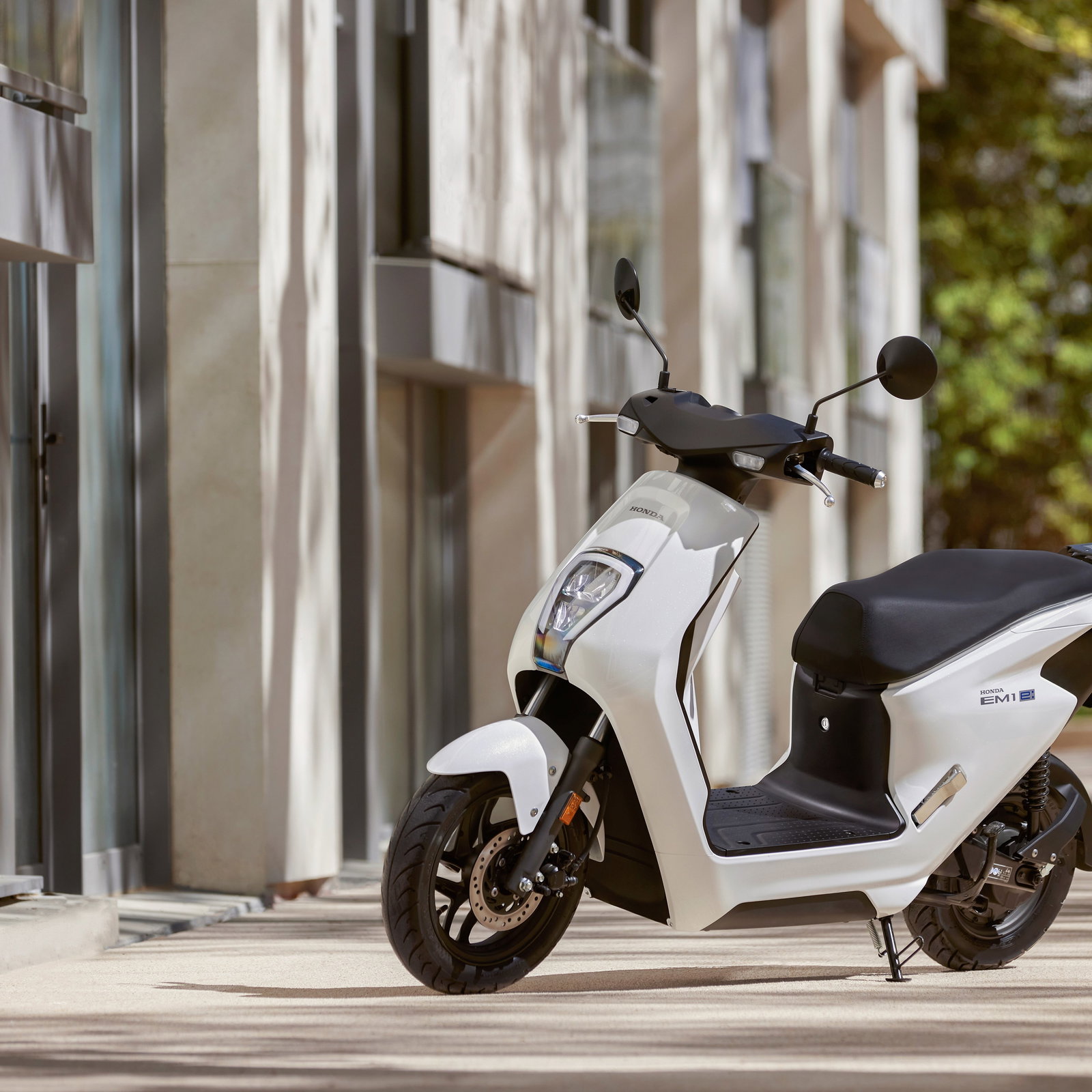
The Honda Riding Assist system
Now, the sceptic in me says there is a reason that the above brands didn’t make the final jump into production – and it’s not because they couldn’t, it’s because they didn’t see the point. Those brands are some of the biggest, most well-funded bike makers on the planet. Had they really wanted to get those prototypes into production, they probably could have. That leads me to believe that, for them at least, the timing wasn’t, and probably still isn’t, right.

Omoway disagrees. The team behind the OMO-X believe that now is the time to get people on self-balancing bikes, and it’s all about breaking down the perceived barriers to learning how to ride. Omoway sees balancing a motorcycle as one of the trickier things to learn. Taking that task away from the rider, and handing it over to what Omoway calls its Control Moment Gyroscope, takes away the risk of an inexperienced rider toppling over. Omoway believes that opens the door to getting more people into the world of two wheels.
Whether or not it actually does is the big question.
A fleeting introduction, but there is more to come

My whistle-stop trip to Singapore was exactly that. A first glimpse rather than a full deep dive. And while Omoway is clearly serious about getting the OMO-X into production, there are still some fairly chunky gaps in the spec sheet.
Weight, power, range, and recharging times are all still under wraps for now, which makes it tricky to properly gauge where this thing will sit in the real world. Because, for all the clever tech and theatrical unveiling, those fundamentals will ultimately decide whether the OMO-X is a curiosity or a credible bit of urban transport.
A full riding launch is already on the horizon, and that’s when we’ll get the answers that really matter, not just what it can do on a stage, but what it’s like to live with on the road.
What Omoway has done is undeniably bold, taking a bit of tech that’s spent years as a prototype party trick and pushing it towards production reality. Whether riders actually want a self-balancing, semi-autonomous scooter is another matter entirely, but that’s almost beside the point for now. The OMO-X isn’t just testing new hardware; it’s testing the appetite for a very different kind of motorcycling. And that’s a far bigger gamble than simply building the thing in the first place.
Find the latest motorcycle news on Visordown.com

Simon (AKA Toad) has been working within the motorcycle industry for more than twelve years, and a member of the motorcyclist family since birth. Growing up around British-built single and twins, it was inevitable that a life on two wheels was on the cards, from a very early age!

.jpg?height=270&format=webp)


