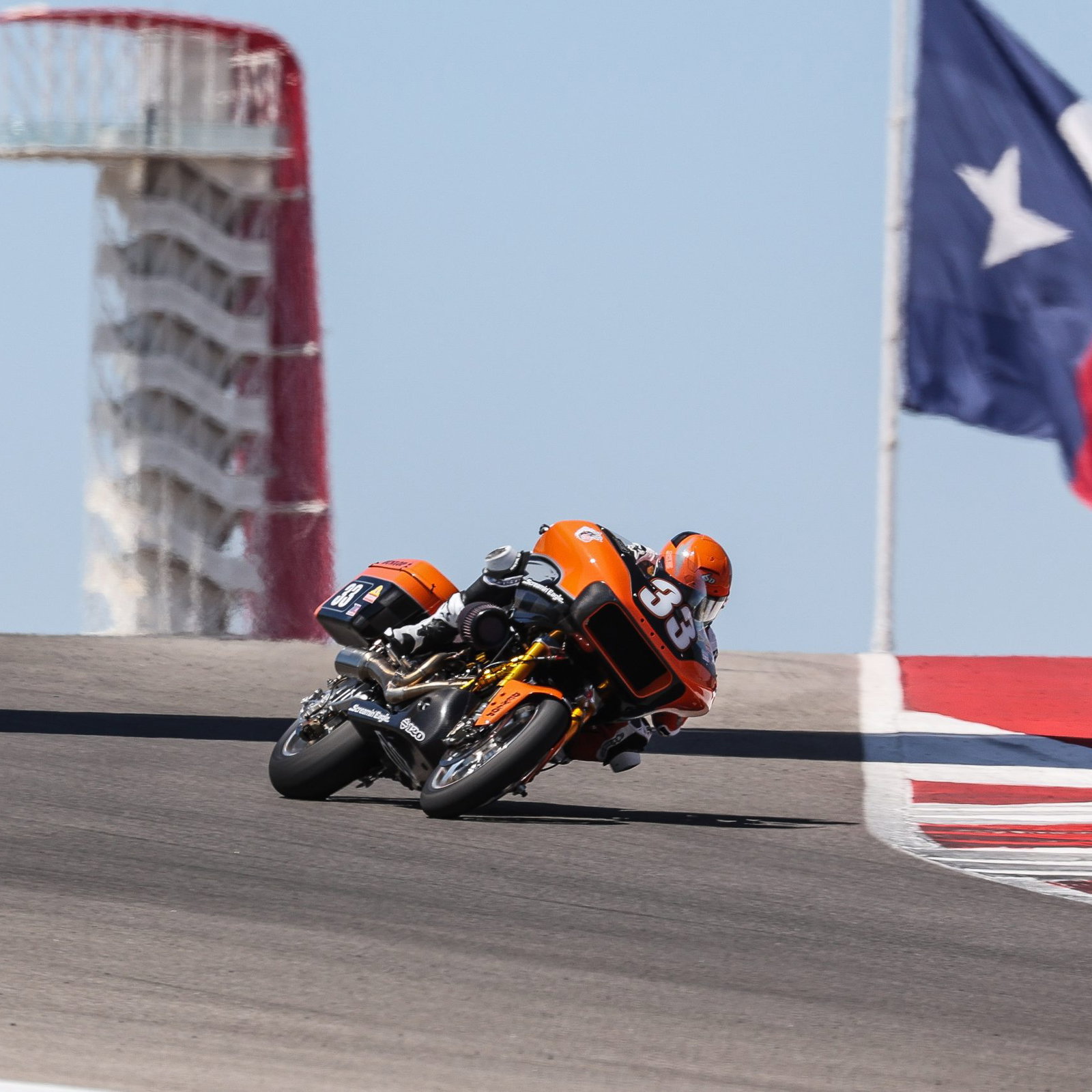
Harley-Davidson credit rating cut below investment grade as turnaround plan faces scrutiny
S&P Global has cut Harley-Davidson's credit rating from BBB- to BB+, pushing the American icon into so-called "junk" territory, but the implications for riders are less dramatic than the headlines suggest.

Harley-Davidson has suffered another financial setback after ratings agency S&P Global downgraded the company's credit rating from BBB- to BB+, stripping the American manufacturer of its investment-grade status and pushing it into what financial markets rather brutally call "junk" territory.
But, before Harley owners start panic-selling Road Glides and cancelling service bookings, it is worth understanding what the downgrade actually means, because despite the fairly dramatic terminology, S&P is not suggesting Harley-Davidson is in danger of disappearing anytime soon.

Credit ratings are essentially report cards for companies that borrow money. A BBB- rating is the lowest rung of investment-grade debt, while BB+ sits one step below it in speculative territory. The downgrade means S&P believes lending money to Harley-Davidson now carries a higher risk than it did previously, and investors will likely demand higher interest rates before handing over their cash.
The reason for the downgrade is less about Harley's survival and more about its profitability. Under CEO Artie Starrs, the company is attempting to reverse years of declining market share with its ‘Back to Bricks’ business strategy. The focus of that is to attract new riders through cheaper and more accessible motorcycles, including the returning Sportster and the forthcoming Sprint models. It's also putting Harley's vast dealership network back in the spotlight. S&P believes that this strategy may work in terms of sales volume, but it also believes it will take several years before that new wave of bikes generates the kind of profit margins Harley has historically enjoyed.

That's the key point here, because Harley isn't being punished because nobody is buying motorcycles. It is being downgraded because analysts believe the company may have to accept lower margins on every bike it sells while rebuilding market share.
For generations, Harley has played in the premium motorcycle sector. Big bikes sell for big money, and they also generally get specced up with more expensive accessories and cost more money to service and repair at a dealership. Suddenly switching its inventory to include smaller, higher-volume, lower-return bikes, such as the aforementioned Sportster and Sprint, is what is punishing the grade.
The numbers illustrate the challenge facing Milwaukee. Harley's share of the US motorcycle market has fallen from just over 49 per cent in 2019 to around 34.5 per cent in 2025. S&P expects the brand can recover some of that lost ground with new products, potentially returning to the mid-40 per cent range, but it expects that recovery to come at the expense of margins.

The ratings agency is forecasting Harley's EBITDA margin, effectively a measure of operating profitability, to sit between five and six per cent this year. For context, Harley was comfortably above 16 per cent in 2022 and 2023. Even Harley's own targets for the next three to five years sit at between 10 and 12 per cent.
Adding further pressure are restructuring costs associated with the firm's Back to Bricks strategy, alongside tariff-related costs on steel and aluminium that S&P believes could total as much as $90 million during 2026 alone. Harley is also carrying around $1.63 billion of long-term debt on its books.
So what does all of this mean for riders, dealers and the bikes themselves? Actually, it’s probably going to amount to very little, in the short term, at least.

Harley-Davidson still has access to financing markets, dealers are still receiving motorcycles, and the company itself remains financially stable enough that S&P assigned a "stable" outlook alongside the downgrade rather than a negative one. Moody's and Fitch also continue to rate Harley at investment-grade equivalent levels, although Fitch's outlook remains negative.
The bigger concern sits further down the road. If Harley cannot grow sales quickly enough, or if its lower-priced models fail to bring new riders into dealerships, borrowing costs could rise further, and future investment in products, technology and expansion becomes harder to justify.
For now, though, this isn't Harley-Davidson circling the drain. It's Wall Street's way of saying that the company's turnaround plan is going to take longer, and cost more, than many investors had hoped. For a business that built its reputation on premium motorcycles with premium margins, that may be the hardest pill of all to swallow.
Find the latest motorcycle news on Visordown

Simon (AKA Toad) has been working within the motorcycle industry for more than twelve years, and a member of the motorcyclist family since birth. Growing up around British-built single and twins, it was inevitable that a life on two wheels was on the cards, from a very early age!