Kawasaki Z650 S 2026 review, spec, features, and details
Updated for 2026, the Kawasaki Z650 S looks sharper than ever, but do its new looks match its performance and warrant the 'S' on the bodywork?

* New styling is great
* Seat comfort is superb
* Optional Q/S is up only
* Chassis spec may be getting left behind
Kawasaki has had its finger in the 650cc pie since the W1 of the mid-1960s. It is then as well practised as any bike maker in the act of slotting a mid-size engine into a sporty, yet accessible chassis. For 2026, the Kawasaki 650 family tree has sprouted a new branch, as the recently announced Z650 S joins the range.
Adding the letter ‘S’ to anything with wheels and an engine comes with certain set of responsibilities, be it increasing straight-line performance, enhancing the handling, or improving the looks. With the 2026 Z650 S, Kawasaki hopes to have ticked off all three.
To find out for myself, I jetted off to Girona, for a quickfire launch that saw me getting around 100 miles of seat time on the new bike. I rode through cities, towns, and villages, and took in fast sweeping A-roads, tighter B-roads and even a short stint on the motorway.
Before we get into the riding review, though, let’s take a look at the new bike and find out how it differs from the existing Z650.
What is new with the Kawasaki Z650 S

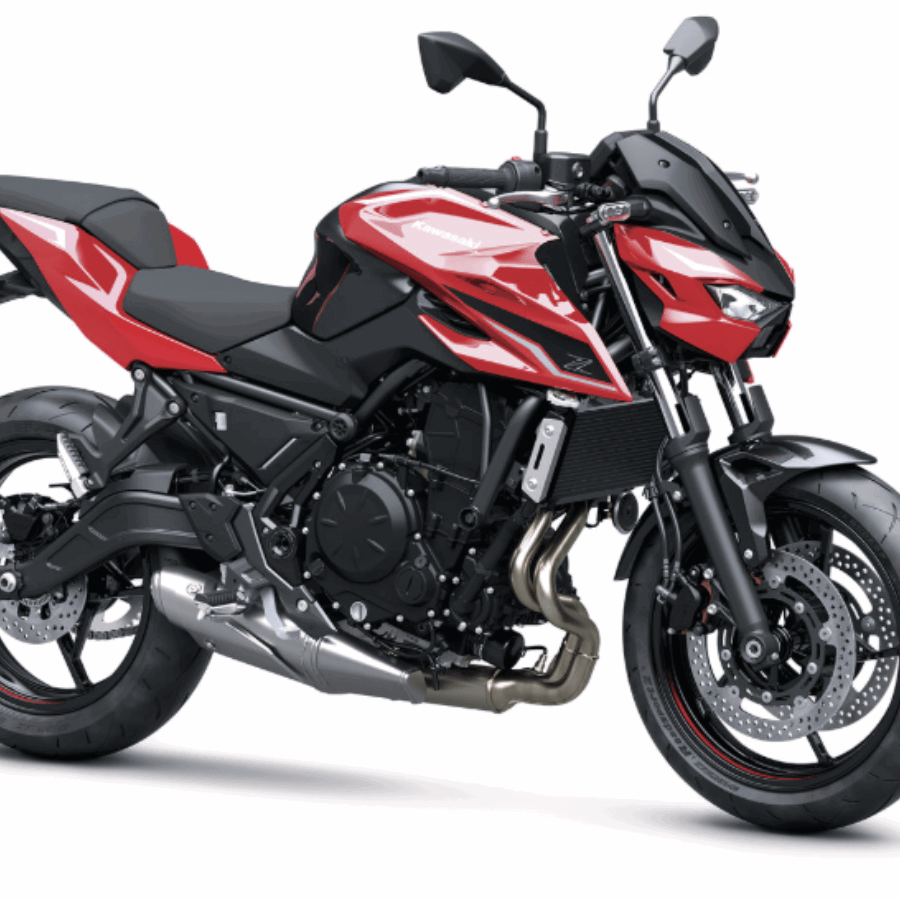
The first and most noticeable difference is the styling, which follows the design ethos of the Z900 and Z500. It’s still unmistakably a Kawasaki, with the trademark Sugomi styling font and centre, but looks more trim around the front end and with more modern lines.
The whole bike uses a layered principle, with different elements of the bodywork sitting on top of one another and overlapping in places. It’s claimed to give a big-bike look without any extra bulk.

The next change is to the riding position, with the bars now 40mm further forward, 10mm higher, and 30mm wider than those on the standard Z650. To match the revised bars, the rider’s footpegs are a touch more rearset. The result is a slightly more leaned-forward riding position that should put more of the rider’s weight over the front end.
The next change is the bike’s weight: the new bike's dry weight is 171kg, compared to 173kg for the standard Z650. The wet weight is, slightly confusingly, up for the new bike, though, with the S tipping the scales at 190kg ready to ride – 188kg for the stock 650.

The other bits of kit on the Z650 S include a TFT, complete with voice command, two-channel ABS and traction control (the latter of which is switchable and can be turned off), and the option to add a quickshifter for upshifts only.
Price, colours, and availability

The Kawasaki Z650 S will be landing in UK dealerships with a price of £7,199, making it just £100 more than the existing – and lower spec – standard Z650. So it’s a bit of a no-brainer. Colour options are Candy Lime Green and Metallic Carbon Gray, Ebony and Metallic Carbon Gray, and Metallic Matte Graphenesteel Gray and Metallic Flat Spark Black. The final colour is as shown in the images in this review, and it’s the only colour option that gains the lovely gold powder-coated frame.
On top of the base Z650 S are two accessory versions, which are Sport and Performance. Sport gains a tankpad, a smoked flyscreen, a TFT protector and a pillion seat cowl. The Performance pack gains all of that plus an underslung Akrapovic full system exhaust.
Kawasaki Z650 S (2026) riding review

As I swing a leg over the Z650 S, the first thing I notice is that the riding position hasn’t been reinvented, just nudged a bit. You’re still sitting in a fairly neutral stance, but there’s now a bit more weight pitched forward, with your chin closer to the headstock than before. It’s not extreme by any stretch, and my arms and shoulders still feel nicely relaxed.
That tweak does have a small knock-on effect, though, in that the TFT dash now sits a touch further out of my natural eyeline, meaning I need a more deliberate glance down to check it. It’s not a dealbreaker, especially as the TFT itself is clean, clear and mercifully uncluttered, but it’s something you notice in the first few miles.

The rest of the ergonomics are a bit of a mixed bag. The revised pegs are meant to open up the knee angle, but if you’re on the taller side, it might still feel a little cramped after a while. The seat, on the other hand, is a definite win. It’s noticeably plusher than the standard bike’s perch and stays comfortable over a longer stint, which is no bad thing when you’re knocking off miles on mixed roads.

Out on the road, the 649cc parallel twin is exactly as you remember it, and that’s no bad thing – Kawasaki has barely touched this engine over the years for good reason. It’s tractable, predictable and easy to get along with from the off. While peak torque is claimed at 6,700rpm, in reality, it feels like the bulk of the grunt is there from around 3,000rpm upwards, making it an easy bike to short-shift and surf along on.

Spin it higher, and it’ll keep pulling cleanly, and it's only really the last 1,000rpm before the redline that it starts to run out of puff. You’re rarely encouraged to chase it that far, though, as the meat of the performance sits lower down. Fuelling is impressively smooth throughout, and while the cable-operated throttle limits the electronics on offer, the upside is a direct, predictable connection between your right hand and the rear wheel.

Another pleasant surprise is how refined the bike feels. There’s barely any vibration coming through the pegs, seat or bars, with just a faint background thrum rather than anything intrusive. It’s the kind of setup you could happily live with over longer distances without feeling like your hands are going to drop off at the next fuel stop

The gearbox itself is fantastic, with slick, accurate shifts, and a clutch that is light enough to use all day without complaint. But the quickshifter, which is optional and fitted to our test bikes, only helps with upshifts. It does work well and is smooth going up the box at a wide range of engine speeds, my issue is that it does feel a little behind the curve in a class where up-and-down systems are becoming the norm. I found myself cutting the throttle myself on upshifts and not really relying on it, as that’s what I was doing going down the box (with a right-hand blip), so I basically forgot it was there for a while.

I did question Kawasaki’s team on the reason for not slotting in some electric throttle valves and a ride-by-wire system, but the answer wasn't all that clear. My guess? To revamp the engine in such a sweeping manner would have pushed the price of the Z650 S up. Possibly to such a point where it no longer undercut its major competitors.

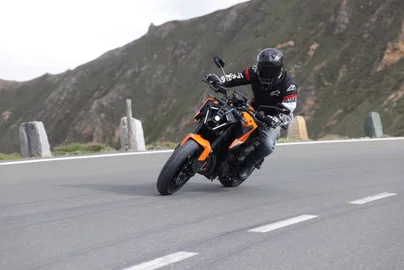
When it comes to handling, the Z650 S sticks closely to the established script, feeling light and agile around town and very easy to place where I need it. The steering is light, and the suspension setup does a decent job of taking the edge off bumps and potholes. It’s an unintimidating bike to thread through traffic or hustle along a flowing A-road.

Push on a bit harder out of town, though, and a weak point begins to show in the form of a lack of rear-end grip. The OEM Dunlop tyres don’t heat up quickly or offer a huge amount of feel, and that lack of feedback translates into a lack of confidence when you start asking more of the bike. Combine that with the slightly more forward-biased riding position, possibly taking a bit of weight off the back of the bike, and the rear can feel a little loose.

In cooler morning conditions, it didn’t take much to get the rear tyre moving around under braking. Later in the day, with more heat in the road and rubber, things improved slightly, but I still experienced a few fairly lively moments driving out of tighter hairpins. In the bike’s defence, that was while riding with the traction control switched off, but even so, I wasn’t exactly riding it like I’d stolen it.

I’m going to move on to the brakes, as seeing a bike in the mid-weight naked sector that uses twin-piston sliding calipers is becoming a bit of a rarity. The Nissin stoppers on the Z650 S are enough for the bike, and there is power to be found when you curl a couple of fingers on the lever. What is lacking, though, is that crisp initial bite and plush lever feel you get from something with four-piston calipers working on the front wheel. It’s worth noting that I had no issues out-braking myself or feeling that the system is underpowered; it’s not. It’s just in this sector, in this day and age; if you stick an ‘S’ at the end of a model name, you expect a bit more of an uplift in the spec.
Electornics

There’s not a whole lot to fiddle with on the new TFT, but I am a big fan of the traction control system and how easy it is to change and switch off if required. Level two is the highest setting with the most intervention, and it’d be great for new riders when they encounter slippery, wet roads. It’s really intrusive, which is kind of what you want, and would be a good wet setting for those who want the extra safety net. Level one is much less intrusive, and you really have to hammer on the throttle with quite extreme amounts of lean angle to trigger it into action.
I also have to mention the switchgear, which is very nice to use, thanks to being chunky and tactile. It's nice to see Kawasaki hasn't delved into the bargain basement parts bin for them, and is keeping the stuff you use every ride nice and premium feeling.
Verdict

The Z650 S is still, at its core, everything the standard Z650 has always been: Fun on a B-road, easy to ride around town, and approachable for a wide range of riders. It’s light, agile, and has a friendliness to its controls that will put newer riders at ease almost instantly.
There are a couple of clear gripes. The rear grip, at least on the stock tyres, knocks confidence when you start pushing on, and the one-way quickshifter feels like an omission in a class that’s steadily moving on. The tyres are an easy fix. The quickshifter less so.
But the bigger question lingering at the end of the day is whether Kawasaki has gone far enough with this update. The styling has taken a big and very positive step forward. It’s sharper looking, more modern and sits nicely in the family alongside its similarly tweaked stablemates. Mechanically, though, it feels more like an evolution than a leap.
Leaving the chassis largely untouched, particularly the suspension and brakes, does feel like a missed opportunity. With many rivals now boasting USD forks and radial four-piston calipers, that’s the sort of spec that stands out, especially when you’re lining bikes up at a meet.
As it stands, the Z650 S remains a very good, eminently capable and usable middleweight. It just stops short of being a possible new class leader.
Kawasaki Z650 S spec
DIMENSIONS | |
Overall length | 2,055 mm (EUR) |
Overall width | 805 mm |
Overall height | 1,080 mm |
Wheelbase | 1,410 mm |
Road clearance | 130 mm |
Seat height | 805 mm |
Curb mass | 190 kg (EUR) |
Estimated dry mass | 171 kg (EUR) |
Fuel tank capacity | 15 litres |
PERFORMANCE | |
Max power (EUR) | 67.3 bhp @ 8,000 rpm |
Max power (35 kW version) | 46.9 bhp @ 8,000 rpm |
Max torque (EUR) | 47.2 lb-ft @ 6,700 rpm |
Max torque (35 kW version) | 42.8 lb-ft @ 4,700 rpm |
ENGINE | |
Type | Liquid-cooled, 4-stroke Parallel Twin |
Valve system | DOHC, 8 valves |
Bore x Stroke | 83.0 x 60.0 mm |
Displacement | 649 cc |
Compression ratio | 10.8:1 |
Fuel supply | Fuel injection: ø36 mm x 2 with dual throttle valves |
Lubrication system | Forced lubrication, semi-dry sump |
Starting system | Electric |
Ignition system | Digital |
DRIVETRAIN | |
Driving system | Chain |
Transmission | 6-speed |
Clutch | Wet multi-disc - slip assist function |

Simon (AKA Toad) has been working within the motorcycle industry for more than twelve years, and a member of the motorcyclist family since birth. Growing up around British-built single and twins, it was inevitable that a life on two wheels was on the cards, from a very early age!