Inside Norton’s new design philosophy: How the Norton Manx R and Atlas were created
From modernity and reductivity to integration, drama and connection, Norton has a clear plan for how its new motorcycles should look and feel.

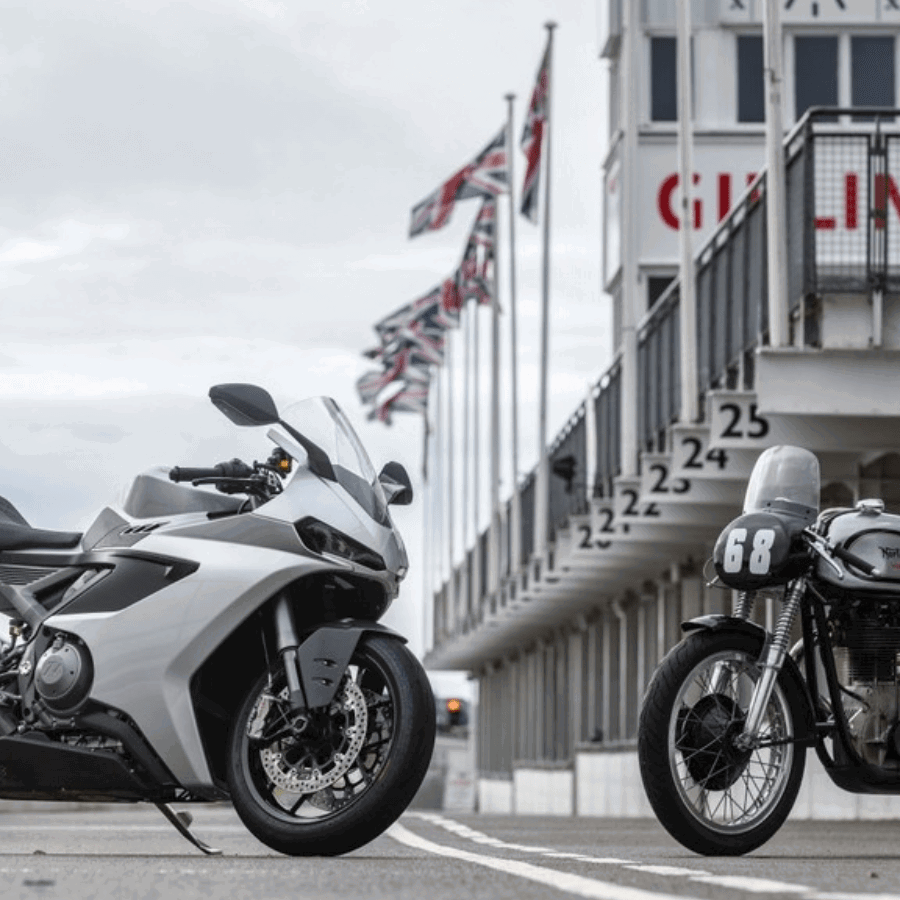
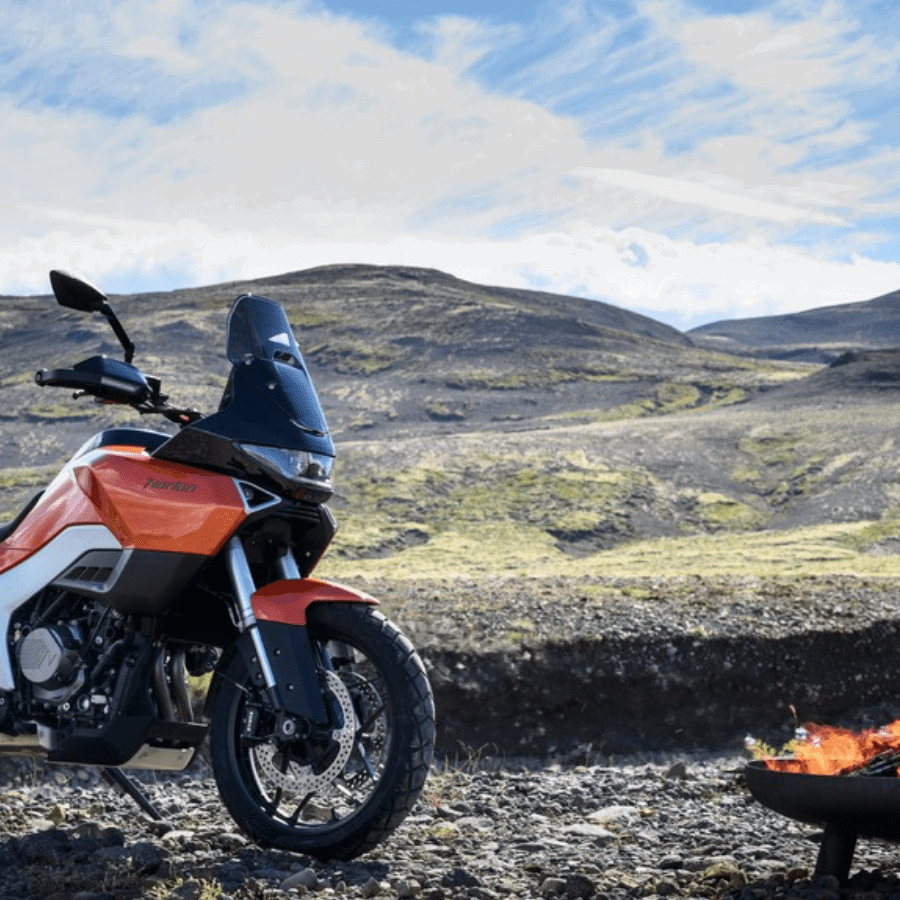
With a history going back well over 120 years, it’d be easy to imagine Norton as being a brand solely rooted in heritage and history. And while it’s true that the brand's latest two bikes, the Manx R and Atlas, which use important names from Norton’s past, the truth of what goes into designing a modern-era Norton is anything but old-school.
Sure, the design team no doubt have drawers brimming with posh felt pens and shelves strewn with sketches, but to get an actual feel for what a bike will look like once it’s built, before it is built, you need something that a pen and paper simply can’t replicate.
Sure, you could build a clay model, or 3D print a life-size version, but both of those take time, as does making changes to the design should you not like what you see.
Norton’s trick for that is simple by today’s standards, but if you showed a VR headset to James Lansdowne Norton in the late 1800s, you’d have been branded a witch and thrown in a lake.

VR is quickly becoming the most powerful tool in a designer’s arsenal, giving teams the chance to view the product in the same space they are standing. Don’t like the way the headlight looks, or how close the rearview mirrors are to the fairing? Fire up the laptop, change it, and reload the new CAD into the VR studio.
Alright, I’m probably massively underestimating the process there, and no doubt doing Norton’s Head Designer, Simon Skinner, and his team a massive disservice. But the point remains: I bet it’s a whole lot quicker to make and view changes than it is to adapt a clay model.
The VR-led design studio is also helpful for Norton given how multinational it is now. The British brand has three main facilities: Solihull, Bologna, and Hosur. All the design takes place in Europe, with engineering taking place in all three facilities. Regardless of whether the teams are creating a flange or a fairing, having a VR set-up that allows people on opposite sides of the world to integrate seamlessly is key to maximising the performance of the business.
“We’re not copying Norton’s past. We’re reinterpreting it.”
How Norton views the bikes it is developing is one thing, but how the team lands on that final design in the first place is a whole other story.
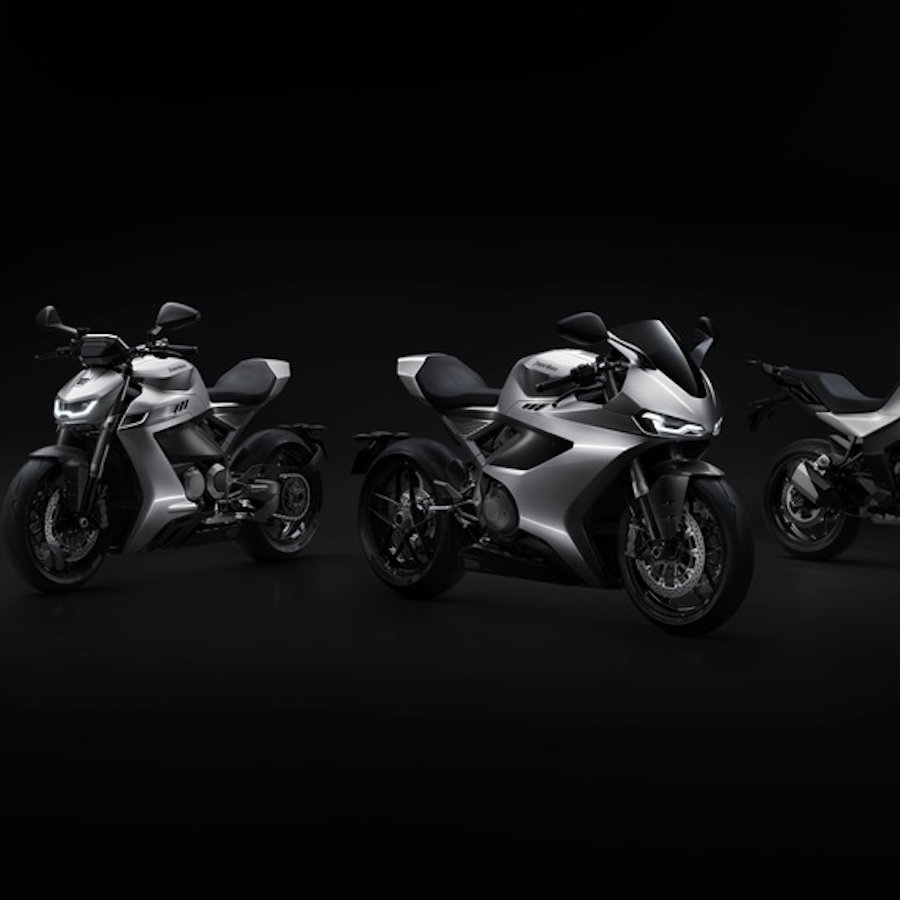
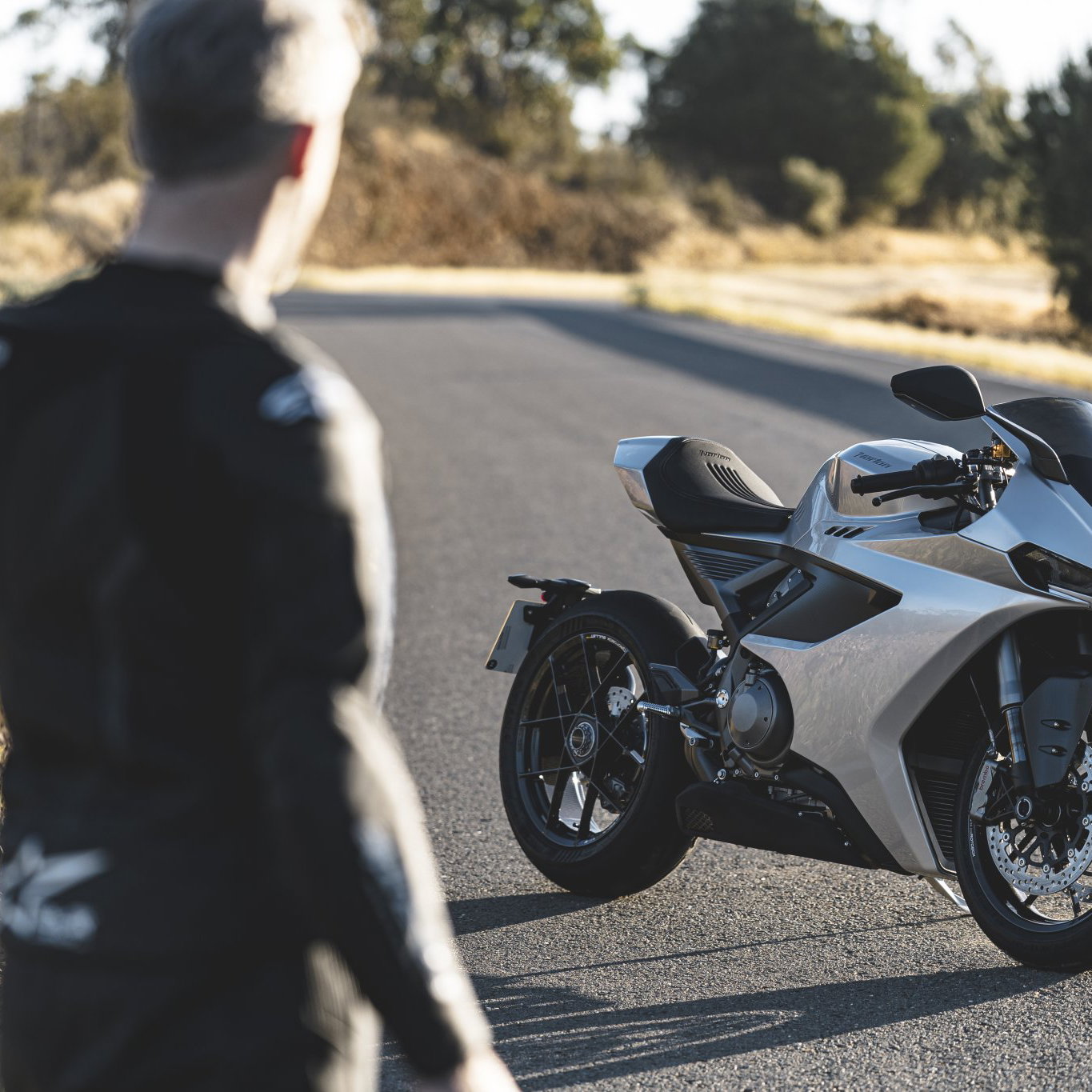
When asked about what inspired the look and styling of the new Norton Manx R, Simon Skinner revealed a four-pronged approach to this bike's styling, which will feed into every new model from here on in.

“Effectively, I’ve got a design strategy,” Skinner said. “People say, ‘What’s your inspiration?’ They’re thinking I’m going to talk about candlesticks or walking around art galleries. But the reality is this.”
He goes on to point to four pillars of design that will rule the look and feel of Nortons in the coming years: Modernity, integration, drama and connection. When quizzed about the ‘Modernity’ pillar, Skinner points to a slide on screen with two houses on display.
“This is new. It’s a new house,” he says, pointing to a picture of a new-build detached house that could be sitting on any one of the thousands of housing estates in the UK. “This is a modern house,” he says as he moves his pointer over to what looks like a glass and steel UFO that has crash-landed into the landscape. “This house is 20 years old, but manages to look like it’s from the future. That’s modernity.”
It’s clear that of the four prongs mentioned, Modernity is the one that is key to Norton’s design language. Many onlookers will ask, ‘Why did they need to change anything? The old Norton V4SV was pretty enough?’ Well, yes, it was, but Norton in the TVS era needed to draw a line in the sand. It also had, and this is probably the most important point, had to land with a range of bikes that look nothing like anything else on the road.
On that last point, they have unequivocally succeeded.

“We’ve done it our way. We’ve done it differently.”
One of the things that strikes you when you see the Manx R (or any of Norton’s new models) up close is how clean they are. From the lack of exterior fairing fixings to the visual deletion of wires, pipes, cables and hoses. Norton has taken the kind of fit, finish and detailing that Triumph has built its name on, and then turned the dial up to eleven.
“There isn’t much on a bike that’s purely engineered.” Skinner said, “A crankshaft, a conrod, a piston, perhaps. Everything else you can see. And likewise, there are very few things, if any, that are purely cosmetic. Everything has a function.”
“Whether it’s bodywork and how you’re interacting with it with your knees and your body, or how it’s controlling airflow through and around the vehicle, everything is integrated. Then it needs to be dramatic, with lots of visual movement.”
That’s the Norton secret sauce behind its models, the design philosophy that ties the bikes together. But Skinner says it does something else, or at least it will do, once the brand has fully embedded itself into the mind of riders and bike fans.
“We don’t want [the Norton range] to be like BMW’s,” he said. “Where you have a 3 Series, 5 Series and 7 Series, which all look the same but just slightly bigger.”
“We want people to look at it and go: ‘That's a Norton’. But how do you make them look like they’re from the same family without all looking the same?”

That’s where the Norton design philosophy comes in, but it’s not going to happen overnight. While I’m sure that Nortons will once again become household names and instantly recognisable out on the road, the process of rebranding such a famous name from the past and then reloading it into the public psyche is going to take time.
“On day one, you won’t get that,” said Skinner. “But in three years, five years, seven years time, when there are more models out, we might not need to write Norton on the tank anymore.”
Building a new identity
What’s interesting about Norton’s new design language is that it isn’t simply trying to ensure that the bikes look different than they did before. It’s that there is a thought process behind almost every part of them, from the broad shapes and surfaces down to the decision to hide a fixing or integrate a component rather than leave it on show. The Manx R and Atlas are effectively the first proper expressions of that thinking, rather than the finished article. Norton now has to prove that the language works, not just inside a VR headset or design studio, but on the road and, eventually, in the minds of the people looking at these bikes. Be them riders or not.
That will take time. But perhaps that’s the most exciting thing about the new Norton generation. The company isn’t simply trying to recreate what made its old bikes memorable. It’s trying to create something that, given enough time, might become recognisable in its own right once again.
The challenge now is whether Norton can make this new design language familiar enough that, one day, you can look at a bike and know it’s a Norton before you’ve even seen the badge on the tank.
Find the latest motorcycle news on Visordown
Tags:

Simon (AKA Toad) has been working within the motorcycle industry for more than twelve years, and a member of the motorcyclist family since birth. Growing up around British-built single and twins, it was inevitable that a life on two wheels was on the cards, from a very early age!