Triumph Bonneville Bobber (2026) review
Triumph’s Bobber hasn’t been softened for 2026, just subtly sharpened. More tech, a bigger tank and lighter wheels help, but the Bobber still demands effort — and that’s exactly the point.

Vote for Visordown 2026 Bike of the year Awards in Association with Carole Nash

Carole Nash are delighted to be announced as the proud sponsors of the 2026 Visordown Awards. With over 40 years of experience in the motorcycling industry, their aim is to get riders out on the road with suitable bike insurance cover for their pride and joy. There couldn't be a better alignment with the Visordown Awards 2026.
* Out of town handling engaging
* Styling that sets it apart from the pack
* Riding position can become tiresome
* Handling around town compromised
The Triumph Bobber has never pretended to be sensible. From day one it’s been a British middle finger to the American V-twin cruiser scene, all slammed stance, fat tyres and barely concealed attitude.
For 2026, Triumph hasn’t tried to civilise it. Instead, it’s been gently fettled, lightly modernised and left to get on with being exactly what it already was – A brawny British hot-rod of a bike.
That means compromises remain front and centre.

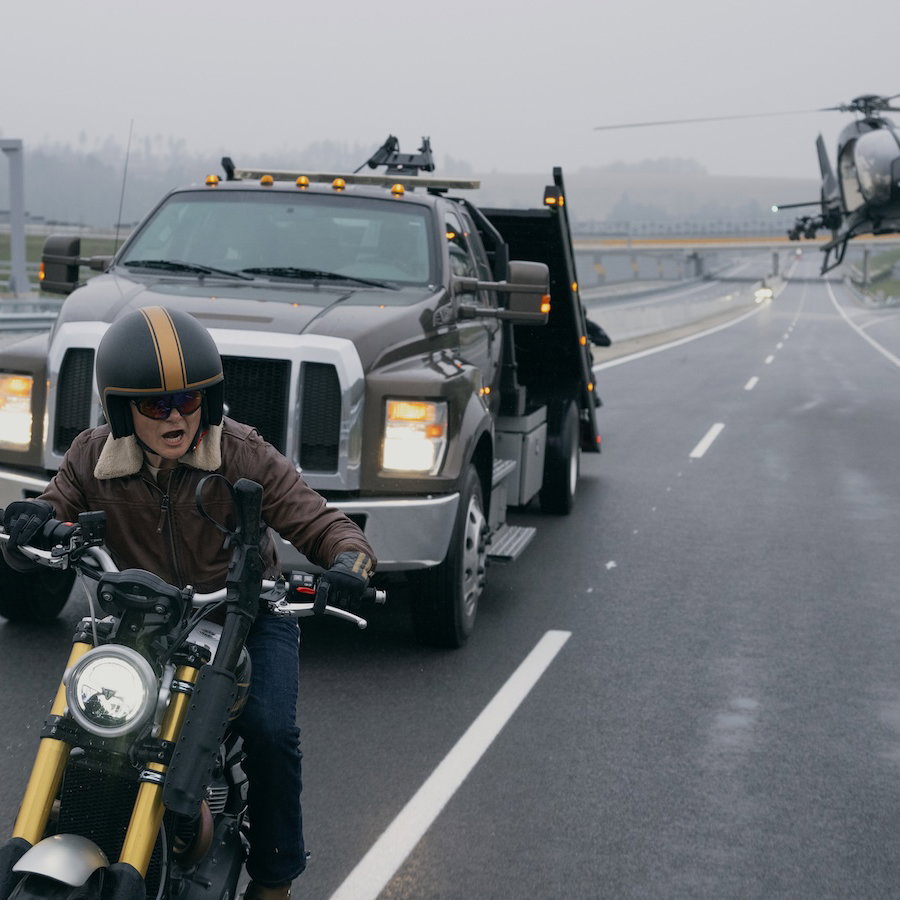
For this launch event Triumph jetted us off to the surf mecca of Oceanside, Southern California. We weren’t just riding the new Bobber out there, though, as we had almost the full fleet of 1200 and 900 Bonnies to ride. I got around a full day in the saddle of the Bobber, riding fast sweeping mountain passes, a little bit of town work and a good few miles of motorway - err, I mean ‘Freeway’!

On paper, the updates look worthwhile. The Bobber still runs the 1200cc Bonneville twin, but with its dedicated hot-rod tune pushing out 77bhp at 6,100rpm and a healthy 78.1lb-ft of torque at just 4,000rpm. Aluminium 32-spoke 16-inch wheels replace the previous items, saving a claimed kilo overall while still wearing chunky 130-section front and 150-section rear tyres. Suspension comes courtesy of KYB, with 47mm cartridge forks up front and a linkage-assisted monoshock at the rear with preload adjustment.

There’s more tech too. For 2026 the Bobber gets lean-sensitive ABS and traction control, two riding modes (Road and Rain), and cruise control as standard. The fuel tank grows from 12 to 14 litres, the seat is wider, the side panels are new and the engine covers have been sharpened up to look a bit more chiselled. Prices start at £13,795, and colours range from sober Jet Black to more considered options like Interstellar Blue and Satin Sapphire Black.
So that’s all the sensible stuff, but the Bobber has never been about sensible.

Around town, it can still awkward and a little clumsy. The wide tyres and geometry might look right parked outside a coffee shop, but they’re less convincing when you’re filtering through traffic or threading it through tight urban turns. The steering feels heavy and reluctant, and low-speed manoeuvres demand more effort than they should. It’s not graceful, and with so much punch on demand from the big twin, you’ve got to be super accurate with throttle inputs. It almost feels like it’s being insulted, chugging along reluctantly and making it very clear it would rather be somewhere else.
That somewhere else is out of town, and when you get there, the Bobber finally starts to make sense.

This is not a bike that flows through corners like a T100 or T120. There’s no smooth arc, no gentle transition from lean to lean. Instead, it’s all about point-and-squirt riding. Tip it in, muscle it through the apex, then stand it up and unleash the torque on the exit. And repeat.

It’s a physical way to ride, and that’s half the appeal. You have to work for your fun on a Bobber, hauling it through bends and manhandling it into line. It’s not elegant, but it’s engaging, and there’s something deeply satisfying about hustling a bike that doesn’t really want to be hustled.

The motor plays its part well here. That thick spread of torque means you’re rarely hunting for gears, and when the road opens up the Bobber fires out of corners with real intent. It may not be the fastest thing on the road, but against traditional cruisers, it would have no trouble disappearing into the distance.
There are drawbacks, though, and a couple are worth calling out.

First, vibrations. Of all the bikes tested on this launch, the Bobber had the most noticeable vibes, and they’re concentrated almost entirely through the footpegs. Bars, seat and tank are largely fine, but the pegs buzz constantly. Their proximity to the crankshaft almost certainly doesn’t help, and while it’s not deal-breaking, it’s hard to ignore.

Second, comfort. The seat itself is actually pretty good, and the wider base for 2026 helps, but the riding position doesn’t flatter long days in the saddle. You’re pitched forward, weight on your arms, and after a few hours, it starts to hammer my lower back. If relaxed cruising is the priority, Triumph’s own Speedmaster does a far better job and with a very different overall feel.

As for the 2026 changes themselves? In truth, they’re subtle. The kilo saved in wheel weight isn’t something you really notice without a back-to-back comparison. The bigger tank is genuinely welcome, and the addition of cornering ABS and traction control makes sense on a bike with this much torque and attitude. Cruise control, too, is a nice bonus rather than a necessity.
So no, the Bobber hasn’t been transformed. But that was never the point.

What Triumph has done is refine a bike that already knew exactly what it was. The Bobber, in some situations, remains flawed, and stubborn. It’s also loud, brash and hugely characterful. And in a world of increasingly sanitised cruisers, something is refreshing about that.
If you want comfort, look elsewhere. If you want easy riding, look elsewhere. But if you want a cruiser that isn’t a V-twin, that demands effort and gives something back in return, the Triumph Bobber still makes a compelling case.
Find out more about the 2026 Triumph Bobber on the official website.
Find the latest motorcycle news on Visordown.com

Simon (AKA Toad) has been working within the motorcycle industry for more than twelve years, and a member of the motorcyclist family since birth. Growing up around British-built single and twins, it was inevitable that a life on two wheels was on the cards, from a very early age!