Ducati Monster (2026) V2 review
Lighter, slimmer, and powered by Ducati’s new 890cc V-twin, the latest Monster aims to balance everyday usability with the sporting edge the name is known for — but has Bologna found the sweet spot?

* New engine feels right at home
* Electronics enhance the bike
* Racy ergonomics might not suit all
* + model offers little above stock
The Ducati Monster is the bike that arguably saved the Bologna firm. When the original M900 arrived in 1992, built around a modified 851 frame and powered by Ducati’s air-cooled twins in 600, 750, and 900 cc guises, it helped shift the brand from niche Italian curiosity to something far more attainable and desirable for the masses. More than three decades on, it remains the longest-running nameplate in Ducati’s current lineup, and now enters its fifth generation with the new Monster V2.
For the launch of this latest model, Ducati whisked the global motorcycle press to Malaga, where we were greeted with unseasonably wet, windy and chilly weather, with a small break in the rain for some riding photography and video.
2026 Ducati Monster V2 price, colours and availability

The new Monster comes in two flavours, with the + (Plus) model boasting a fly screen and seat cowl. The base bike starts at £11,995, while the Monster + starts at £12,295 - and offers little above the base bike. Both bikes are available in either Ducati Red or Iceberg White. Those starting prices make the Monster a slightly more expensive option compared to the competition, most of which hover around and under the £10,000 mark. It is, though, a bit of a V-twin outlier in the category, and a Ducati, both of which should protect it somewhat.
Both versions are available on Ducati’s Accelerate PCP scheme, offering a new low-commitment way into Bologna’s most important naked. Put down a 50 per cent deposit, and there are no monthly payments for two years, after which you can choose to part-exchange the bike for another Ducati, keep it by settling the optional final repayment, or simply hand it back (subject to return conditions). With no interest and no instalments during the term, it’s a straightforward route to riding a Monster or Monster + with minimal financial noise.
What’s new with the 2026 Monster V2

At the heart of the 2026 model is Ducati’s latest 890cc V-twin, producing 111 hp (109.4 bhp) and 91 Nm (67.1 lb ft) of torque, with a claimed 70 per cent available from just 3,000 rpm and 80 per cent between 4,000 and 10,000 rpm. Intake Variable Valve Timing (IVT) headlines the engine tech, while the chassis sees a claimed wet weight (minus fuel) of 175 kg — four kilograms lighter than before. A technopolymer rear subframe replaces the aluminium unit used previously, though the bike borrows its swingarm directly from the Panigale V2. Suspension comes courtesy of a non-adjustable 43 mm Showa fork and a preload-adjustable Showa monoshock, while Brembo M4.32 calipers grip 320 mm discs up front.

Seat height drops slightly to 815 mm — five millimetres lower than the outgoing Monster — with both a -20 mm low seat and lowering kit available. Electronics are handled via a five-inch TFT dash, with riding modes comprising Sport, Road, Urban, and Wet, alongside cornering ABS, traction control, engine brake control, and wheelie control. Cruise control and Bluetooth connectivity remain optional extras. The Monster + adds a flyscreen and seat cover, though there are no additional tech upgrades.
Riding impressions

From the moment you climb aboard, it’s clear this is a very different kind of Monster. The bike feels exceptionally slim and light, and the steering is so effortless at low speeds that you can flick the bars from lock to lock with a single finger. Of the mid-weight nakeds that don’t pretend to be track bikes, this is among the raciest in terms of riding position. The pegs sit high and slightly rearward, while the bars don’t sweep back as generously as some rivals.

At five foot seven, I found it engaging rather than uncomfortable, though there’s no escaping the rider-forward stance — your chin feels as though it’s hovering somewhere above the headstock. Despite that bias toward the front, the steering never becomes heavy or awkward around town.

Starting in Rain mode reveals just how accessible the new engine is. Power is capped and arrives gently, with the torque curve deliberately softened through the lower rev range. Traction control is dialled up to its maximum setting, but in truth, you’d need truly dire conditions to provoke it.

Switching into Road mode brings full peak power, though the delivery remains carefully managed. Fuelling is crisp and predictable, yet there’s a faint sense that the electronics are still smoothing over your inputs. It’s not dull, far from it, but you’re aware that some digital oversight is keeping things tidy.

Sport mode is where the bike wakes up properly. Throttle response sharpens, the engine feels less restrained, and there’s noticeably more punch driving you out of corners. Having ridden this same 890 motor in both the Panigale V2 and Multistrada, it’s surprising to find it arguably best suited to the Monster. In the Panigale, it feels sharp-edged and track-focused; in the Multistrada, it’s more refined and restrained. Here, it’s eminently playful and blessed with a soundtrack that is all pops, bangs and burbles on the overrun.

It doesn’t deliver quite the same torque-rich shove as the outgoing 937 cc Testastretta, and that is something I found myself missing slightly. But the trade-off is an engine that feels more usable and versatile, capable of being dialled back to near A2 levels of friendliness when required.

One more hand-me-down from its current generation V2 siblings is the switchgear, and I’m a big fan of it. Gone are the slightly confusing multi-function rocker switches, and you instead get a clear and easy-to-use four-way button design, with a separate function button for scrolling through the modes. Like the switchgear, the menus in the TFT are also updated, and sitting between each of the modes is a mode edit menu, allowing you to quickly and easily tap into the electronic settings while not in motion.
Chassis and handling

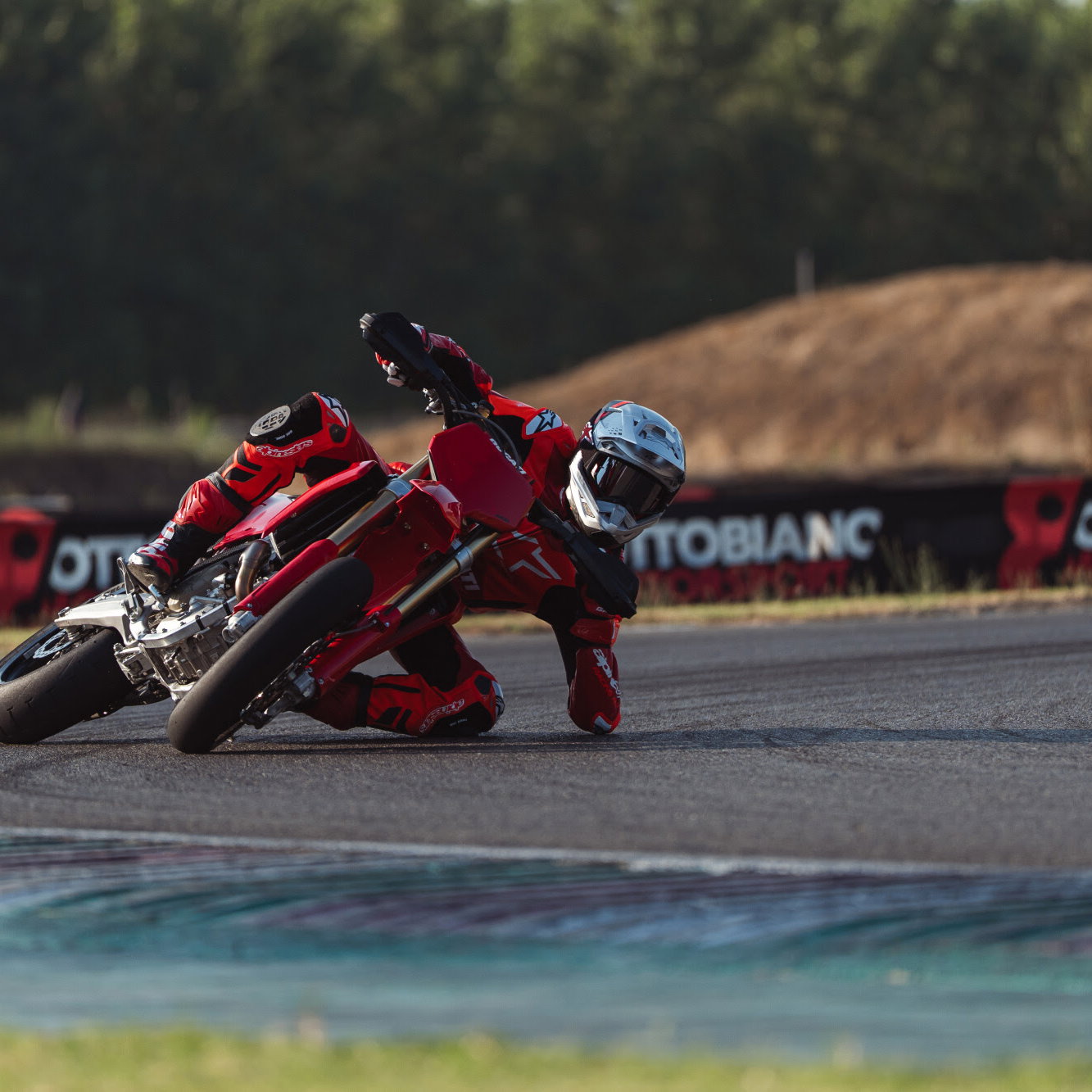
Handling is where the new Monster makes perhaps its biggest leap forward. It’s every bit as direct as the 937 when tipping into corners, but there’s an added layer of agility that makes the bike feel almost telepathic. The odd flipside to that is that it also seems more composed when the road surface deteriorates, shrugging off mid-corner bumps that might have unsettled earlier versions.
The Showa suspension deserves credit here. At a standstill, particularly at the rear, the setup feels very soft with a noticeable amount of sag when you place weight on the bike. Once moving, however, it reveals itself to be extremely plush rather than vague, offering support throughout the stroke while delivering a level of comfort that previous Monsters didn’t quite manage.

Braking remains extremely good, with the Brembo M4.32 calipers provide serious stopping power. Crucially, they’re progressive enough not to intimidate, and the lever feel is strong, consistent, and easy to modulate – exactly what you want from a naked that encourages spirited riding.
Any downsides?

One quirk I also encountered on Ducati’s other latest generation of V2-powered machines is a brief hesitation during some upshifts. It doesn’t occur at every engine speed, but across the press ride, it probably happened around ten times, just enough to notice.
Ducati attributes it to the electronics momentarily adjusting the gear cassette to ensure a clean engagement. From the saddle, though, it can make the drivetrain feel slightly unrefined on occasions, interrupting what is otherwise a very polished riding experience.
Verdict

The new Monster V2 feels like a bike that has matured without losing its sense of fun. It’s lighter, sharper, and noticeably more sophisticated than the model it replaces, yet still approachable due to an engine that strikes a balance between performance and genuine usability. For everyday riding, it strikes an impressively broad spread between friendliness and excitement.
What stands out most is how cohesive the package has become. The chassis delivers agility without nervousness, the suspension blends comfort with control, and the electronics largely enhance rather than dilute the ride. Even the new 890 motor, despite surrendering some of the old Testastretta’s low-down punch, suits the Monster’s character well by being adaptable and playful.
It isn’t perfect. The occasional shift hesitation chips away at an otherwise premium feel, and riders who loved the muscular torque of the 937 may need time to adjust. But taken as a whole, the Monster V2 doesn’t just carry forward one of motorcycling’s most important names; it reinforces why the Monster remains such a cornerstone of Ducati’s lineup.
Images: Ducati / Alex Photo
2026 Ducati Monster spec
Category | Specification |
Engine | 890cc V-twin |
Power | 111 hp (109.4 bhp) |
Torque | 91 Nm |
Torque delivery | 70 per cent available from 3,000 rpm |
Midrange spread | 80 per cent available from 4,000–10,000 rpm |
Valve system | Intake Variable Valve Timing (IVT) |
Wet weight (no fuel) | 175 kg |
Weight change | 4 kg lighter than previous Monster |
Rear subframe | Technopolymer with trellis |
Swingarm | Panigale V2–derived |
Front suspension | Showa 43 mm SFF fork, non-adjustable |
Rear suspension | Showa monoshock, preload adjustable |
Front brakes | Brembo M4.32 calipers |
Front discs | Dual 320 mm discs |
Seat height (standard) | 815 mm |
Seat height change | 5 mm lower than previous Monster |
Low seat option | –20 mm |
Lowering kit | –20 mm |
Display | 5-inch TFT |
Riding modes | Sport, Road, Urban, Wet |
Power modes | High, Medium, Low |
Safety electronics | Cornering ABS, Traction Control, Engine Brake Control, Wheelie Control |
Connectivity | Cruise control and Bluetooth (optional) |
Model variants | Monster / Monster+ |
Monster+ extras | Flyscreen and seat cover |
Tags:

Simon (AKA Toad) has been working within the motorcycle industry for more than twelve years, and a member of the motorcyclist family since birth. Growing up around British-built single and twins, it was inevitable that a life on two wheels was on the cards, from a very early age!