Shoei Neotec 3 review: Better than ever?
Shoei’s premium-priced flip-front helmet is good, but is it better than the lid it replaces?

- Built to last
- Looks sportier than previous Neotec
- Chin curtain needs to be removed
- Expensive
“You pay for what you get,” sang Dave Matthews. That’s a cultural reference that applies to the Shoei Neotec 3 in two ways:
Firstly, because it’s an expensive lid. With an asking price that starts around £600, it is exceptionally good but definitively not cheap. Secondly, because the typical Neotec 3 owner is old enough to understand a 30-year-old musical reference.
Stereotypes aside, I’ve been wearing the Neotec 3 for about nine months, having upgraded from the Neotec 2 that had been my go-to helmet for a number of years. Because I loved my Neotec 2, and the changes made for this model aren’t dramatic, you can probably guess how this review is going to go.
If you’re even considering a Neotec 3, you’re likely already comfortable with its hefty asking price, as well as its reputation as the choice of gentlemen of a certain age. The big question you likely have is: Is the Neotec 3 actually better than the Neotec 2?
Let’s dig into that.

Key Features of the Shoei Neotec 3
- Flip-front modular opening
- Easy-to-remove main visor
- Integrated drop-down sun visor
- Micro-ratchet chin strap
- Pinlock antifog insert included
- SENA SRL3 compatible
The 'handmade' helmet
Shoei is a Japanese company based in Tokyo. Producing helmets since St. Patrick’s Day 1959, it has grown to encompass 785 employees and prides itself on delivering "handmade" high-quality products.
The helmets are still made in Japan via a process that Shoei says involves 50 people in the making of each lid. That strikes me as impressive. I doubt 50 people would show up to my funeral, yet 50 strangers have put time and effort into helping to prevent that event from taking place.
The Neotec 3 arrived in shops in early 2024. Comfortably residing in the top two choices of preferred helmets for long-distance touring riders (the other being the Schuberth C5), it is the third generation of a legendary modular line that began in 2011.

Fit and comfort
Manufacturers generally build helmets for one type of head, hoping it will fit enough customers to deliver a profit. Shoei offers a Personal Fitting System at select UK retailers, which involves measuring various bits of your skull to tweak cheek pads and the headliner for a bespoke fit. Doing this adds about £50 to the cost, but it gives you a better chance of riding away with a helmet that actually fits your cabeza.
Even so, you generally still need to have a "Shoei-shaped" head. I’m fortunate that I do, although there is a very weird quirk to the Neotec 3’s fitting. We’ll get to that.
A size Medium Neotec 3 weighs 1,715 grams without the SRL3 system installed - about as much as a 16-week-old kitten. There are lighter lids out there (the Neotec 2 weighed 1,665 grams), but it’s a weight you quickly get used to. I’ve worn my Neotec 3 on 350-mile days without complaint, and that weight contributes to an overall feeling of robustness. It feels safe.
One of the great benefits of a flip-front helmet is that it’s easier to pull onto your head, especially if you like to ride with a neck buff pulled up over your face to filter out pollen and road dust. And here’s where we get to the odd fit quirk.

The difference between good and bad fit is a piece of cloth
When I first got the helmet, the weather was particularly warm, and I didn’t pull my neck buff over my face as I normally do. In those first few rides, I found that after about 45 minutes, the helmet would press hard into my right temple. After an hour and a half, the pain was debilitating. I had to buy emergency paracetamol at a services and lie in the grass until the pain went away.
If I hadn't had so much residual love for the Neotec 2, I would have thrown the Neotec 3 into a river.
Then, one morning, it was cold. I pulled the buff up over my nose and—poof—the problem was gone. Not even a hint of pain. I wore the helmet for three hours without any problems.
The neck buffs I wear are just tubes of cotton cloth no thicker than a T-shirt. How could that tiny extra bit of material change the helmet’s fit so dramatically? I don't know, but if I pull the buff down, the helmet starts to hurt again.

Flip-front mechanism
To swing the front of the helmet up, you press firmly on a robust switch right at the centre of the chinbar. Like the Neotec 2, the Neotec 3 is P/J homologated, meaning you can legally ride with the chinbar locked up, effectively using the helmet as an open-face.
This is fantastic if you want to ride around looking like an Italian motorcycle officer. However, it shifts a bunch of weight to the top of your head, encouraging wobble, and the chinbar acts as a sail at any speed above 20 mph. It’s a nifty feature, but not one I use often.
Visor, vision, and the cluttered chinbar
The biggest differences between the Neotec 2 and the Neotec 3 come in the way Shoei has cluttered the chinbar with elements.
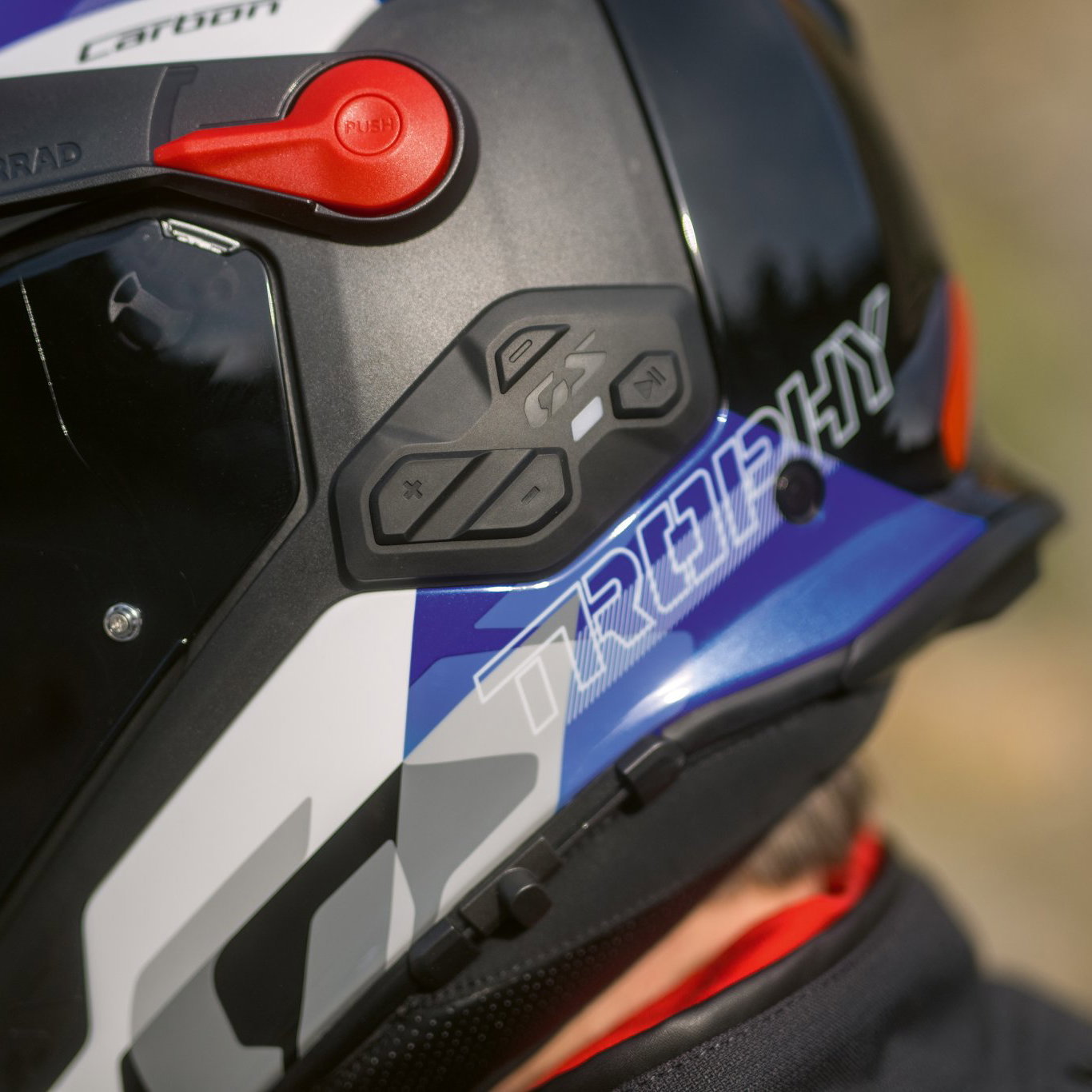
On the Neotec 2, the visor latch was located on the left side. It was clever, keeping your hand out of your line of sight when filtering on the M25. The Neotec 3 moves the latch to the centre, placing it directly above the visor lock, chin vent, and chinbar release buttons. You can’t see any of these bits when wearing the helmet, of course, so you usually end up just slapping at your own face trying to find the latch.

The challenge is exacerbated by the new visor lock. You need to press the lock button while simultaneously lifting the visor—a level of dexterity that is challenging one-handed with gloves.
As far as the visor itself is concerned, it’s excellent. The field of vision is great, and the included Pinlock insert keeps things fog-free all day.
That’s fortunate because the Neotec 3 can get quite steamy. Shoei pitched this as a quieter helmet, achieved largely by tweaking the fit of the chin curtain. But decreasing noise ingress also decreases ventilation. Ultimately, I just removed the chin curtain.
Lastly, the chin vent is the source of my biggest gripe. On the Neotec 2, it was opened and closed via a proper switch. On the Neotec 3, it is a slider constructed of slick plastic that your glove frequently slips off of. Ninety percent of the time it’s annoying; the other 10 percent of the time, you wonder why they changed it.

Is the Neotec 3 quiet?
Shoei says the helmet is “wind tunnel engineered,” and you can feel it. There is no buffeting or shuddering. At motorway speeds, I’m able to look left and right without resistance. That aerodynamic improvement plays a big part in noise reduction.
However, a lot of the noise reduction comes via that reduced ventilation. With all the vents closed and the chin curtain in place, it is indeed a very quiet lid. But if you want to breathe, you have to open it up. The good news is that even with the chin curtain removed and vents open, it’s still very quiet—though it’s still always a good idea to ride with earplugs.
SENA SRL3 Intercom System
For the low, low price of £339, you can buy the SENA SRL3 communication system, which integrates seamlessly into the Neotec 3. It slots in easily with no visible wires or unsightly exterior modules. Annoyingly, it is not exactly the same system as the older SRL. If you have a Neotec 2, you cannot transfer your old SRL unit into the Neotec 3. You have to buy the new one.
The SRL3 offers voice command and Mesh 3.0, allowing you to interact with a near-limitless number of users on an "open mesh" like an old-school CB network. I can’t decide whether this would be fun or a rolling version of hell. Sound quality for music is good, though.

Neotec 2 vs. Neotec 3: What are the differences?
In addition to the cluttered chinbar, fiddly vents, and slight weight increase, the Neotec 3 differs subtly from its predecessor. ECE 22.06 regulations have made all helmets a little bigger, so the Neotec 3 is noticeably wider than the Neotec 2 when placed side by side. On the go, however, this size difference is negligible.
The Neotec 3 features a new rear spoiler and overall looks a little less "Old Man." Its internal sun visor is 5mm longer, which makes a surprising difference; it’s as effective as riding with a fully tinted main visor.

Verdict
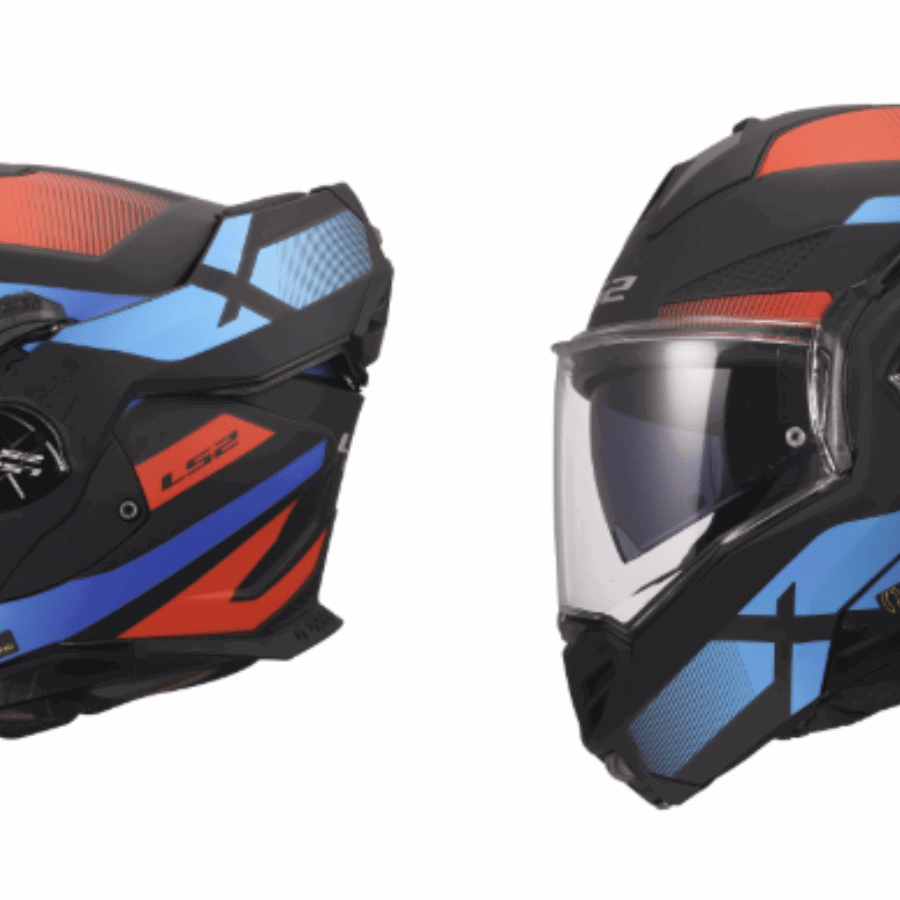
On a recent episode of the Front End Chatter podcast, it was noted that ECE 22.06 regulations mean you can get a very safe flip-front helmet (like the LS2 Strobe II) for just £99.99.
But as the hosts pointed out, the difference between a cheap helmet and an expensive one is the rate at which it deteriorates—how soon the visor gets sloppy, how soon the vents feel gritty.
Therein lies the argument for dropping £600 on a Neotec 3. All the buttons and vents feel built to last. My Neotec 2 is still in great condition after eight years of service.
Shoei says you should replace your helmet “after about five years of normal use.” I question that. I reckon you can keep it for longer. Remember when McDonald's got rid of polystyrene packaging because everyone was terrified it would sit in a landfill and take 500 years to break down? Wanna guess what the impact-absorbing inner part of a motorcycle helmet is made of? Yes, polystyrene.

So, let’s be conservative and say you can wear a Shoei Neotec 3 for eight years. Add in the cost of a SENA SRL3, and you’re looking at an initial outlay of roughly £1,000. Divide it by eight. That’s £125 a year, or £2.40 a week. Bargain.
And eight years from now, I can already predict my review of the Neotec 4: “Why’d they change the chinbar vent? The one on the Neotec 3 was so easy to use…”
Is the Neotec 3 better than the Neotec 2? On paper, yes. It has a higher safety rating. But if you’ve got a good-condition Neotec 2 right now, there’s not enough improvement here to mandate an immediate upgrade. When you are ready for a new lid, though, the Neotec 3 is highly recommended.

Shoei Neotec 3 specs
STARTING PRICE | £599.99 |
MADE IN | Japan |
SAFETY RATING | ECE 22.06 and P/J Homologation (You can legally ride with the chinbar up) |
SIZING | XS-XXL (three shell sizes) |
WEIGHT | 1715 grams (for a size M) |
Read more gear reviews on Visordown

Chris Cope is a fourth-generation journalist, originally from Texas. He has lived in the UK for roughly two decades and has been writing about motorcycles for most of that time. He has written for dozens of publications and websites in the UK, US, Canada, and Australia.