2026 Ducati DesertX review: Too much of a good thing?
The new DesertX is one of the most expensive middleweight adventure tourers out there. Does it justify the asking price?

- Fantastic sound
- Suspension is superb
- Expensive
- Engine character is "Non per tutti."
It’s not always the case that Italian brands live up to the hype. So, I’ll admit that I approached the new Ducati DesertX with a deep cynicism. Beyond the superlatives and loud music of Ducati’s marketing team, would it actually be any good?
Short answer: Yes. There is a lot to like about this motorcycle.
Enough to justify its “introductory price” of almost £15k, making it one of the most expensive bikes in its class? Read on.

Some Background
The concept of the DesertX was first introduced at EICMA back in 2019. Initially, it was intended as yet another Scrambler variant - revealed in that weird era when Ducati was churning out a new Scrambler seemingly every other week.
The folks in Bologna soon realised, however, that they had the tools and know-how to produce something better: something more capable of doing what it claimed. The Scrambler range, after all, is largely a collection of bikes that are intended to be seen and heard rather than ridden hard through dirt and mud.
When the DesertX went into production in 2022, it was driven not by a Scrambler powerplant but the same 937cc Testastretta V-twin that Ducati had been using in the Multistrada 950. But perhaps because it had been tarred by the Scrambler brush, or because there were already approximately 238 billion different adventure-touring motorcycles for riders to choose from, the first-gen DesertX didn’t become a huge seller.
But the people who actually did buy them praised them with such fervour that Ducati has held onto the idea and given the model a full makeover for 2026. New engine, new chassis, updated suspension, even a new rear axle bolt.

Look, Fit, and Feel
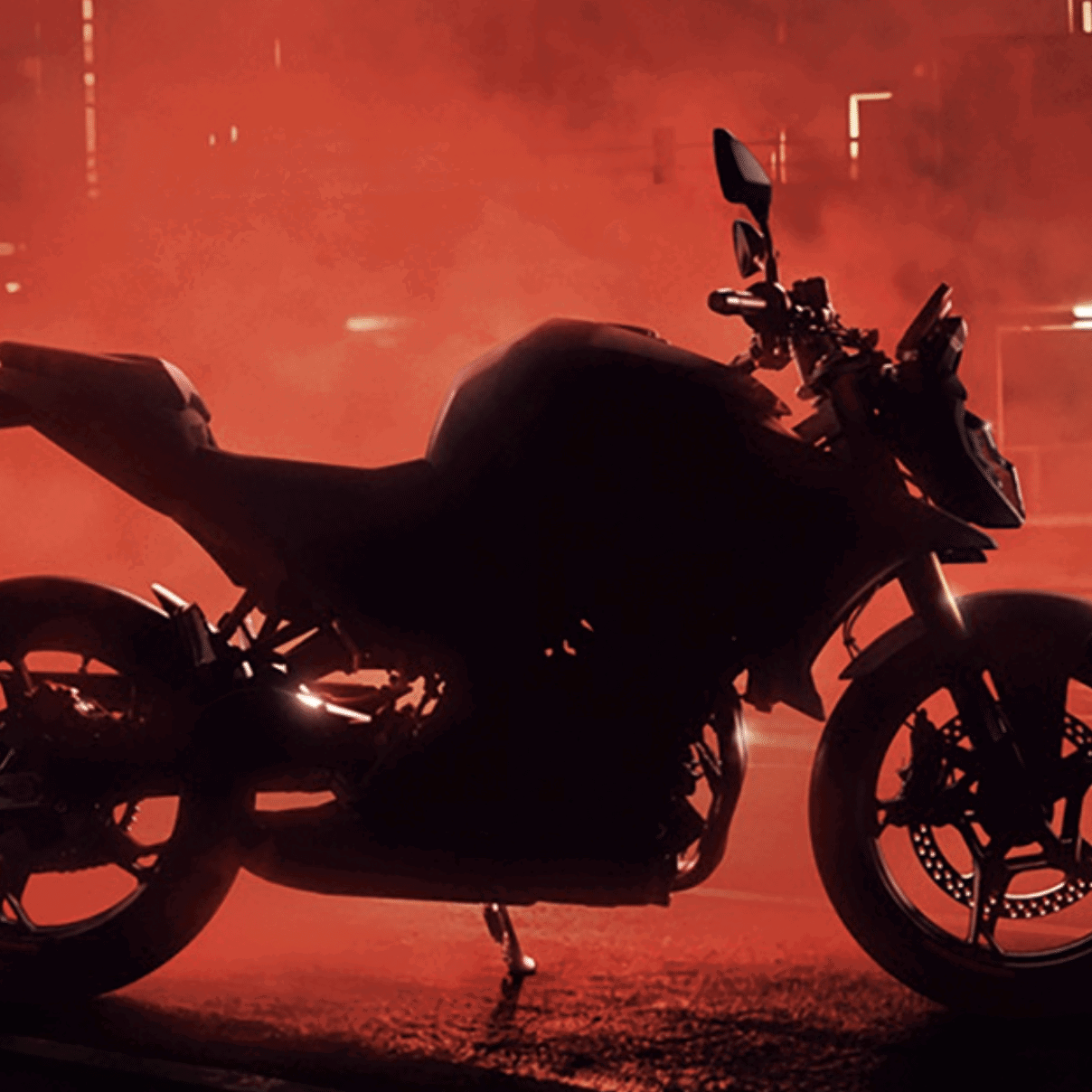
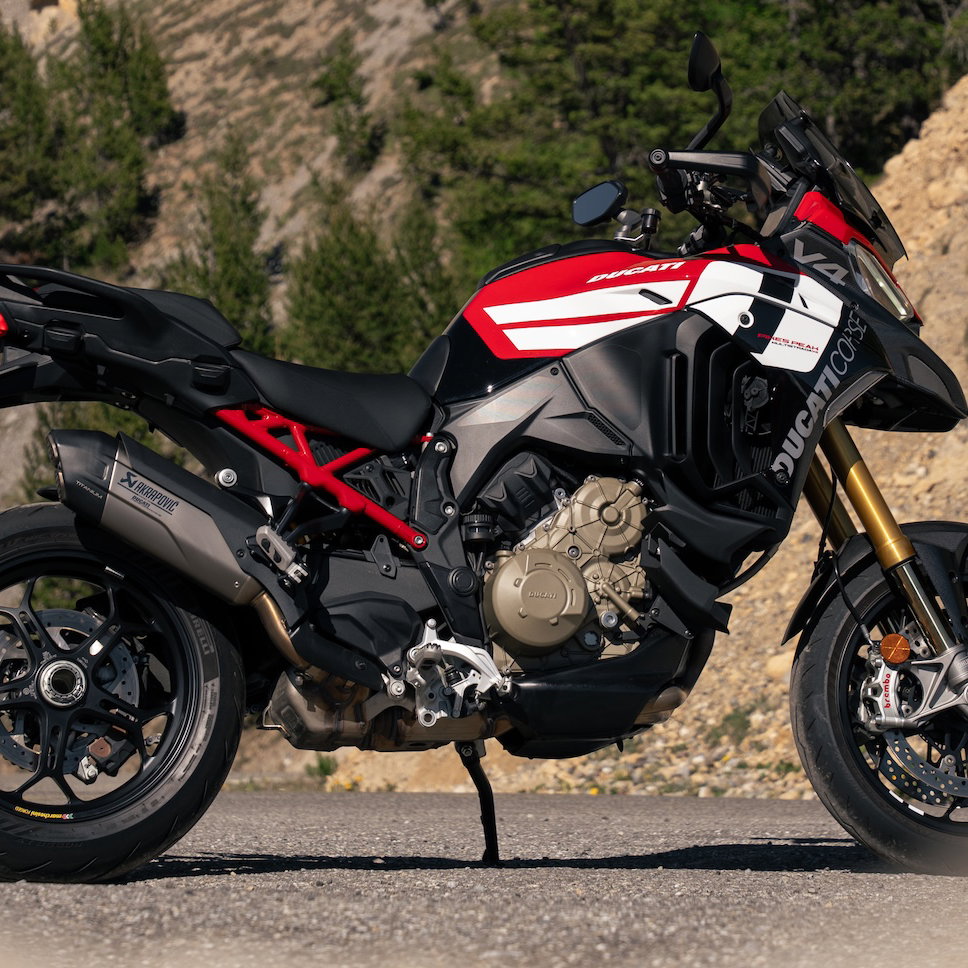
One of the few things that hasn’t been dramatically overhauled for 2026 is the DesertX’s styling. From five paces it looks pretty much the same as the outgoing version. Feel free to discuss the wisdom of that decision. On one hand, it creates a narrative consistency across two markedly different motorcycles. On the other hand, it dulls or hides the dramatic changes that Ducati has made.
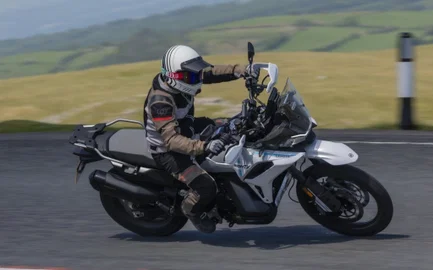
Whatever the case, it’s a good looking machine, standing out from a very, very crowded field. It also looks robust. The build quality here is superior to what I was expecting. Ducati makes beautiful, premium motorcycles, but sometimes there is a difference between ‘premium’ and ‘made to last.’
Special effort has been put into crash resilience. The most obvious example of this comes in the plastic tank, which, along with the surrounding bits of fairing, feels to be constructed of something far more durable than your standard fairings plastic. It almost feels rubberised.
And it seems to do the trick. Through the course of my test ride in Spain, our group experienced three crashes. Nothing serious - everyone was able to carry on riding - but at least one of the incidents was dramatic enough that lesser bikes would be written off: it took five of us to haul a bike off the 6-foot berm onto which it had been thrown.

There was a broken lever, a foot pedal that needed to be bashed back into place with a rock, a broken spring on a shifter, but nothing so dramatic that it couldn’t be sorted out on the spot.
Standard seat height on the DesertX is 880 millimetres. Ducati has accessory items that can raise or lower that, offering a range between 840 mm and 900 mm. The seat is narrow, which means getting feet down is easier. Being a 6-foot-1 rider, I was able to set both feet flat on the ground.
Although narrow and somewhat firm, the seat is reasonably comfortable. I spent a full day in the saddle without complaint. Although, it’s worth noting that I have a long history of tolerating seats that others feel are too firm.
The windscreen is not adjustable but - genuinely - does not need to be. I found it very effective even at extra-legal speeds.

The switchgear is a little cluttered, with the indicator switch particularly difficult to find without looking. But I suspect that an owner would eventually get used to it.
Pulling the bike off the sidestand, it is well balanced and the centre of gravity relatively low. Ducati claims a wet weight of 209 kg. It is kind of lying. Its wet weight figure is, in fact, very dry; it doesn’t include fuel.
The DesertX has an 18-litre fuel tank. According to my kitchen scales, a litre of water weighs 920 grams. If we assume a similar weight for dino juice, that adds roughly 16.5 kg to Ducati’s number. So, 225.5 kg of motorcycle fully fuelled: just on the right side of manageable when tackling uneven and loose ground. Especially when the weight is balanced this well.
Engine
The DesertX’s new engine isn’t new to Ducati. It’s the same 890cc liquid-cooled V-twin (or ‘V2’ in Ducati-speak) that the company’s put into a number of its models in recent years: Multistrada V2, Streetfighter V2, Panigale V2, and Monster.
In this guise, claimed peak outputs are 110 bhp at 9000 rpm, and 68 lb-ft of torque at 7000 rpm. Ducati says 70 percent of that torque arrives by 3000 rpm.

For a bike claiming 110 bhp, I was a little surprised at how wheezy the DesertX is above 85 mph. It will definitely achieve and exceed 100 mph, but not with urgency. But speed is not the point here. Ducati offers plenty of other bikes that can rocket you toward the horizon to greater effect.
Power delivery is relatively smooth - within the Ducati context. All Ducati engines have character and the DesertX is no different. There is a certain rawness to a Ducati engine - a kind of impatience and readiness to support you in ill-planned endeavors.
Exactly how much character you experience will be determined in part by which of the six (Six!) riding modes you choose: Sport, Touring, Urban, Wet, Enduro, or Rally.
The engine’s sound is fantastic: dirt bikey on acceleration and offering an addictive burble and pop on overrun. Like all Ducati engines, the DesertX’s V2 does not like being cold and puts out a hell of a lot of heat.

Transmission
I’m going to give Ducati the benefit of the doubt here and point out that transmissions on brand-new bikes are often a little clunky. That is especially true, it seems, with V-twin motorcycles. It is also often the case that things smooth out over time.
So, the transmission on the brand-new V-twin-driven Ducati that I rode was… wait for it… a little clunky. Especially in the first three gears. There were multiple instances in which I struggled to find neutral. Would this issue resolve itself over time? Maybe.
Clutch pull is light but requires a full-hand grab of the lever. If you do the two-finger thing, the two fingers that remain on the grip (your ring and pinky finger) will block the clutch lever from actuating fully. This is primarily an issue when riding off road.
The good news is that the quickshifter works pretty well off-road, meaning you often don’t have to fuss with a lever. It’s not as faff-free as the E-Clutch system on the Honda Transalp 750, but it’s pretty good.

You might also be interested in: 2026 Honda XL750 Transalp with E-Clutch Review
On the road, my opinion of the quickshifter is more mixed: when it’s good, it’s good; when it’s bad, it’s awful. There’s no consistency in terms of the conditions under which it performs one way or another.
Also, it may be that the quickshifter is sensitive to a fault. Throughout the first part of the day, I suffered stalling to an infuriating degree. I mentioned this to Ducati’s team at lunch and they suggested I may have been unintentionally tapping the gear shifter with my toe, fooling the quickshifter into wanting to activate.
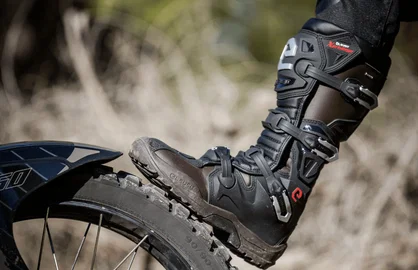
That’s possible; the Sidi Taurus GTX boots I was wearing are pretty thick. Fortunately, it is possible to turn off the quickshifter. I did that and didn’t stall for the rest of the day.

Chassis and Brakes
The DesertX’s chassis is another area where huge changes have been made. It has a new monocoque frame and the suspension is now fully adjustable. In addition, the rear shock uses a “full-floater” set-up. That sounds like something you might find in the toilet, but it’s actually just an explanation of how the shock is mounted, allowing it to be compressed at both ends.
Ducati has nailed it with the DesertX suspension. It’s witchcraft. The bike will take whatever you throw at it off road - ruts, rocks, sand - then magically feel planted and firm on road, ie, the Ducati experience you’d expect.

Too Much Choice
Sometimes too much is too much. Ducati has crammed the DesertX with so much technowhizzbangery that it is overwhelming and effectively impossible to fully make use of.
I mentioned earlier that there are six different riding modes. Within each of those modes, you have the option of eight different traction control settings (EIGHT!), five different cornering ABS settings, four different power settings, four different “wheelie control” settings, three different engine braking settings, and, of course, the ability to turn the quickshifter on and off. That works out to 23,040 different possible combinations.
That is stupid. It reminds me of the plot of A Short Stay In Hell, a novel in which a man must search through an infinite library to find the story of his life. Although, I suppose it provides Ducati with a response to any criticism: “Actually, this bike is perfect for you; you just haven’t found the right combination of settings yet.”
Meanwhile, in addition to the (overly sensitive) quickshifter, you get full LED lighting, a steering damper, cruise control, and the aforementioned 5-inch TFT screen. Turn-by-turn navigation is reportedly possible via the Ducati Link app; I didn’t get a chance to test it.

Servicing Concerns
Ducati’s team made a point of talking about how changes have been made from the previous generation to meet the servicing and maintenance expectations of an adventure-touring rider. Recommended oil changes are now 9,000 miles apart. Recommended valve checks come every 28,000 miles.
Depending on riding conditions, you’ll want to check (and clean) your air filter more frequently. To facilitate this, Ducati has made it more accessible: remove just three screws on the internal part of the cowling and it slides right out.

The company also takes pride in now offering a rear axle that can be removed with a standard hex socket. Apparently, you needed a special tool - bought from Ducati - to remove the rear wheel on the previous-generation DesertX.
Add to this the fact that Ducati has designed an element that connects the frame and subframe which is removable and thereby makes access to the engine headers easier. Ostensibly that reduces the amount of time/effort needed to do valve checks.
But changing the oil is less straightforward. Take a look at the bike and ask yourself: Where is the oil filter?
I couldn’t find it. Neither could any of my fellow moto-journalists.

After a fair bit of YouTube research into other V2-engined bikes (eg, the Streetfighter V2), and a conversation with Ducati test rider Andrea Rossi, I was able to determine that the oil filter sits in a cartridge just below the engine cover on the left side of the bike. To access that oil filter you need to remove an oil filter panel that is held in place by two bolts.
The housing for the oil filter is set into the engine somewhat, so internet tutorials on other V2 bikes suggest covering the lower part of the bike with aluminium foil to keep excess filter oil from spilling onto your beautiful machine.
On top of this, getting at the oil drain plug may also be tricky. On at least some V2-engined bikes, the routing of the exhaust makes access to the plug challenging.
The home mechanic in me is grumpy about this. Changing the oil is usually the easiest bit of wrenching you can do, and doing it yourself can save you thousands of pounds over the lifetime of a bike.

Verdict
Oil-change silliness aside, there are a lot of things to like about the DesertX. The list grows the longer you spend time with it. Whereas I had started my day feeling skeptical and looking for faults, I finished my day finding more and more little things to appreciate.
I mean, yeah, it’s still too heavy for dedicated off-road use, and it’s not half expensive. But the DesertX is also thoroughly enjoyable and confidence-inspiring thanks to an excellent suspension and weight balance.

It cuts a nice dirt bike figure from the rear and offers up a fantastic, snarling exhaust note. The bike’s character also speaks to the heart; this is a motorcycle that has been spinning in my mind over and over since I rode it.
It’s well built, packed with an insane amount of tech, has a style that is unique, and carries a badge that inspires envy. Anyone who has one of these in their garage has reason to be proud.
Gear worn in photos
Helmet: HJC RPHA 60
Jacket: Spada Vanguard
Gloves: Aerostich Elkskin Competition Ropers
Pants: Spada Vanguard
Boots: Sidi Taurus GTX

2026 Ducati DesertX V2 specs
PRICE | £14,995 |
ENGINE | 890cc liquid-cooled V-twin |
TRANSMISSION | 6-speed, with quickshifter |
POWER | 110 bhp at 9000 rpm |
TORQUE | 68 lb-ft at 7000 rpm |
TOP SPEED | n/a |
SEAT HEIGHT | 880 mm |
GROUND CLEARANCE | 250 mm |
WEIGHT | 209 kg (without fuel) |
FUEL CAPACITY | 18 litres |
FRONT TYRE | Pirelli Scorpion Rally STR 90/90 - 21 |
REAR TYRE | Pirelli Scorpion Rally STR 150/70 R18 |
FRONT BRAKES | Two 305mm semi-floating discs, radially mounted Brembo monobloc 4-piston 2-pad calipers |
REAR BRAKE | Single 265 mm disc, Brembo 2-piston floating calliper |
FRONT SUSPENSION | KYB 46 mm upside-down fork, fully adjustable |
REAR SUSPENSION | KYB shock absorber, fully adjustable, remote preload adjustment, full floater progressive link |
Read more motorcycle reviews on Visordown

Chris Cope is a fourth-generation journalist, originally from Texas. He has lived in the UK for roughly two decades and has been writing about motorcycles for most of that time. He has written for dozens of publications and websites in the UK, US, Canada, and Australia.