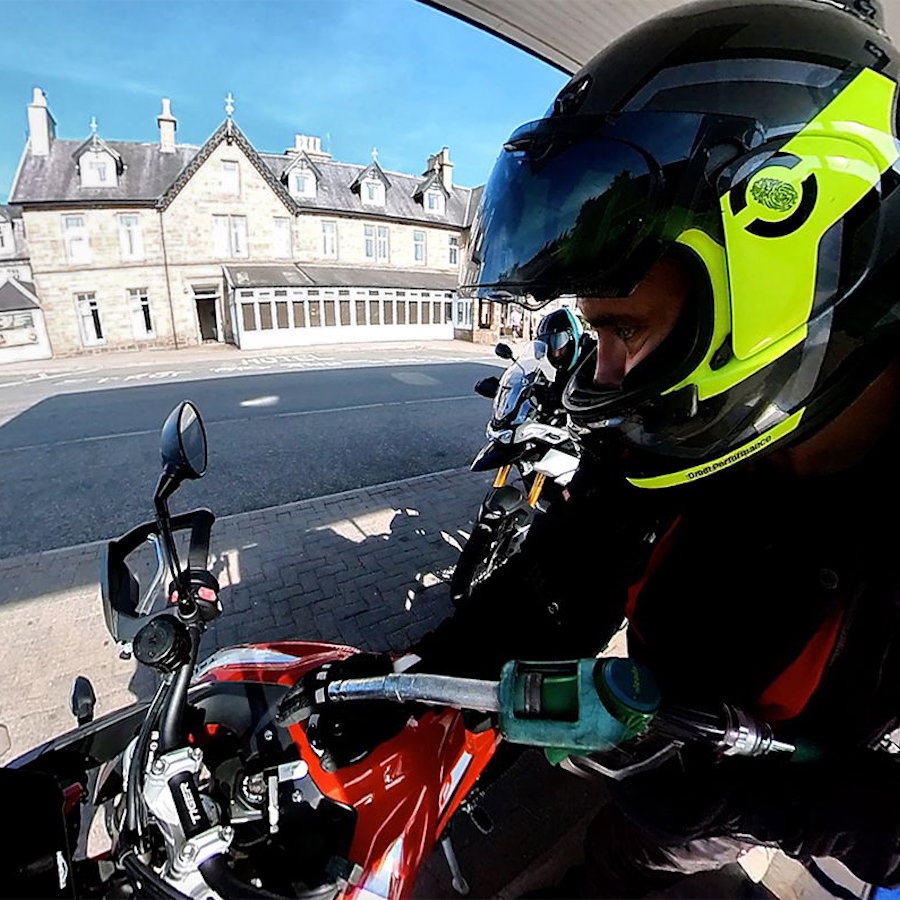
The best ways to stay cool on a motorcycle this summer
Riding a motorcycle in hot weather can be tough. Here are eight simple ways to stay cool, hydrated and safe when temperatures start to rise.

A warm summer's day and an empty road are about as close to motorcycling perfection as it gets. But when temperatures start pushing towards 30°C and beyond, riding a motorcycle can become uncomfortable surprisingly quickly.
The problem isn't just that you're hot. Dehydration, fatigue and heat exhaustion can all affect your concentration, reactions and decision-making, which is rather important when you're sitting on a motorcycle surrounded by other road users.
That doesn't mean you need to put the bike away whenever the mercury rises. There are plenty of simple things you can do to stay cool while riding a motorcycle in hot weather, without compromising your protective gear or making yourself miserable.
1. Drink before you're thirsty

If you're heading out for a long ride on a hot day, hydration should be part of your preparation rather than something you think about once you're already thirsty.
Riding in the heat, particularly in full motorcycle gear, means you can lose a surprising amount of fluid. You might not notice it while you're concentrating on the road, but the effects of dehydration can creep up on you and leave you feeling tired, sluggish or unable to concentrate properly.
Carry plenty of water and drink regularly throughout the ride. A hydration pack is particularly useful because you can drink little and often without having to wait until your next fuel stop.
It's also worth drinking before you set off. If you're already dehydrated when you climb onto the bike, you're starting the ride on the back foot.
2. Take more breaks than usual

There's no prize for completing a motorcycle journey without stopping. In hot weather, regular breaks are one of the easiest ways to keep yourself comfortable and alert. Find somewhere shady, take your helmet off, get some water down you and give your body a chance to cool down before carrying on.
If it's particularly hot, stopping roughly every hour is a reasonable starting point, although the right interval will depend on the conditions, your route and how you're feeling.
A five or ten-minute break might seem like wasted riding time, but it's considerably better than pushing on until you're exhausted and struggling to concentrate.
3. Wear motorcycle gear, not less gear

When the temperature climbs, it's tempting to leave the jacket at home, ditch the gloves or head out in shorts and a T-shirt.
Don't.
Apart from the obvious consequences if you come off, riding without proper protective equipment isn't necessarily going to make you feel better. Good motorcycle gear is designed to protect you while also managing airflow and moisture, particularly if you choose equipment designed specifically for summer riding.
A well-ventilated motorcycle jacket, mesh panels and a breathable base layer can make a huge difference. The same applies to your trousers, boots, gloves and helmet.
You don't need to choose between staying cool and staying protected. Choose the right gear instead.
4. Use every vent you've got

Your motorcycle gear has vents for a reason, so use them. Open the ventilation points on your jacket and trousers, and make sure your helmet vents are open when conditions allow. The airflow you get once you're moving can make a significant difference, particularly compared with sitting in still air while wearing several layers of protective equipment.
Just remember that ventilation works best when you're actually moving. Which brings us neatly to the next problem.
5. Avoid the hottest part of the day

If you're planning a long motorcycle ride during a period of very hot weather, think about when you're going to ride rather than simply where you're going.
The middle of the day is usually the toughest period, when air and road-surface temperatures are at their highest. Setting off early in the morning can make a surprisingly big difference, and you'll often have quieter roads to enjoy at the same time.
Alternatively, wait until later in the afternoon or evening when temperatures start to fall.
There's also something particularly satisfying about an early-morning motorcycle ride. You get cooler air, quieter roads and don't have to spend the first few hours of the day cooking inside your riding gear.
6. Keep moving where you safely can

There's a reason sitting in stationary traffic on a motorcycle when it's 30°C feels so much worse than cruising along an open road.
Moving air helps carry heat away from your body, while sitting in a queue leaves you exposed to direct sunlight with little or no airflow. Your motorcycle is also producing plenty of heat of its own, which isn't particularly helpful when you're already struggling with the temperature.
You obviously shouldn't take risks simply to avoid a traffic jam, but when planning a longer ride it can be worth choosing a quieter route rather than spending an hour crawling through town.
If you do get stuck in traffic, take the opportunity to drink when it's safe to do so and be aware of how quickly the heat is affecting you.
7. Know the warning signs of heat exhaustion

Heat exhaustion doesn't necessarily arrive with an obvious warning. You can go from feeling slightly uncomfortable to feeling genuinely unwell without realising quite how quickly it's happened.
Dizziness, headaches, excessive tiredness, muscle cramps, nausea and difficulty concentrating are all signs that you need to take the heat seriously.
If you start experiencing these symptoms while riding, don't try to push on to your destination. Find somewhere safe to stop, get out of the sun, remove your helmet and excess layers and cool yourself down. Get some fluids onboard and give yourself time to recover.
If you're still feeling unwell after stopping and cooling down, don't get back on the bike.
Your destination can wait.
8. Slow down and don't fight the conditions

Hot weather can make for fantastic riding, but there's no reason to turn every sunny day into a race.
Riding quickly requires more concentration and physical effort, and both can contribute to fatigue when you're already dealing with high temperatures. A more relaxed pace can help you conserve energy, spot hazards earlier and enjoy the ride rather than constantly thinking about how hot you are.
It's also worth remembering that hot weather doesn't automatically mean perfect road conditions. Road surfaces can become extremely hot, tyres can behave differently, and the combination of glare, heat and fatigue can make riding more demanding than it initially appears.
So take it easy. There's no need to hurry when the weather is this good.
When is it too hot to ride a motorcycle?

There isn't a single temperature at which riding a motorcycle suddenly becomes unsafe. How you cope with heat will depend on the temperature, humidity, your riding gear, the length of the journey and how acclimatised you are to the conditions.
The important thing is to pay attention to how you're feeling.
If you're becoming dehydrated, struggling to concentrate or showing signs of heat exhaustion, the temperature has effectively become too hot for you to continue riding safely, regardless of what the thermometer says.
Hot-weather motorcycling should be enjoyable. Stay hydrated, wear the right protective gear, use the ventilation available to you, take regular breaks and don't ignore the warning signs from your body.
The best summer ride isn't necessarily the one that takes you furthest. It's the one where you arrive home feeling as good as when you left.
Find the latest motorcycle news on Visordown

Simon (AKA Toad) has been working within the motorcycle industry for more than twelve years, and a member of the motorcyclist family since birth. Growing up around British-built single and twins, it was inevitable that a life on two wheels was on the cards, from a very early age!