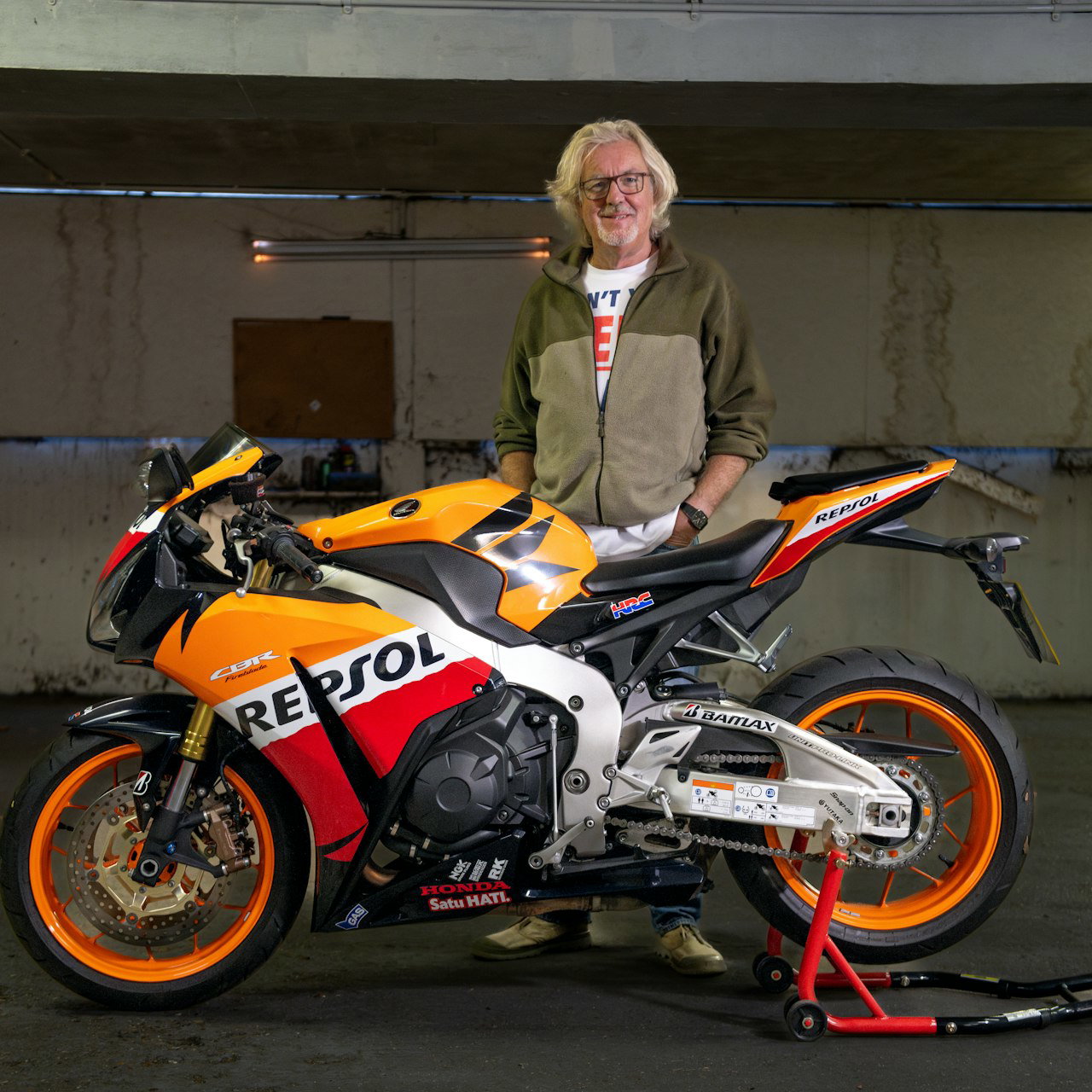
2027 Honda CBR1000RR-R Fireblade gets all-new chassis and aero package
Honda's 2027 CBR1000RR-R Fireblade gets an all-new aluminium frame, revised suspension, lighter engine components and MotoGP-inspired aerodynamics.

Honda is taking a different approach to developing its flagship Fireblade for 2027, with the new CBR1000RR-R shaped around the requirements of its WorldSBK race programme before the production road bike was finalised.
The result is a substantial overhaul of the iconic superbike, with a new aluminium frame, revised suspension layout, lighter components and an aerodynamic package developed alongside Honda Racing Corporation (HRC). It’s with this update that Honda will be hoping to close the gap to the marauding Ducati Panigales that have dominated superbike racing for the last few seasons.
Since its introduction in 1992, the Fireblade has evolved from a road-focused sports bike into a machine with an almost unmatched racing pedigree, with wins on both short circuits and at events such as the Isle of Man TT.
The current generation arrived in 2020, drawing heavily on the technology of Honda's RC213V-S road bike and RC213V MotoGP racer. It received further development for 2022 and a more substantial round of engine and gearbox revisions for 2024.

For 2027, Honda says it has reversed its traditional development process. Rather than creating a road bike and subsequently adapting it for racing, its R&D engineers worked with the HRC WorldSBK team to establish the requirements of the competition machine first. The production Fireblade was then developed around those needs, with improvements targeted at corner entry, mid-corner control and acceleration on corner exit.
New chassis and suspension
At the centre of the changes is an all-new aluminium frame, constructed using Honda's Gravity Die Casting process and designed with a revised rigidity balance. Lateral stiffness has been reduced by 20 per cent, to improve cornering performance, grip feel and stability on both road and track.
The frame works with a redesigned aluminium swingarm, which is 200g lighter than before and has a revised rigidity balance to complement the new chassis. The swingarm's lower rigidity is intended to improve rear-tyre feedback, while a move from a 525 to a 520 drive chain saves a further 270g.
Honda has also altered the steering geometry and weight distribution, shifting more load towards the front wheel. The wheelbase remains 1,455mm, while rake and trail are now 24 degrees and 101mm respectively. The crankshaft centreline has been raised by 5.2mm, and seat height increases from 831.5mm to 843mm, giving the rider more room to move around the bike during direction changes.

Suspension is provided by fully adjustable 43mm Showa Big Piston Forks at the front and a Showa Balance Free Rear Cushion Light shock at the rear. The latter now mounts directly to the lower section of the engine, rather than the frame, as part of Honda's revised approach to chassis rigidity.
New lightweight seven-spoke wheels reduce unsprung mass, while braking is handled by Nissin radial-mount four-piston front calipers and lighter 330mm discs. A six-axis IMU manages the electronic systems, including the three-level Honda Electronic Steering Damper.
Revised engine and aerodynamics
The Fireblade retains its short-stroke 1,000cc inline four-cylinder architecture, producing 160kW (214.6bhp) at 14,000rpm and 114Nm (84.1lb-ft) at 10,500rpm. Peak output remains unchanged, with Honda concentrating instead on improving mid-range performance and reducing the weight of the engine.
A new two-stage Variable Air Funnel system is the most significant engine development. Below 11,750rpm, the longer intake funnels are used to improve intake efficiency and strengthen mid-range performance. Above that point, they switch to a shorter configuration to maintain airflow at higher engine speeds.

The two-motor Throttle By Wire system has also been revised, with separate control of the throttle valves allowing finer management of acceleration and engine braking. Other changes include revised cam timing, a new cam sprocket design offering a wider range of valve timing adjustment, updated valve springs and a higher compression ratio, rising from 13.6:1 to 13.8:1.
Weight has been trimmed, too, thanks to the use of magnesium engine covers, lighter crankcases and 35 aluminium fasteners replacing heavier steel items. The first gear ratio is now five per cent taller, while revised spacing between the gearbox mainshaft and countershaft gives Honda greater flexibility when selecting transmission ratios for different racing applications. As before, a compact and lightweight titanium Akrapovič exhaust is fitted as standard.
The bodywork has also been completely redesigned with input from HRC and Honda's MotoGP aerodynamic development. The new fairing is claimed to generate the same downforce as the previous design, which used external winglets, but with improved aerodynamic efficiency and reduced drag.
Rather than relying on conventional wing elements, the new package uses a layered mid-section and lower aerodynamic sidepods to manage airflow around the motorcycle. Honda says the changes are intended to improve stability and cornering performance, particularly during high-speed direction changes, while also improving wind protection for the rider.
Other changes include a new LED headlight with integrated daytime running lights, a lighter rear light and a 16.6-litre titanium fuel tank. Removing the previous tank's external plastic cover saves a further 1.4kg.

Electronics and equipment
The Fireblade's electronics package is built around its six-axis IMU and revised two-motor throttle system. There are three default riding modes, with the rider able to adjust power delivery, engine braking, wheelie control and Honda Selectable Torque Control (HSTC).
Power has five adjustment levels, engine braking has three, while wheelie control offers three levels of intervention plus an off setting. HSTC provides nine levels of adjustment, with the system recalibrated to suit the engine's power delivery and revised chassis.
Start Mode (aka launch control) is also standard, offering four selectable engine-speed limits of 6,000, 7,000, 8,000 and 9,000rpm. The system allows the rider to hold the throttle open while concentrating on clutch release to try and get a clean getaway.
A five-inch colour TFT display provides access to the various settings, operated through a four-way switch on the left handlebar. Honda's Smart Key system is also retained, while Emergency Stop Signal technology activates the rear indicators under hard braking.

The 2027 CBR1000RR-R Fireblade will be available in Pearl Deep Mud Gray.
Find the latest motorcycle news on Visordown

Simon (AKA Toad) has been working within the motorcycle industry for more than twelve years, and a member of the motorcyclist family since birth. Growing up around British-built single and twins, it was inevitable that a life on two wheels was on the cards, from a very early age!