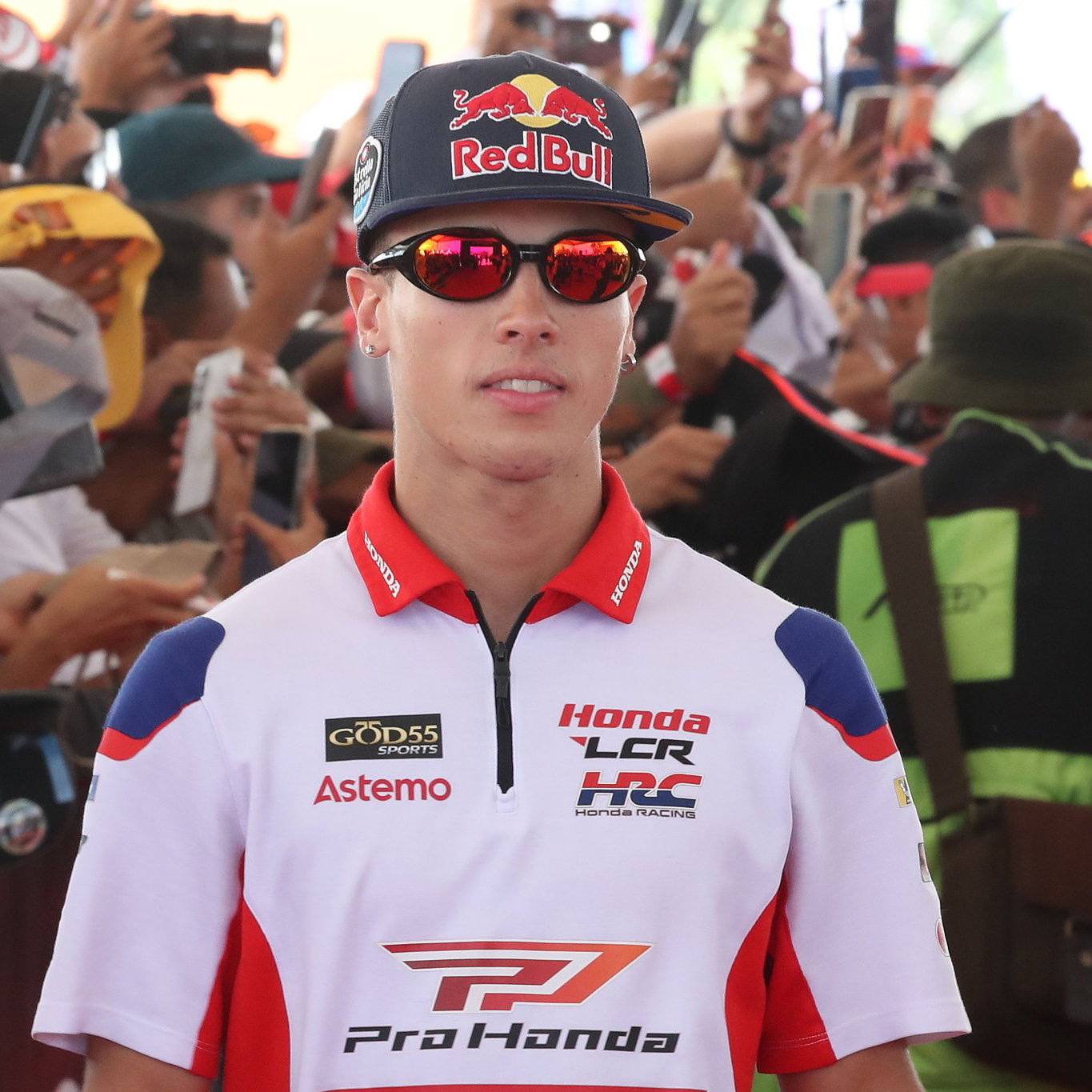
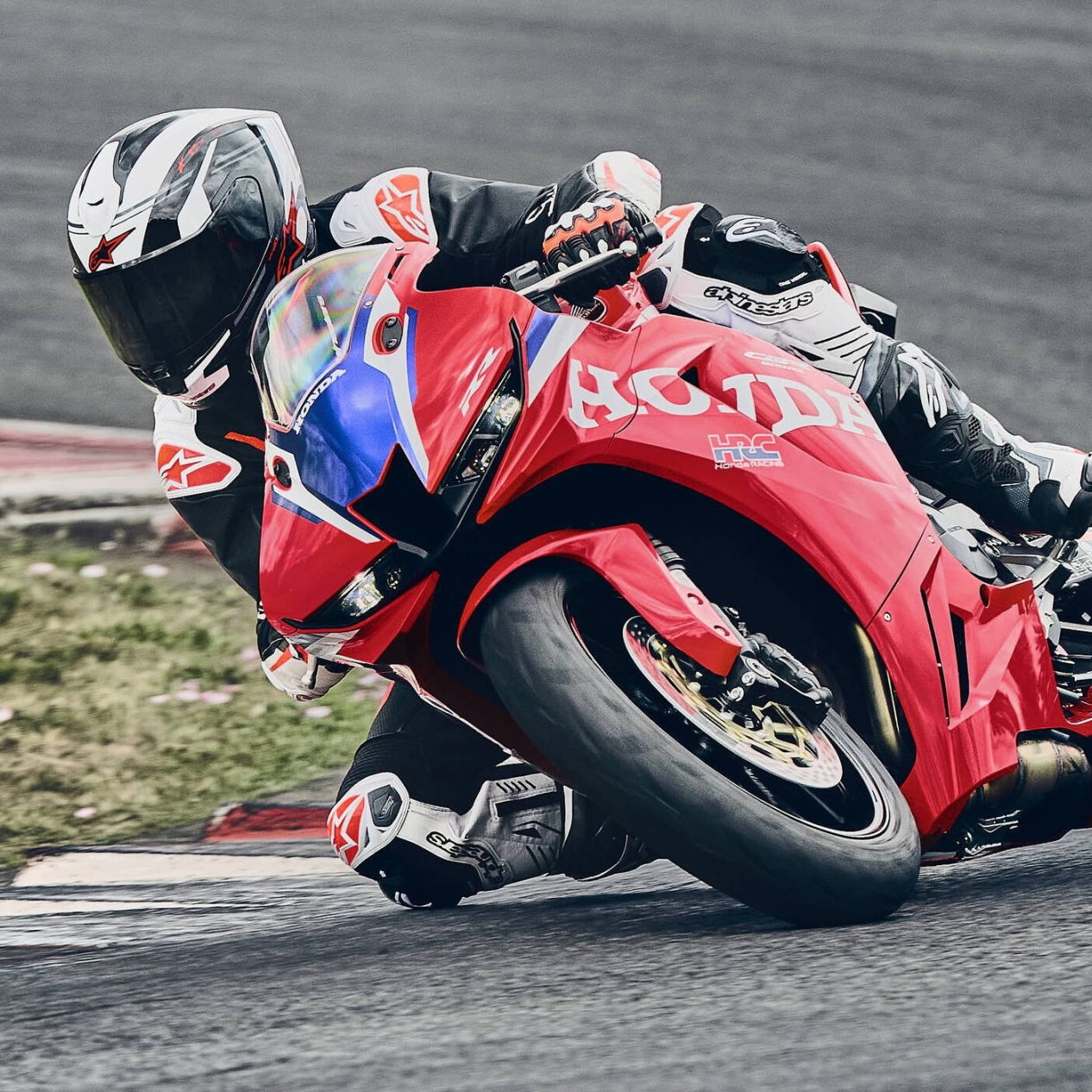
We experience the new Honda-approved RAPID Training course
Honda partners with RAPID Training to offer bespoke on-road training course.

“What are you thinking when you’re riding?” asks racer and riding coach Laurence Norrington-Parois.
“Well…” I say, holding the word – allowing the sound of it to decrescendo into a long, confused sigh.
Choosing to interpret her question philosophically, the space and time of my mind has expanded infinitely. I am lost, and wandering down a thousand paths in search of a clever response. What do I think about? I reflect on an observation from Haruki Murakami’s book What I Talk About When I Talk About Running:
“I'm often asked what I think about as I run,” says Murakami. “I always ponder the question. What exactly do I think about when I'm running? I don't have a clue.”

The look on Laurence’s face suggests I’m putting too much effort into this. Her eyebrows are raised in that gentle way we use with children. This is an easy, almost rhetorical question. Like when I ask my 2-and-a-half-year-old daughter: “And where do our shoes go?”
She’s not seeking a treatise on mindfulness and connection. She is, as I say, a riding coach. Putting up with me right now may have her questioning her life choices, but she is part of the team at RAPID Training – a rider training company that’s been in business for almost 30 years and operates in 21 different locations across the UK.
The impossible goal
Honda has recently partnered with RAPID Training and I’ve come to Blyton Park to learn more and experience the training for myself.
“Where is your focus?” Laurence says, rephrasing the question. “Where should it be?”
On the road, of course, and the space ahead of me: where I’m going, where I want to go, how I’m going to get there, and where I’ll be going after that. Whereas motorcycling may more generally be a mindful experience, encouraging us to exist in the present, good motorcycling comes from also paying constant attention to the immediate future. Not just responding but anticipating.
I know this. But it’s good to be reminded.

I have ridden hundreds of motorcycles over the years, clocking up hundreds of thousands of miles – on road and off – across dozens of countries, in all four seasons. On paper, I am a very experienced rider. But perhaps the accumulated benefit of all my experience is an understanding and acceptance of the fact that I don’t know everything. As Touchstone says in Shakespeare’s As You Like It: “The fool doth think he is wise, but the wise man knows himself to be a fool.”
And the particular fool that is me was delighted to be invited to take part in training from RAPID’s rider coaching team, which includes TT and endurance racers, Police Class 1-qualified riders, and British Superbike Championship riders.
Honda has partnered with RAPID as part of a broader, company-wide initiative to improve rider safety. Big Red says it has set a corporate target of reducing the number of traffic collision fatalities involving Honda vehicles to zero by 2050.
Zero deaths – none at all – within the next 24 years. Honda produces upward of 20 million motorcycles a year. Unless it plans to cease production entirely in 2049, the odds of it achieving this goal are astronomically low. I asked the Gemini AI to calculate Honda’s likelihood of success and it says the chances are “mathematically indistinguishable from 0%.”
But God loves a trier. And Honda’s pursuit of its unachievable goal will still benefit those of us who ride.

Honda acknowledges that there’s only so much it can do from a product standpoint. Some 94 percent of accidents, it says, can be blamed on human error.
“Many accidents could be avoided,” Honda says.
As such, it argues that it is “not only responsible for developing safe bikes equipped with advanced safety technologies, but also investing in rider training [that focuses] on skills development and risk prevention.”
To that end, Honda has set up some 51 safety training centres around the world, 16 of which are located in India. Only three are located in Europe, however: in Spain, Germany, and Turkey. In countries like the UK, Honda is working with individual organisations – like RAPID Training or the Dave Thorpe Off-Road Centre – to deliver an approved curriculum in a setting that meets Honda standards in terms of coaching experience, facilities, quality, processes, and so on.
An important first step
Honda has coordinated with RAPID Training to develop a one-day road course that is bespoke to the rider (ie, no rigid IAM or RoSPA doctrine). The course will set you back £545, but you can pick up a £250 voucher when you buy a new Honda, bringing the cost down to £295.

Honda and RAPID pitch this as “an important first step into great riding.”
“At Honda UK Motorcycles, safety for everyone is at the heart of everything we do,” explains Andy Mineyko, Head of Honda Motorcycles UK. “Our partnership with RAPID Training reflects our shared commitment to equipping motorcyclists with the skills and confidence they need to enjoy the road safely. By combining Honda’s engineering excellence with Rapid’s expert tuition, we’re proud to support the next generation of riders in becoming safer, smarter, and more skilled motorcyclists.”
The idea/hope is that the course will inspire riders to want to continue to improve their skills. To give me a sense of what that next step might look like, my day starts on the track, with Laurence helping me break down aspects of my riding: throttle, braking, and positioning.
Turns out I have a bad habit of braking late. I had not realised this, but as soon as Laurence says it, it makes sense. In my mind, my memory offers a highlight reel of goofed corners over the last year or so: late braking, late braking, late braking.
This is something I have observed in many of my experiences with rider training over the years: often it’s the case that instructors aren’t telling you stuff you’ve never heard before – they’re telling you things that you’ve failed to pay attention to. This is where the real “Aha!” moments come.

Chicken wings will save your life
There are, too, the moments of reassurance: when you discover that some of your insecurities are unfounded. For example, I have a tendency to obsess over my body position in corners. It’s a curse of moto-journalism that you end up with lots of photos of yourself, and I can’t help but notice that I don’t look as cool in pictures as, say, editor Toad Hancocks, or, well, quite a lot of other riders.
“For track, maybe there are things you could do,” Laurence says. “But not everything we learn on track translates to the road. That’s the same the other way, too. You’ve told me that you’re primarily a road rider and for that, most of what you’re doing is fine.
“Although, you are tight in the shoulders,” she shares. “This sounds silly, but you should be able to do flapping chicken wings with your elbows before turning. You should aim to be that relaxed.”
Later in the day, former police officer Les Smith makes a similar observation.
“The more relaxed and comfortable you are, the more you’re going to be able to take in,” he says.

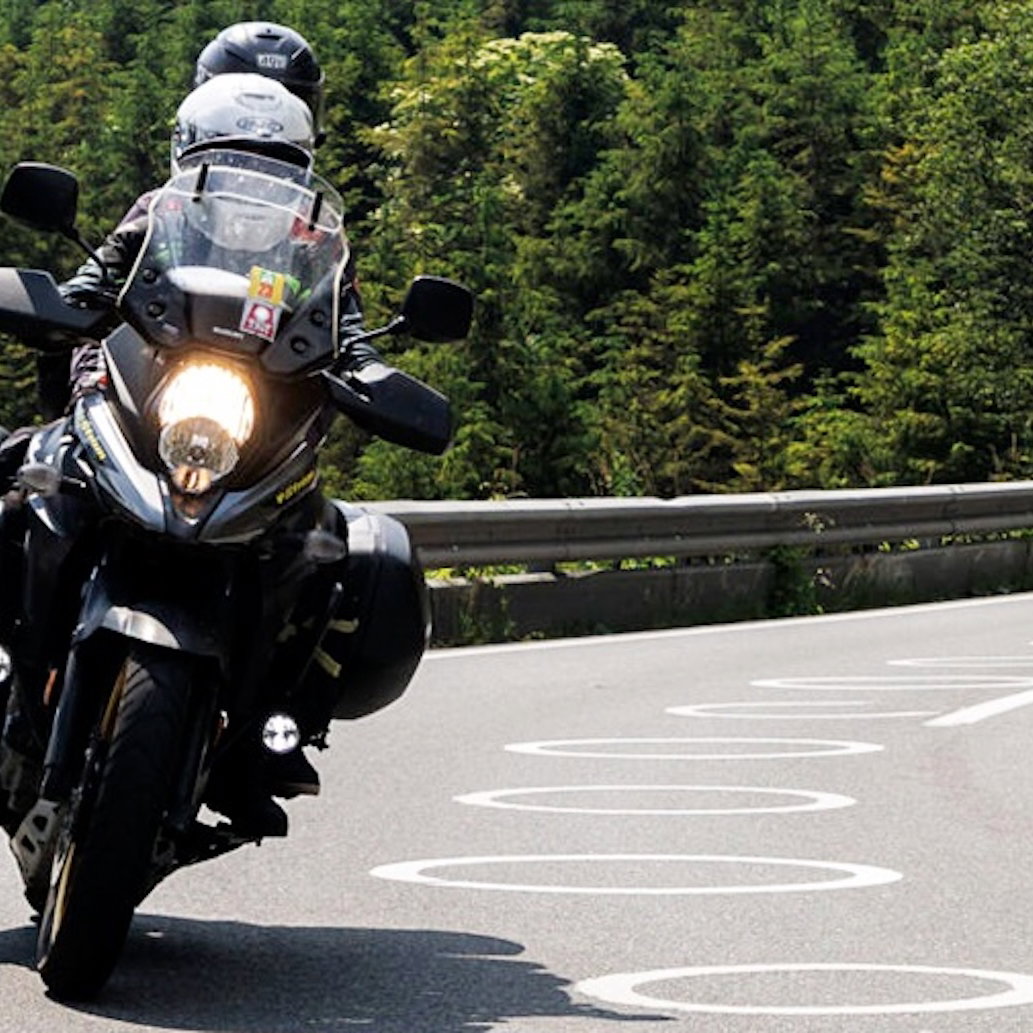
Les is guiding me through the sort of thing one might expect from the one-day road-focused course. Dan Trent of AutoTrader and Mid-life Crisis Motorcyclist has joined for this part of the training. Dan is yet another person who looks cooler than me on a bike. But I’m able to find consolation in learning that, in general, my road riding is sound.
Most of the time.
Once is not enough
Another theme for the day is that I may know the “right” things to do – the “right” part of the road to place myself when approaching a corner, or the “right” moment to roll off the throttle, etc. – but after a certain space of time I fall into older habits: failing to look/think beyond what’s immediately in front of me, late braking, not using the whole of my lane, tensing up – responding rather than anticipating.
Trying to get things “right” all the time is hard, and a little overwhelming.
“It’s a lot to take in,” explains Les. “The hope is that you can absorb all of this enough that you can go home and unpack it at your own pace.”

Good riding is not something that happens instantly. You have to work on it. And once you’ve developed good skills you need to apply them every single time you ride. Someone attending a training course should not expect it to be a ‘one and done’ exercise.
The good news is that all of this is actually fun. It’s informative and helpful and will lead to better riding. And it will likely reduce – somewhat – the probability of your getting yourself killed or seriously injured on a motorcycle. But it’s also actually fun. Developing skills on a track – especially in a non-competitive setting – is fun. Zipping down country lanes with a former police officer encouraging you to take a spirited pace is fun.
And being able to apply all the things you learn (or remember) in your everyday riding makes that more fun, too.
You can learn more about the Honda Bespoke Rider Coaching course by visiting the RAPID Training website.

Read about more ways to improve your riding on Visordown.

Chris Cope is a fourth-generation journalist, originally from Texas. He has lived in the UK for roughly two decades and has been writing about motorcycles for most of that time. He has written for dozens of publications and websites in the UK, US, Canada, and Australia.