Thirty years of Bosch ABS: From the GPZ to the IMU
Thirty years ago, ABS on a bike was seen as unnecessary at best and dangerous at worst. Today, it’s a foundation of motorcycle safety, and Bosch is largely responsible for that shift.

Thirty years ago, fitting ABS to a motorcycle sounded like a solution that was looking for a problem. Bikes were simple, riders were skilled (apparently), and the idea that electronics might step in between brake lever and tyre was viewed with suspicion.
Fast forward to today, and ABS is so normal that you only really notice it when it’s being overzealous. Bosch, more than anyone else, is the reason for that.
Bosch claims that the first motorcycle to gain ABS was the Kawasaki GPZ1100 back in 1995, although some point to it being a BMW K100 in 1988. At the time, it marked a quiet turning point in motorcycle design and technology. Bosch had already proven ABS could work in cars and also aviation, but bikes, which pitch more than both and lean into corners, are a very different kettle of nuts and bolts.

Less grip, less stability, more variables, and far less tolerance for error. Getting ABS to work properly on two wheels took nearly a decade of development before Bosch was confident enough to put its name on a production system.
From there, progress was steady rather than flashy, with lighter units, faster processing speeds, and better integration being the main milestones. The real step change came in 2013 with Motorcycle Stability Control (MSC), which added an inertial measurement unit (or IMU as we know it) to the mix. That meant the bike finally knew not just how fast the wheels were turning, but what the whole machine was doing on the road, be that leaning, pitching, and rolling into turns. Braking in corners stopped being a gamble on available grip and became something electronics could manage intelligently.

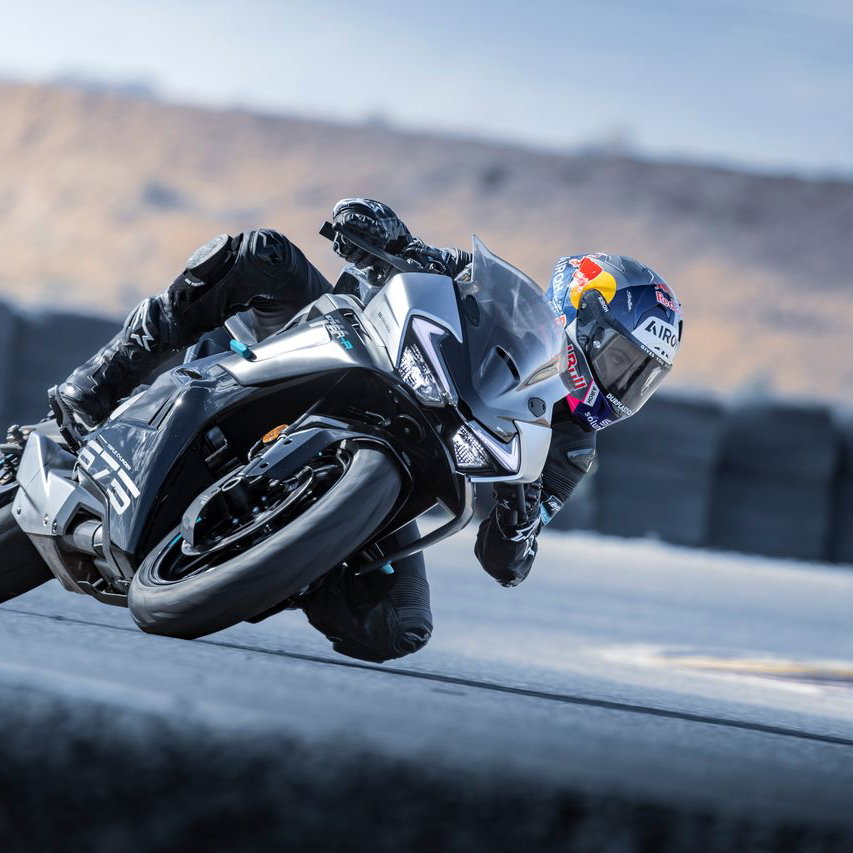
MSC matters because most serious accidents don’t happen in straight lines; they happen mid-corner, on poor surfaces, or when riders ask too much of the front tyre at exactly the wrong moment. By reading vehicle dynamics up to 100 times a second, MSC can modulate braking and traction even when the bike is leaned over. It also unlocked secondary systems like rear-wheel lift control, hill hold, and controlled rear-wheel slide – the latter of which was new as it focused on improving performance over and above just rider safety.
Bosch’s own accident research suggests that ABS combined with MSC could prevent or reduce the severity of more than 30 per cent of injury-related motorcycle accidents. You can debate the numbers, but the direction of travel is clear. Advanced ABS isn’t about replacing rider skill; it’s about giving riders a bigger margin when reality doesn’t match intention.

That thinking has fed directly into regulation, as ABS has been mandatory on new bikes over 125cc in the EU since 2016, followed by India in 2018. Singapore is taking it further still, requiring ABS on all new motorcycles from 2027, regardless of capacity. That shift matters because Bosch has spent the last decade shrinking and simplifying its systems so they can work just as effectively on small-capacity commuter bikes as they do on 1,000cc sports bikes and big-bore ADVs.
At EICMA 2025, Bosch marked its ABS anniversary while also making it clear that safety is only one part of the modern picture. Electrification is on the horizon - even if the goalposts keep getting moved - and it’s clear that connected vehicles (which can sense one another on the road) will be another big shift in the world of two and four-wheeled mobility. The challenge for the bike makers and Bosch is implementing them in the world of the powered two-wheelers, which has traditionally been sceptical of such technology.

On the electric side, Bosch is pushing modular drive systems aimed squarely at smaller, urban-focused machines. Integrated control units combine inverter, motor management and vehicle control into a single package, simplifying development for manufacturers and keeping costs in check. Features like electric traction control, smoother throttle response, cruise control and regenerative braking aren’t about novelty; they’re about making electric two-wheelers easier to live with and more efficient in daily use.
Connectivity follows a similar logic, with Bosch’s latest Connectivity Cluster integrating navigation, calls and music directly into the bike’s display, removing the need for aftermarket phone mounts and secondary screens. For bike makers, that brings costs and labour down, and for riders it means less faffing about with a phone and satnav and more riding.

Then there’s the less glamorous but increasingly important background work. From 2027, every battery sold in the EU will require a digital battery passport. Bosch’s solution tracks battery health, usage and lifecycle data via cloud-based monitoring, creating a digital twin of the real-world battery. For manufacturers, it simplifies compliance. For those few owners who take the electric route, it means better diagnostics, longer battery life and clearer residual values when it’s time to sell.
Thirty years on from that first GPZ1100 ABS, Bosch claims the job still isn’t done. Motorcycles are more complex, more varied and more global than ever. But the core aim hasn’t changed: give riders better tools, quietly, without getting in the way - ABS just happened to be the place where it all started.
Find the latest motorcycle news on Visordown.com
Tags:

Simon (AKA Toad) has been working within the motorcycle industry for more than twelve years, and a member of the motorcyclist family since birth. Growing up around British-built single and twins, it was inevitable that a life on two wheels was on the cards, from a very early age!