Norton Manx R and Norton Atlas technology: The engineering innovations behind the bikes
The new Norton Manx R and Atlas don't just introduce new motorcycles, they establish a new ethos where the engine, chassis and electronics work together, rather than inflate the spec sheet.

For years, new motorcycle launches have become a race to quote the biggest power figures and longest electronics lists. But looking at the engineering behind the all-new Norton Manx R and Atlas bikes, something different becomes apparent.
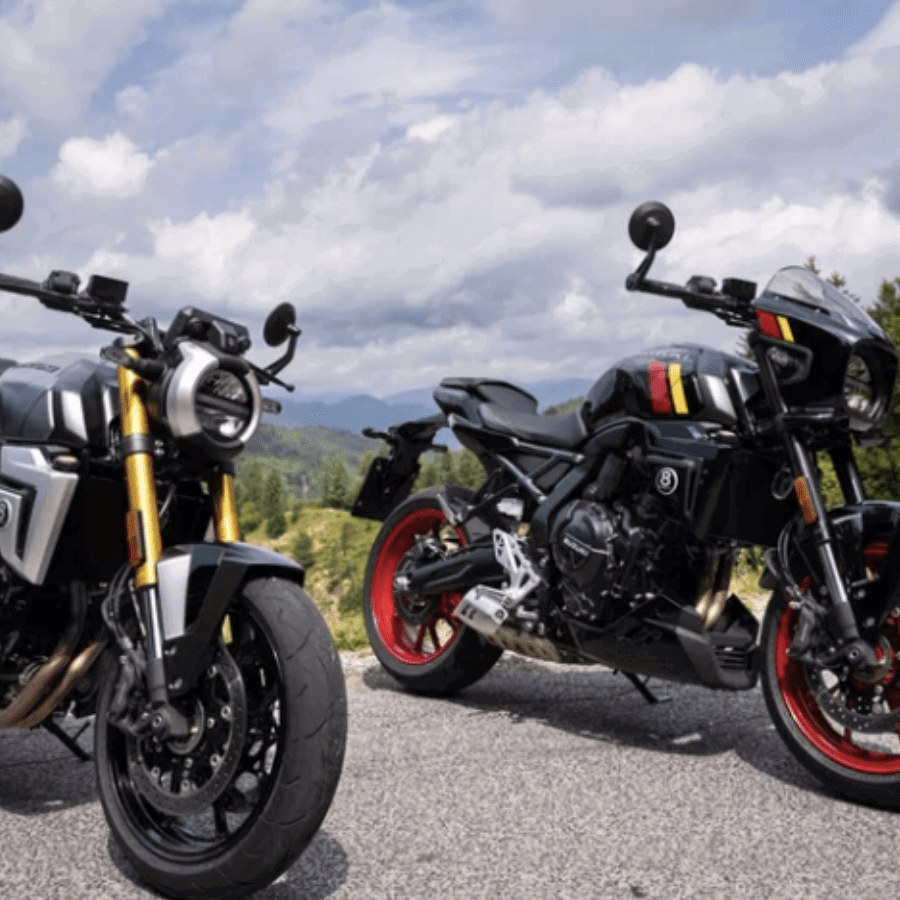
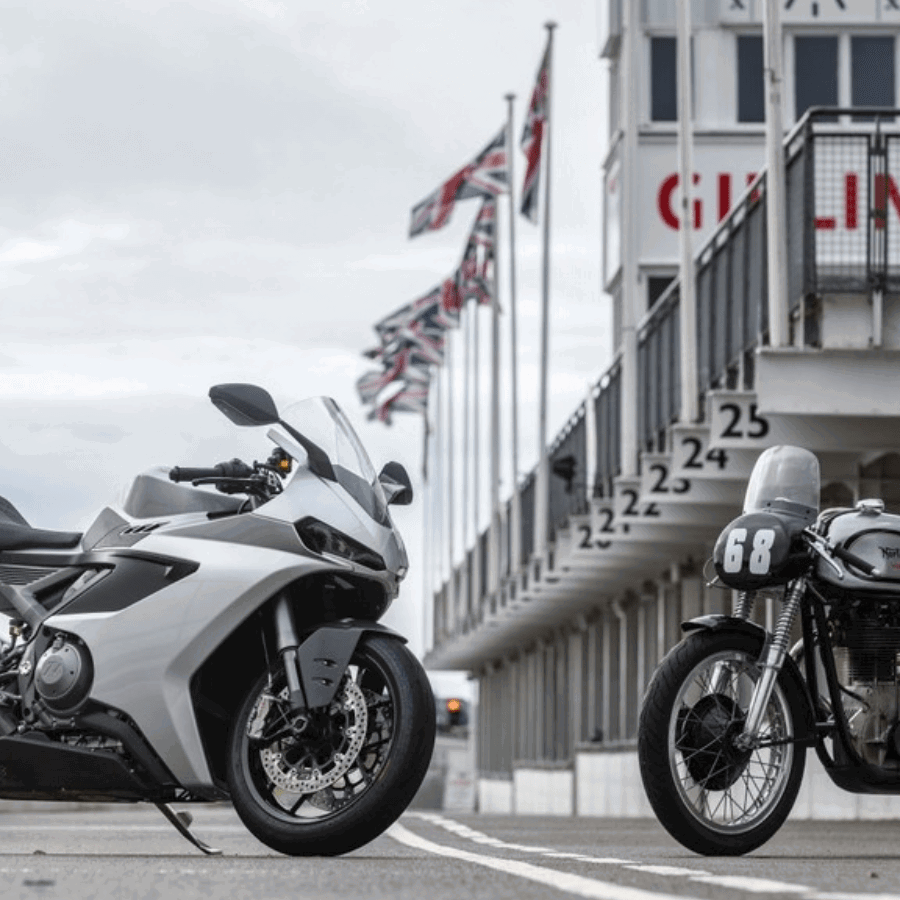
The numbers are certainly there, with the Manx R delivering 206bhp from an all-new 1200cc V4, while the Atlas introduces a completely new 585cc parallel twin platform aimed at the middleweight adventure class. But neither machine feels like it has been developed around headline figures alone. Instead, the team at Norton appears to have started with a simple question: how can technology make a motorcycle feel better to ride?
Suspension that thinks for itself

The biggest engineering headline arguably belongs to the Manx R, thanks to clever chassis technology that is apparently making its debut on a production bike. Semi-active suspension is increasingly common on premium motorcycles, but Norton has taken the idea a step further. Rather than relying solely on the bike’s IMU, the Manx R's Marzocchi suspension uses linear potentiometers built directly into the forks and rear shock.
These measure the exact position, speed and acceleration of the suspension in real time, with Norton claiming the system updates every three milliseconds. To put that into perspective, it takes a human an average of 100 to 400 milliseconds to blink, so we are talking about unfathomably small units of time. The result is a system that independently adjusts compression and rebound damping at the front and rear, constantly adapting the bike to the road surface, brake pressure, throttle position and lean angle. It's one of those pieces of technology riders may never consciously notice, but as with any system like this, that’s kind of the point.
The IMU is only the beginning

Both motorcycles make extensive use of Bosch electronics, but it seems like the emphasis isn't simply adding rider aids for the sake of it.
The Atlas, for instance, uses a six-axis IMU to control lean-sensitive ABS, cornering traction control, wheelie control, slide control and, crucially, cornering cruise control. That final feature is interesting, as rather than simply holding the bike at a set speed, the system recognises when the bike is leaned over and adjusts engine torque to maintain a smooth, consistent speed through sweeping bends. Norton claims that this should help to reduce fatigue on longer rides, thanks to less time toggling between cruise control settings and adjusting the speed.
The Manx R builds on that further with launch control, rear wheel slide control, an auto blipper and shifter, intelligent shift suggestions and fully adjustable traction control. Even hill hold control is included, a feature more commonly found on large-capacity touring and adventure bikes.
The common thread is that every system is intended to work quietly in the background, enhancing the ride rather than replacing rider skill.
A completely new V4

The Manx R may share its 72-degree architecture and 1,200cc capacity with the previous V4SV, but that’s where the similarities end, with Norton stating that the new engine doesn't share a single component. Its 206bhp output only tells part of the story, with Norton’s engineers focusing on delivering strong, usable torque where road riders actually spend their time – a move that is backed up by tens of thousands of miles of on-road testing. A unique Phased Pulse firing order improves mechanical traction before the electronics are required to intervene, and dual electronic throttle bodies and twin injectors per cylinder are employed to optimise the fuelling throughout the rev range.
The result is an engine that develops 77 per cent of its peak torque from just 5,000rpm, making flexibility every bit as important as outright performance.
Atlas – smaller engine, big engineering

The Atlas may produce a more modest 69bhp, but its engineering is equally impressive as its bigger sibling. The new 585cc parallel twin uses atmospheric plasma spray-coated cylinder bores, replacing conventional steel liners with an ultra-thin coating that reduces friction, improves cooling and saves weight.
Twin oil pumps, knock sensors and an advanced cooling system all contribute to durability, while an 8-inch touchscreen TFT display combines navigation, Bluetooth connectivity, ride modes and diagnostics into one touchscreen interface. The Manx R goes even further, adding GoPro integration, live tracking, remote immobilisation and another touchscreen dash. Add in the hill hold control, and many of the Manx R’s technical features are firsts in the sports bike segment.
More than a spec sheet

Taken individually, some of these technologies have become familiar sights on premium motorcycles. IMUs and TFT displays are de rigueur, after all, but the Manx R moves the conversation on again, introducing suspension with integrated linear potentiometers, giving a level of real-time chassis measurement usually reserved for MotoGP and World Superbike machinery.
What's really interesting, though, is how Norton has brought everything together. The Manx R doesn't simply chase lap times, and the Atlas isn't just here to tick adventure-bike specification boxes. Instead, both have been engineered to make the riding experience feel more intuitive, more connected and more confidence-inspiring.
In an era where it's easy to mistake bigger spec sheets for better motorcycles, the Manx R and Atlas suggest a different approach. I’ve always said that the cleverest technology isn't always the stuff you notice, it's the stuff you don't. If Norton has achieved that, it hasn't just built two impressive new motorcycles, it's built two motorcycles that put the rider first.
Find the latest motorcycle news on Visordown

Simon (AKA Toad) has been working within the motorcycle industry for more than twelve years, and a member of the motorcyclist family since birth. Growing up around British-built single and twins, it was inevitable that a life on two wheels was on the cards, from a very early age!