Moto2 engine secrets: How Externpro builds Triumph’s 765 engine for perfect parity
The Triumph 765 might be a road bike at heart, but for Moto2 it’s transformed into one of the most tightly regulated and reliable racing engines.

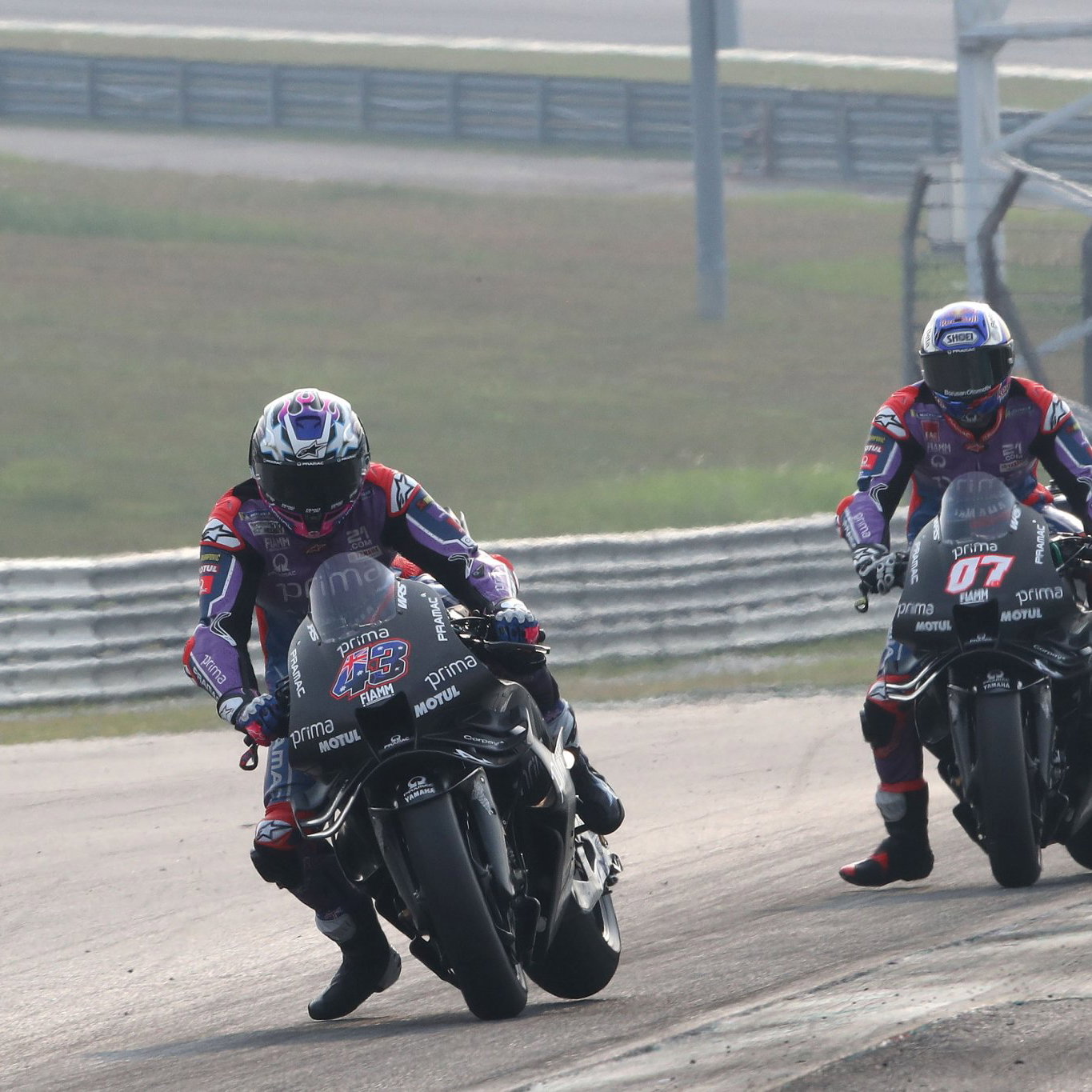
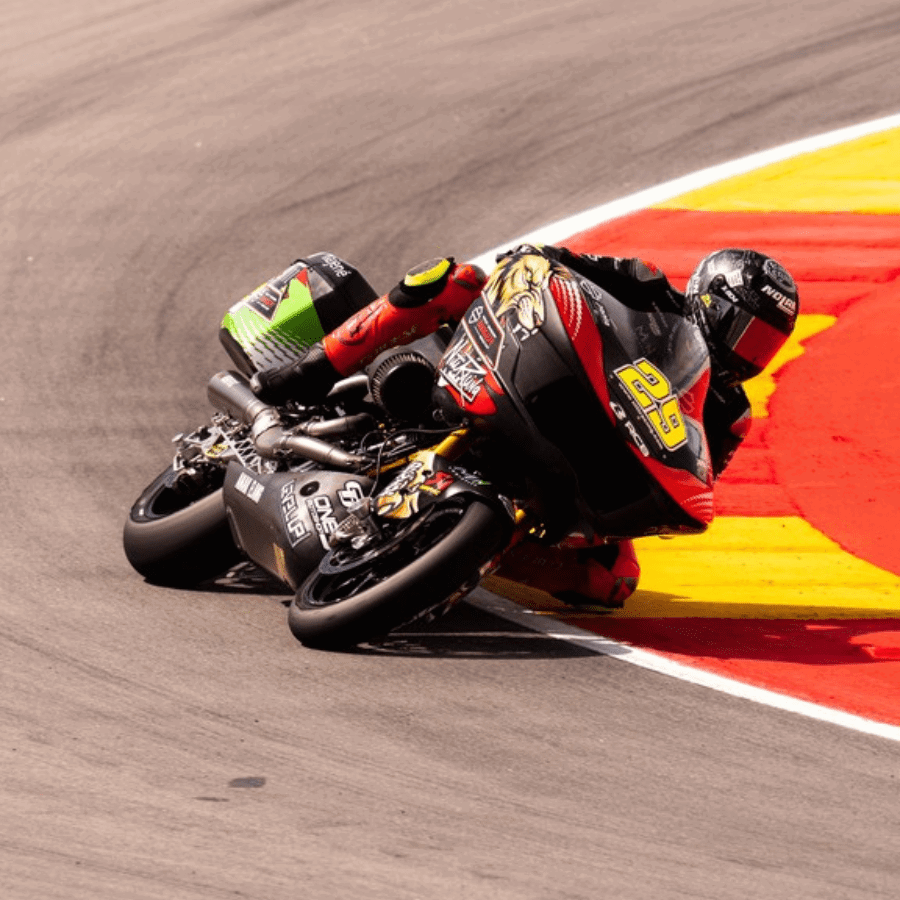
There’s a point, while I’m lapping Jerez on the Triumph Street Triple 765 Moto2 Edition, when I start to think less about the bike, the crowds, and the MotoGP paddock still buzzing behind pitlane, and more about the engine beneath me. And not just about how it performs, but what is signifies, because unlike any other track-focused road bikes, this one has an engine that is directly tied to the Moto2 grid.

While the story you’ll often hear is that Triumph supplies Moto2 with its engines, the reality, as the team at Externpro were quick to point out, is a lot more involved, and a lot more obsessive. To find out more, I sat down for a chat with Externpro’s Technical Director, Trevor Morris.
“We don’t get engines from Triumph,” Trevor tells me, almost immediately correcting the assumption that Triumph ships them complete engines. “We get a box of parts.” That distinction matters because Externpro is, first and foremost, an engine builder. It needs the raw materials to begin with to allow it to do its job.

And it isn’t just a service partner bolted onto the side of the Moto2 operation, either. It’s the centre of the supply that feeds the series. Triumph supplies the raw components and the DNA, but every single race engine is built, checked, rebuilt and tested under Externpro’s watch.
“We just get the parts to build the engines, from there, we do the whole process,” he explains. “The only thing that we don’t do is the manufacturing.” From here on in, the level of scrutiny involved in every engine borders on the forensic. Crankcases are measured, components are weighed, and tolerances are checked and checked again. And it’s not because they doubt the supply from Triumph, but because in a tightly controlled spec series like Moto2, microscopic consistency across every single component, and the entire grid, is everything.
“One of the things that we have to target is that horsepower outputs are all the same,” Trevor explained. “Within the limit… and the limit is only one per cent.” To put it in simple terms, the gap between the strongest and weakest engine on the grid is roughly one horsepower, across every round and, theoretically, every session of a 20 plus race season.

That’s not just impressive levels of equality, it’s fundamental to the reason that Moto2 exists. The series isn’t meant to be an engine arms race. Moto2 is about the riders, the chassis and the setup. The engine is the constant, it’s the thing teams and riders don’t have to second-guess at every race weekend.
Once the engines are built, the process only gets tighter. Each one follows the same build steps, using the same tools, and the same team. It then goes through a controlled dyno routine designed to remove any and all variables.

“[The engines] go two hours on the dyno, for a running-in procedure, then it has ten short power checks … afterwards, we let the oil cool down, and then we do the full power checks,” he says. The aim of all these tests isn’t just to measure the peak power and torque, but to look at how, and just as importantly, where that power and torque is being delivered.
“We have a dyno trace of the power and the torque that it has to follow,” Trevor adds. “So it’s not like one is losing two horsepower at the bottom, and the other one is gaining two horsepower at the top.” Every engine has to match not just the top-line power and torque figure, but the entire curve from the top to the bottom. That gives them all the same delivery, the same response, and most importantly for racing, the same feel.

As you’d expect at this level, Moto2 engines have a short life. Each unit is used for four race weekends which equates to around 1,000 miles. After that, it’s pulled apart and stripped.
“When we get it back, it gets completely stripped down. Every last nut and bolt,” he says. From there, it follows a structured cycle. A full rebuild with a defined parts kit, then a second, deeper rebuild after another four races, then another return to Externpro for a lighter refresh. The aim is simply to keep performance inside that same tight window for as long as possible.
Eventually, each engine reaches what Externpro call its “end of life”, but that isn’t actually the end, as each engine will live on. It just won’t be within the Grand Prix paddock.
“All those engines, at the end of their life in Moto2, we do another light refresh, and they are allocated for the FIM Junior and the Spanish championship,” Trevor explains. So they live on, but in a much more restrictive life. “They’re sealed, so they can’t do anything in the engine… and once they reach the mileage limit, around 1,800 miles, they can use it as an ashtray or a paperweight!”
It’s a throwaway line, but a defined conclusion. These engines have a fixed lifespan, and once it’s done, it’s done. You can scrap it, or turn it into a coffee table. But you can’t use it to spin laps in your trackday bike.
From counters to computers

The last time I met Externpro was at the UK launch of the first-generation Street Triple Moto2 Edition, where I was on hand to witness the teams picking their race engines at random. That process has moved on quite a bit since then, though.
“We were upgraded from an actual bag of counters,” Trevor laughs. “We used to put the engine number on that counter, and it goes in a bag and bingo, there’s your engine … We’ve actually got a computer program now, so they choose it electronically.”
While the method has changed, the principle hasn’t. The allocation is random, controlled and transparent. Given how tightly matched the engines are, that leaves little to argue about anyway.
The Triumph Triple effect

If you’ve followed Moto2 for a while, you’ll remember the Honda CBR600RR era. The inline four-cylinder engine powered the class from its switch away from 250cc two-strokes in 2010 through to 2018. Since the move to Triumph’s triple, race and lap records have tumbled, but a bigger shift in durability has also taken place.
“The secret of performance is compression … As long as you’ve got compression, you’ll get the performance,” Trevor says. With the previous Honda engines, holding onto that compression was an uphill task. “We were always having to reseat valves and re-cut them on the Honda. With the 765, we’re using titanium valves with beryllium seats, so obviously they’ll last a lot longer.”
The result is fewer performance dips across a race cycle, and according to Trevor, those dips were something the riders could feel with the previous Honda engine.

“With this engine, the teams don’t feel it getting to the fourth race and getting tired like they used to,” he says. For a championship built on consistency, that’s a huge deal, but the sub-plot to this is where the engine started life. The Honda CBR600RR engine that powered Moto2 previously was a unit that, first and foremost was honed, tested, and developed to perform on track. Sure, you can buy a CBR600RR to run around on the road with, but its bigger purpose was to take Honda to the top step of the podium in domestic and international supersport championships. That’s a very different start in life to that of the 765 and its predecessor, the 675.
“[The Triumph 765 engine] is built for a regular sporty naked runabout kind of bike,” Trevor says. “It’s not even an RR [Race Replica]… It’s a normal, everyday road bike engine. The average RPM of a normal rider is around 7,400rpm when riding on the road. The Triumph Moto2 engine revs to over 12,000rpm. So on track, in the hands of a pro racer in Moto2, we’re doubling its average RPM. Hats off to the engine, really. It is unbelievable.”
Closing the gap to MotoGP

Performance is one thing, but another transition that is happening is how Moto2 now feeds into MotoGP. The 765’s character, mated to its strong low and midrange torque, is actually closer to the feel and delivery of a modern MotoGP bike than the old high-revving Honda.
“The character of the engine is very similar,” Trevor says. “Like, [Marco] Bezzecchi said, when he moved up from Moto2 to MotoGP in 2022, he said it [his Moto2 bike] felt like a smaller Ducati MotoGP bike. That was our target. We needed to close the gap.”
That’s what Moto2 has become now, a proper stepping stone, not just in lap time, but in how the bikes behave and how riders use them. And maybe that’s the part most people miss. The 765 triple engine isn’t there to stand out. It’s there to disappear, so everything else can be judged properly.
By the time I roll back into the pits following my handful of laps on the Street Triple, it’s clear the engine isn’t just another component in Moto2, it’s the anchor point that holds the whole class together. What Externpro does is strip away the usual variables you’d expect in racing, leaving the riders, teams and the chassis to do the talking. And when you realise that the same basic engine architecture started life in a road-going Street Triple, it puts into perspective just how much work goes on behind the scenes to make everything feel so even, so predictable, and ultimately, so fair.
Find the latest motorcycle news on Visordown

Simon (AKA Toad) has been working within the motorcycle industry for more than twelve years, and a member of the motorcyclist family since birth. Growing up around British-built single and twins, it was inevitable that a life on two wheels was on the cards, from a very early age!