Suzuki GSX-R1000R (2026) review, spec, features
Suzuki’s reborn GSX-R1000R skips the power war in favour of mid-range drive, sharper electronics and proven endurance-ready durability.

* Throttle crisper than before
* Ten level traction control and IMU supoort
* Suspension took some fine-tuning
* non-adjustable steering damper
There’s been a certain expectation building around the return of the GSX-R1000R, with many looking forward to big power, headline numbers, and a bike to knock the current superbike elite off their perch. Suzuki hasn’t done that, but what it has done instead is arguably more interesting.
With 21 Endurance World Championship titles since 1983, 15 of those on GSX-R machinery, the GSX-R’s philosophy is baked in. It’s a bike that provides performance, durability, and rideability. A bike designed for not just one fast lap, but for long-distance consistency.

For this launch, Suzuki UK flew the world’s press to Monteblanco for a day simulating a day in the life of an EWC racer. The team on the ground were keen to press on us that this wasn’t a race, probably more for insurance purposes than anything else. We were split into six teams, with three riders in each team and would ride the event continuously, with fuel stops, tyre changes and brake pad swaps all taking place as they would at Le Mans, Spa, or the Bol D’or - just at a slightly slower pace.
Suzuki might have been billing this as a simulation, and most definitely not a race, but when the flag dropped, and the Le Mans start got underway, it was instantly clear that all the riders involved were taking this one very seriously indeed.
Suzuki GSX-R1000R UK price and colours

The new GSX-R1000R lands in the UK at £17,599, timed neatly to tie in with 40 years of the GSX-R name. And rather than chasing peak dyno glory, the brief instead has been to build something that works, lap after lap, stint after stint.
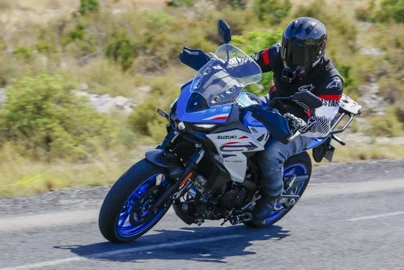
Colour options are Pearl Vigor Blue and Pearl Tech White (as ridden), Candy Daring Red and Pearl Tech White, and the eye-catching Pearl Ignite Yellow and Metallic Matt Stellar Blue. All the bikes are backed by Suzuki’s headline-grabbing up to ten-year warranty, and one year AA cover as standard on new bikes.
Engine and performance

On paper, the numbers don’t scream revolution. The 999cc inline-four makes 195 PS (193 bhp) at 13,200rpm and 110 Nm (81 lb ft) at 11,000rpm. In a world of 210-plus bhp superbikes, that might look conservative, but out on the track, it doesn’t really feel it.

The heavily revised engine keeps Suzuki’s MotoGP-derived variable valve timing system but brings in a long list of internal changes, including a new crankshaft, new crankcases, forged DLC-coated pistons, higher 13.8:1 compression, revised cams, larger valves and a new finger follower setup. Intake and fuelling have been reworked too, with bigger throttle bodies and a higher-pressure pump. What all of that translates to is drive and durability, should you want to go on and tune your bike further down the line. Suzuki is not here to chase a headline-grabbing power figure, but instead to give riders proper mid-range shove.

Crack the throttle mid-corner, and it just pulls hard, with an urgency that genuinely doesn’t feel far from the 210bhp bikes when you’re firing out of slower turns. Yes, you’ll lose a bit down the straight to something like a Panigale V4 or S1000RR, that’s unavoidable. But getting to that straight and getting out of the corner before it is where this bike claws it back. One immediate impression is how the throttle connection feels cleaner and crisper than before. It’s slightly sharper, but still predictable. We started riding in SDMS mode A, giving the sharpest response and most aggressive pick-up. The downside of that was that picking up the throttle out of slower corners could feel a little clumsy. To see if less was more, we dropped down into riding SDMS mode B, with the same peak power, just a slightly softer throttle, and the bike was much more manageable. Our lap times didn’t change, but it made riding the bike over multiple, long stints much less energy-sapping, which in an endurance race really is everything.

Gearbox performance was faultless all day, with the bi-directional quickshifter proving to be direct and accurate, especially in its sportier setting. The slipper clutch also did a solid job of keeping things calm while stomping down through the box into slower corners over Monteblanco’s numerous bumps and lumps. From 175 mph down to second gear at Monteblanco’s tight first turn, over washboard ripples, it maintained an impressive level of composure.

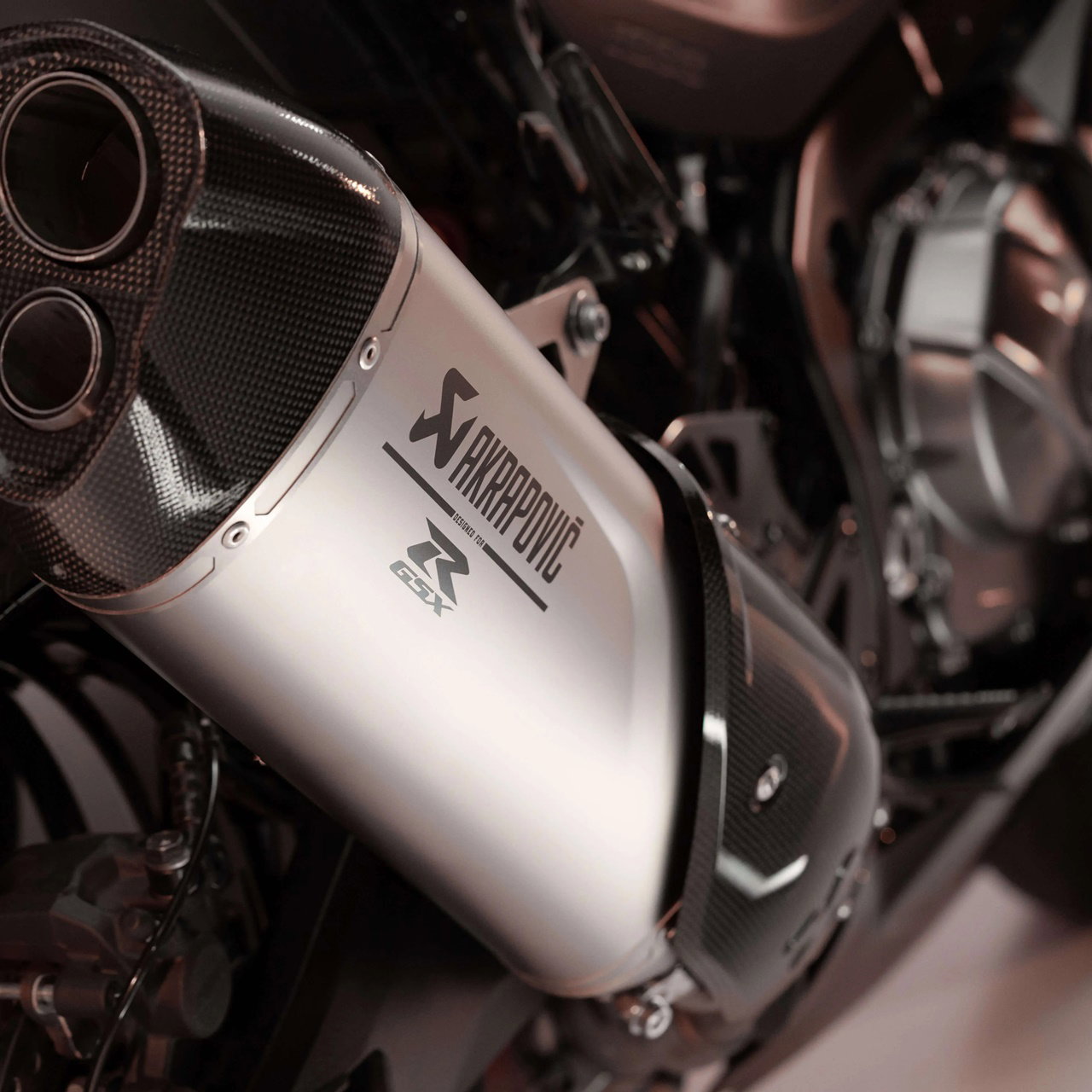
Then there’s the exhaust. Smaller, lighter, 34 per cent more compact, but crucially, it still sounds like a superbike should. Trackside, it’s got that proper hard-edged GSX-R bark, something that could easily have been lost with Euro5+ strangling things.
Chassis and handling

The chassis sticks with what works. Twin-spar aluminium frame, Showa Balance Free forks and Balance Free Rear Cushion (BFRC) rear shock. It’s a known quantity, but it works, and as we found, small changes can make a big difference.

The GSX-R1000R is still a physical bike to ride. It demands input, especially in faster corners, and as I said, Monteblanco isn’t exactly smooth. There’s a section where you crest a rise while still carrying lean, and even when the front goes light and a bit crossed up, it gathered itself up beautifully when it landed.

One issue we did hit on was in the early sessions, when the bike had a tendency to squat hard out of the final corner, which in turn made the front go light and start shaking its head. A small setup tweak, more rear preload in the shock and some fork adjustment sorted most of it. It reduced the squat, calmed the steering somewhat and made the bike easier to manage on corner exit.

That said, there’s still a slight question mark over high-speed stability. Out of the final corner, a few moments of front-end instability crept in once I'd already got out of the corner and onto the straight. It was nothing overly dramatic, but definitely noticeable, as the front end began to weave as I accelerated hard through third gear. The non-adjustable steering damper limited what we could do trackside, although with more time, we'd likely have been able to chase it out with further setup changes - a more trick steering damper that added some adjustability would also be helpful.
That one trait aside, it’s a bike that rewards effort and engages you when you push on. Get the set-up dialled in, and it’ll be predictable, planted and enjoyable to push.
Electronics

The electronics system is arguably where the new GSX-R has moved on compared to the previous bike. A six-axis IMU underpins a much more refined electronics package, boasting Traction control that now has 10 levels plus off - we were running around level three all day, it was almost invisible. You can see it working on the dash when the ‘TC’ light illuminates, but we didn’t really feel it interfering and upsetting the balance of the bike. That’s a big step forward from the previous GSX-R. The Roll Torque Control, Suzuki’s predictive system for managing torque mid-corner, is similarly subtle, and unless you’re really aggressive mid-corner, it just fades into the background.
The only slight drawback is the ABS. It’s lean-sensitive and slope-aware, but on a bumpy track like this, I could feel it stepping in more than I’d like, especially as the tyres aged.
Aero, styling and details

The aesthetic changes to the new bike are admittedly subtle, with the new dry carbon winglets, developed with Suzuki’s CN Challenge endurance team, paint job and exhaust being really the only clues. The winglets, small as they may be, are claimed to add stability and a touch of anti-wheelie effect without making the steering feel heavy. Could I feel that on track? No, not really, and to me it feels a bit like Suzuki has played a game of spec sheet, box-tick bingo. Everybody else was wings, so we should have wings.
The rest of the bike’s styling leans into heritage, with three retro-inspired colour schemes and a throwback ‘R’ logo on the bellypan. It’s a neat nod to a lineage that goes back to 1985, when the first GSX-R landed and effectively rewrote the rulebook of racing.
Suzuki GSX-R1000R verdict

If you’re expecting a GSX-R1000R that blows the old one into the weeds in every measurable way, this isn’t it. What it is, though, is a better GSX-R in a number of measurable ways. The engine is stronger where it matters, the electronics are significantly more refined, and the whole package feels like it’s been developed with real-world riding, and racing, in mind.

And then there’s the endurance element of this event. Six hours on track, multiple riders, 20 to 30 minute stints, and the only things touched were tyres, brake pads and fuel. There were no breaks in the ‘racing’, no engine warning lights, no surprises, and no inconsistent drop-offs in performance. The bike just performed as I expected, and just like it did in the previous stint, lap after lap, stint after stint, over and over again. And that is probably the biggest compliment I can give it.

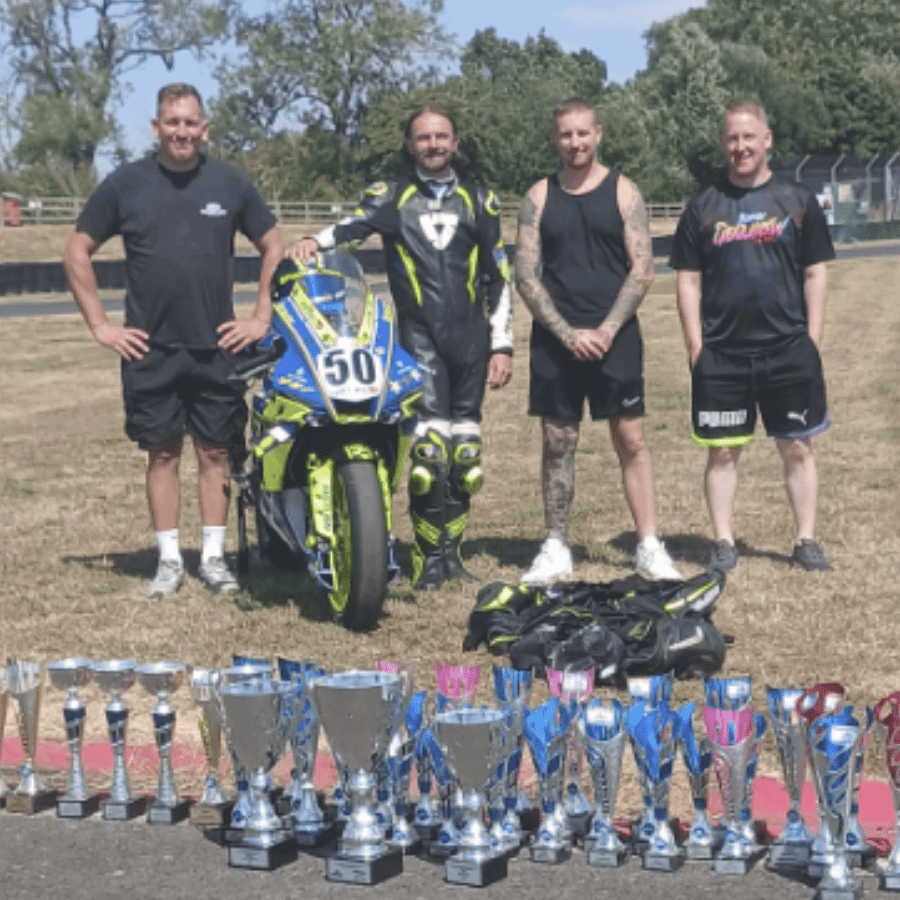
My team also 'won' the race that was not a race, clocking 724km in six hours. We might not have been the fastest team, but we were consistent, never ending a session earlier than we had to, and never fluffing a pit stop. For three riders who had never met prior to this launch, that's a pretty big achievement.

It might not win the pub bragging rights war, but for riders who actually ride, trackday regulars, racers, or anyone coming off an older GSX-R1000, this feels like the one that makes the most sense. It’s not the most powerful bike in the class, and might not be the flashiest.
But it is very, very hard to fault where it counts.
Suzuki GSX-R1000R (2026) spec
| Overall length | 2,075 mm (81.7 in.) | |
| Overall width | 705 mm (27.8 in.) | |
| Overall height | 1,145 mm (45.1 in.) | |
| Wheelbase | 1,420 mm (55.9 in.) | |
| Ground clearance | 130 mm (5.1 in.) | |
| Seat height | 825 mm (32.5 in.) | |
| Kerb weight | 203kg (448 lbs.) | |
| Engine type | Four-stroke, four-cylinder, liquid-cooled, DOHC | |
| Bore x Stroke | 76.0 mm x 55.1 mm (3.0 in. x 2.2 in.) | |
| Engine displacement | 1,000 cc (61.0 cu. in.) | |
| Compression ratio | 13.8:1 | |
| Maximum power | 143.5kW (195PS)/13,200rpm | |
| Maximum torque | 110.0Nm/11,000rpm | |
| Fuel system | Fuel injection | |
| Starter system | Electric | |
| Lubrication system | Wet sump | |
| Transmission | Six-speed constant mesh | |
| Suspension Front | Inverted telescopic, coil spring, oil damped | |
| Rear | Link type, coil spring, oil damped | |
| Rake / Trail | 23°20’ / 95mm (3.7in) | |
| Brakes Front | Disc, twin | |
| Rear | Disc | |
| Tyres Front | 120/70ZR17M/C (58W), tubeless | |
| Rear | 190/55ZR17M/C (75W), tubeless | |
| Ignition system | Electronic ignition (transistorised) | |
Find the latest motorcycle news on Visordown.com

Simon (AKA Toad) has been working within the motorcycle industry for more than twelve years, and a member of the motorcyclist family since birth. Growing up around British-built single and twins, it was inevitable that a life on two wheels was on the cards, from a very early age!