Born Slippy: White Motorcycle Concepts creates Mono RR, a 450cc supercharged streamliner
The WMC Mono RR combines aerodynamic efficiency with a supercharged 449cc Yamaha single, with targets of 100hp and a 100kg weight.

White Motorcycle Concepts (WMC) has taken on its most ambitious build to date, with WMC claiming that its new Mono RR boasts 16.4 per cent less drag and 77 per cent more downforce than a conventional bike.
The Mono RR is a technology demonstrator designed to show how motorcycle aerodynamics and powertrain design could work together to improve performance and efficiency, without changing the familiar riding position of a conventional sports bike.
At the heart of the project is WMC's patented aerodynamic duct, which channels air through the centre of the motorcycle rather than forcing it around the bodywork. By reducing the frontal area and allowing air to pass through the bike, the system is designed to reduce drag while also improving aerodynamic stability.
WMC has based the Mono RR on the Krämer EVO2 690R, a lightweight track bike that provides a useful benchmark for measuring the benefits of the company's ideas. The original chassis, suspension and brakes have been retained, with modifications made to accommodate the new engine and the all-important duct system.

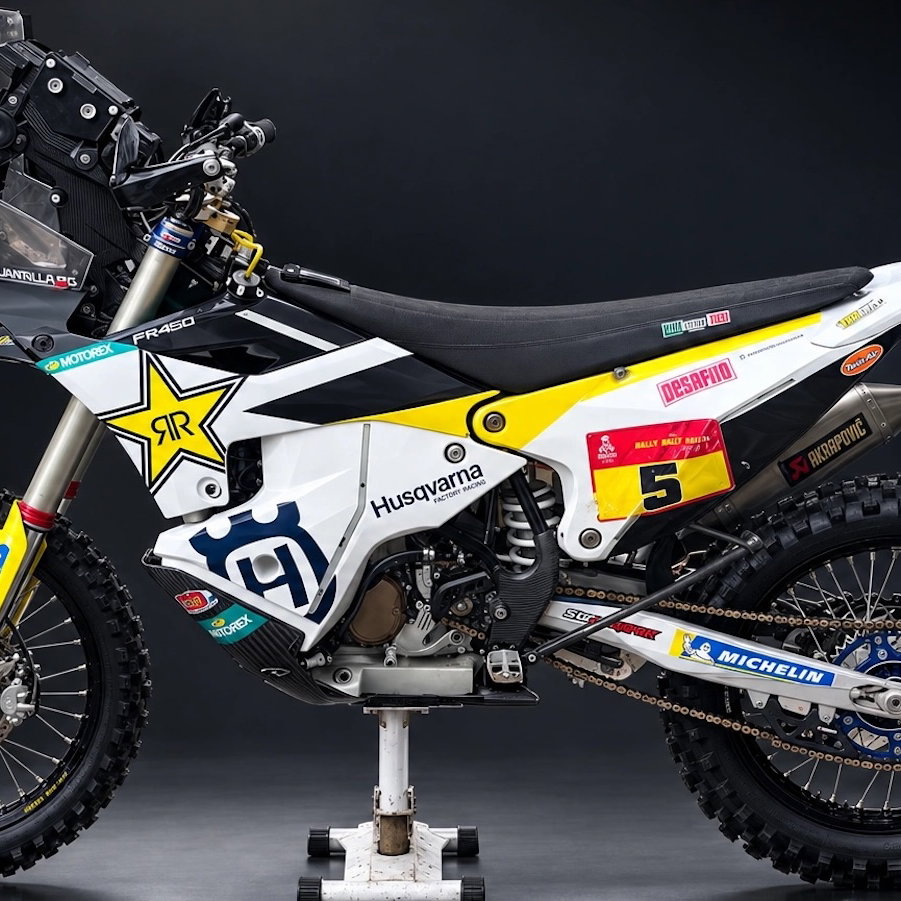
That engine is a 449cc single-cylinder unit derived from the Yamaha YZ450F motocross bike. It uses a reverse-cylinder-head layout, with the intake at the front and exhaust at the rear, helping WMC separate cooler intake air from hot exhaust gases while also creating space for the duct.
Rather than leaving the engine in standard trim, WMC has fitted a Rotrex C15-20 supercharger, driven from the crankshaft, along with an intercooler and revised fuel-injection hardware. The aim is to produce comparable performance to the larger 693cc KTM single used in the original Krämer.
WMC's initial target is around 75hp, broadly matching the 76hp output of the standard Krämer, with a longer-term goal of increasing power towards 100hp.
The company is also targeting a reduction in weight from the donor bike's 125kg down to 100kg. For now, though, that weight saving remains a development target rather than an accomplishment.
According to WMC's computational fluid dynamics (CFD) simulations, the Mono RR reduces aerodynamic drag by 16.4 per cent, cuts lift by 77 per cent and improves thermal management by 16 per cent compared with the conventional Kramer design.

The company also estimates that the aerodynamic changes could improve fuel efficiency by seven per cent.
The duct has required changes to the front mudguard, fork shrouds and fairing, while extensions around the sides of the bike are intended to smooth airflow around the rider's legs. WMC says those extensions reduce rider-related drag by 36 per cent compared with the standard Krämer.
Despite the extensive aerodynamic work, the Mono RR retains the donor bike's seat height, riding position, wheelbase and chassis geometry.
By doing that, WMC effectively ratifies that the technology could be applied to existing motorcycle platforms without requiring manufacturers to develop entirely new chassis.
The next stage is to validate the CFD results through physical track testing, allowing WMC to compare simulated aerodynamic gains with the bike’s performance in the real world.

WMC is an engineering and technology company rather than a motorcycle manufacturer, so the Mono RR is not intended to reach showrooms.
Instead, the project is designed to demonstrate technology that could eventually be licensed to established manufacturers, with the potential to improve efficiency and performance across future road and racing motorcycles.
That final point noted, we can’t help but wish we could have a go on it!
Find the latest motorcycle news on Visordown

Simon (AKA Toad) has been working within the motorcycle industry for more than twelve years, and a member of the motorcyclist family since birth. Growing up around British-built single and twins, it was inevitable that a life on two wheels was on the cards, from a very early age!