2026 Indian Chief Vintage - First ride review
There’s nothing really new about the new Indian Chief Vintage, but there is something special about it.

- Air-cooled V-twin goodness
- Enjoyable to ride
- Hand levers are not adjustable
- Stock exhaust is jarring
The 2026 Indian Chief Vintage could so easily be a gimmick if it wasn’t very good. Fortunately for Indian Motorcycle, it is.
As the brand celebrates its 125th anniversary and takes on the ninth official owner in its history, the new Chief Vintage serves as a statement piece: a declaration of where the brand is and where it’s going. It is also, as I say, a very good motorcycle to ride. Is it good enough to be worthy of its roughly £19k asking price? Let’s get into that.
Authentic heritage styling
“There is a life cycle of design,” Ola Stenegärd, Indian’s director of design, tells me. “Someone designs something and it becomes ‘modern’ for its era. Eventually, it falls out of fashion; it becomes unmodern. Time goes on and someone discovers it again and it becomes ‘retro’ or ‘retro-cool.’ But then there are other products, they just go from ‘modern’ to ‘classic.’
“This,” he continues, nodding to the Chief Vintage. “This is classic… it is very, very special.”

He’s not wrong. There’s something about the Indian Chiefs of the 1950s that makes your heart go funny. Indian Motorcycle’s recently departed parent company, Polaris, knew this when it relaunched the brand back in 2013. The Chief Vintage, along with the Chief Classic and Chieftain, was one of the stars of the initial three-model line-up.
That Chief Vintage was problematic. It was a comfortable bike to ride, with a good engine, but it was too big, too unwieldy. More damning was the fact its styling was off; it was tainted by then-modern perceptions of the past. It was dripping with chrome. It had studded leather seats, and leather fringe everywhere, with the option of adding even more leather fringe. I remain baffled by anyone who bought one.
In 2021, the Chief platform was overhauled - given a new, more manageable chassis - and the Chief Vintage was quietly shelved. Or, perhaps it’s better to say it was postponed.
“[The Chief Vintage] was always in the back of our minds,” says Ola.
And at some point, somebody somewhere made the clever decision to have this bike be the statement piece for Indian’s 125th anniversary. The timescale of motorcycle development is such that when the processes of designing the new Chief Vintage began, no one would have guessed that it would serve as the first model of the Carolwood era.

If you’re just showing up at the party, late last year, Indian’s parent company, Polaris, sold its controlling stake in the brand to a private equity company. That deal was concluded on 2 February of this year - Groundhog’s Day.
As mentioned, Carolwood LP is Indian Motorcycle’s ninth official owner. There was the original Indian Motocycle Company of 1901-1953 (note the spelling), followed by John Brockhouse (1953-1960), American Motorcycle Company (1960-1963), Floyd Clymer (1963-1970), Alan Newmann (1970-1977), the so-called Gilroy Indians made by IMCA (1998-2003), the King’s Mountain Indians made by Stellican Ltd. (2008-2011), Polaris (2011-2026), and now Carolwood. Nevermind the half a dozen or so other dreamers and schemers who have laid claim to the brand over the years.
The 2026 Chief Vintage is 100-percent a Polaris-developed and -made motorcycle (you can see it in small things like the fender mounting bolt system that’s been on Polaris motorcycles - Victory and Indian - since the late 1990s). Nonetheless, because it’s the first model of the Carolwood era, it’s a motorcycle that speaks more to Indian’s past, present, and future than perhaps initially intended.
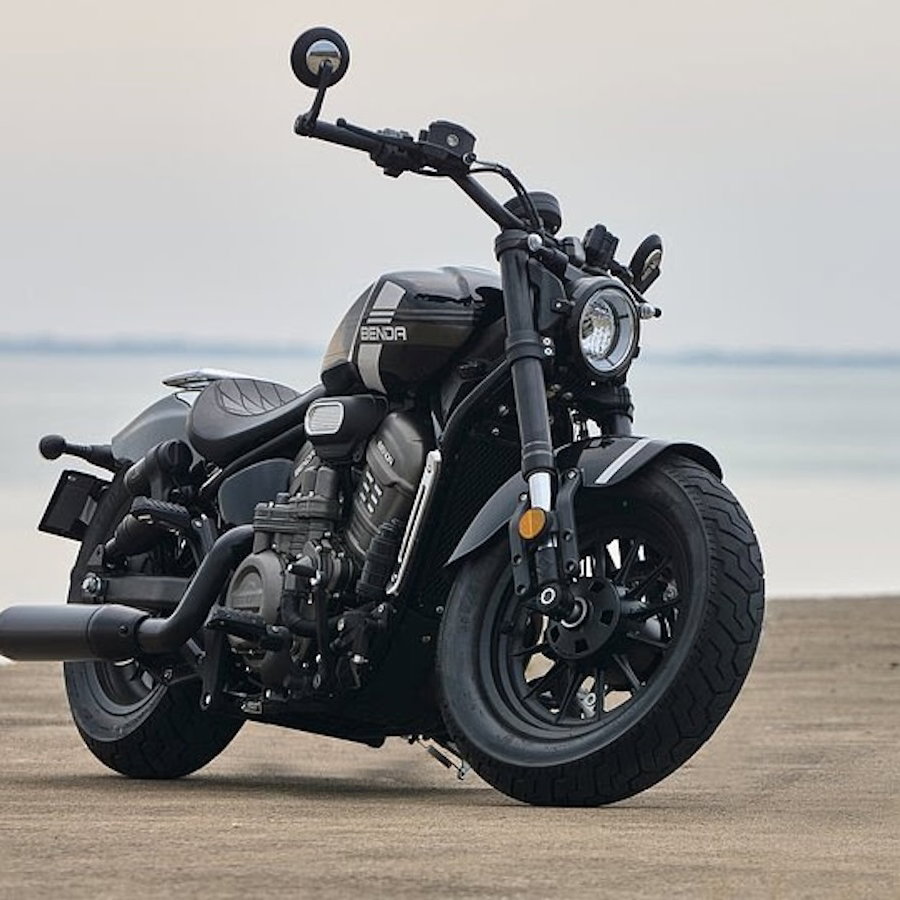
It is also, as Ola points out, an instant classic. Take away all of the biases you may have about cruisers or the likelihood of Indian’s survival under its new owners, and just look at this motorcycle. It’s gorgeous. It’s authentically, classically beautiful.
If you can’t agree on that one point, stop reading now and go seek psychiatric help; there is something deeply wrong with you, and you may be a danger to yourself or others.

Almost every line is right (I’m not a fan of the exhaust, but, hey, Indian’s not responsible for emissions regulations). We’ve spent the last decade lauding Triumph for its ability to offer authentic styling in the Bonneville, but here Indian manages to take things up a level.
It’s just so good. Even within the context of Indian Motorcycle, which has long made attention to detail one of its KSPs, this is an almost faultless motorcycle. It’s art, but it’s art that you want to ride. Art that you want to keep. And, perhaps, art that you want to pass down to your children or grandchildren.
Authentic burning thighs
One of the ways in which the Chief Vintage serves as a statement of future intent is in its use of an old engine: the Thunderstroke 116 V-twin. Capacity is greater than it once was, but effectively this is the same powerplant that Indian launched 13 years ago. The technology of the Thunderstroke - air-cooled, pushrod V-twin - is even older.
Not so long ago, I was speculating that the Thunderstroke engine was on the chopping block. Indian had dropped Thunderstroke-powered baggers and tourers from its European line-up and I was convinced that meant the powerplant would be gradually phased out.
Clearly, I was wrong. Indian is keeping its old-school beauty. And perhaps we’re all better for it.

In Not America numbers, the Thunderstroke 116 has a capacity of 1890 cc. Peak torque is 115.06 lb-ft at 3300 rpm. Indian pulls the old-school American trick of not giving horsepower figures, but if you use the equation of torque multiplied by rpm then divided by 5,252, you get a figure of 71.3 bhp. That’s about the same power you’ll get from a Suzuki V-Strom 650. And it’s roughly in line with dyno figures that Cycle World got when it tested the 2024 Indian Sport Chief, which has the same engine.
As one of my fellow moto-journalists observed, it’s almost a feat of engineering that Indian is able to get so little power from such a massive engine. But, of course, cruisers have never been about horsepower. They’re about torque. And here you get heaps of it, delivered with smooth and luscious ease.
Torque delivery on the Chief Vintage is less aggressive than you’ll find on, say, a Harley-Davidson cruiser. It’s not as abrupt. It’s like being wrapped in a big duvet of torque.
You’ll notice the relatively low horsepower when trying to perform short-distance high-speed overtakes, but in all other cases - genuinely - you’re never wanting for more go.
There are three riding modes to choose from: Tour, Standard, and Sport. Tour is Indian’s rain mode and, like all rain modes on all bikes, should be avoided. Sport sharpens the throttle response a bit, but on a bike of this style it doesn’t make sense. Standard offers the smooth power delivery that facilitates flowing, natural, cruiser riding.

There is something very special about an air-cooled engine - in spirit, performance, and feel. Exactly how special will depend on your mindset. There’s the lower horsepower figures, of course, but also the heat that radiates from the engine. Personally, I like it; it feels visceral, and human, and real.
Again, I doubt this was fully intentional on Indian’s part, but over and over I found myself thinking of how the Chief Vintage feels like a rejection of and antidote to our current AI-corrupted world.
Meanwhile, I don’t suppose the transmission for a heavyweight cruiser is ever going to be Triumph levels of slick, but the six-speed box on the 2026 Chief Vintage is markedly smoother than Indians of, say, 10 years ago. Clutch pull is lighter than that of a Harley.
Authentic handling
Here’s a thing I tend to do: in the last few metres before tipping into a fast corner I oh-so-lightly apply the front brake, just enough that I feel it, then release and flow through said corner.
I doubt that this tap of the lever scrubs any speed. It’s more an action of reassurance, like sub-consciously patting your pockets - phone, wallet, keys - while stepping out the door. A reminder that, yes, I have brakes.

I’ve had to teach myself to not do this on Harleys. The on-off nature of Harley-Davidson brake set-ups means that when I release the brake lever the whole show lurches - the weight of the bike asserting itself and unsettling the suspension.
Perhaps it’s not something I should do on any bike. Discuss. But old habits die hard. And here’s where I finally get to my point: although the Chief Vintage weighs 327 kg fully fuelled, it handles much like a more ‘normal’ bike. Or, at least, one that weighs less.
This is down to a braking set-up that allows more nuance, and a more neutral suspension. A lean angle of just 28 degrees before scraping floorboards means the Chief Vintage will never be sporty but its chassis and brakes facilitate fast, flowing movement through corners.
All this comes thanks to the Chief platform overhaul of 2021. Before then, the Chief models were effectively built around a touring chassis. They were great for long-haul straight-line stuff, but tiring on winding roads or in tight urban situations. The 1950s Chiefs that inspired the 2026 Chief Vintage were built on smaller frames, Ola Stenegärd points out, so this modern take is really just a return to form.
Being a custom builder, Ola will draw your attention to the frame of the Chief Vintage while making disapproving noises about the choices made by Indian’s most direct competitor. I’m not a custom builder, so I don’t really know what he’s on about, but there is something beautiful and enrapturing about the way the Indian’s frame wraps around the engine. It looks as if the steel has somehow been stretched to accommodate the Thunderstroke’s incredible girth.

You’ve got non-adjustable telescopic forks with 132 mm of travel up front and preload-adjustable dual shocks with 75 mm of travel at the rear. It strikes me as a somewhat basic suspension set-up for a £19k motorcycle, but it works.
Equally, there’s a part of me that would like to see a second brake disc up front, but I understand that a single 298mm disc makes more sense stylistically, and it - along with the 298mm rear disc - works perfectly well. Within context.
Not-so-authentic fancy bits
The Chief Vintage has a few tricks up its sleeve in terms of modernity - things you can’t see from a few feet away. There’s an expertly hidden USB port beneath the tank, for example. Ignition is keyless, lighting is fully LED, and cruise control comes standard.
The best bit of modern fanciness, however, comes in the presence of a 4-inch touchscreen display that runs a stripped-down version of Indian Motorcycle’s excellent Ride Command software.
Ride Command is the software that was developed for Indian’s colossal touring machines. In this application it offers a few less features (no stereo, for example) but, crucially, includes a built-in sat-nav. None of this connecting via a phone app nonsense; you get maps that work in places that have no phone signal (which is usually where you want to ride).

Although, if you want to ruin your ride, you can connect your phone to be able to receive texts and messages, etc.
The touchscreen is quite sensitive, meaning that it can easily be operated while wearing gloves. I wonder what effect raindrops would have, though.
Better-than-authentic riding experience
Apparently, a lot of people have expressed concern about the Chief Vintage’s tractor-style seat, fearing it will be uncomfortable. If you’ve ever ridden a Triumph Bobber, you know it’s possible to make comfy tractor seats. Equally, Indian has long offered a tractor seat as an accessory to its Scout Bobber. I once clocked up a 350-mile day on one of those saddles without complaint. So, it came as no surprise to me that the Chief Vintage’s butt perch is all-day comfy.
The seat, old-school-looking handlebars, and floorboards join a relaxed rider triangle in creating an experience that feels natural and comfortable. It’s not the best position to be sitting for motorway work, but at 60 mph and below it is delightful.
The chassis and engine work together to make it easy to find and maintain your flow on this bike. A cruiser is not about point-and-shoot riding, it’s about gliding through corners and curves. On cruisers from other brands, things can get pretty stressful if/when your flow is disrupted. The brakes and chassis of the Chief Vintage are good enough to allow for more mistakes.

And then there’s that wonderful engine: the heat caressing your legs, the low growl of the exhaust, the reassuring tick-tick-tick of internal workings. Facilitated by the look of the engine (Indian has painted it to look more old-school), it feels, again, so human. So real. So authentic.
Things to complain about
Neither the brake nor the gear lever are adjustable. Not something I’d expect on a £19k motorcycle. I wear size 10 gloves, so it didn’t bother me, but I can imagine this being annoying and a little wearying for other riders.
There are two other minor quibbles I have, but I don’t really know what Indian should have done differently.
The exhaust is one of them. As I say, Indian Motorcycle is not responsible for the emissions regulation that necessitates the presence of humongous, ugly exhausts. Pretty much every exhaust on every motorcycle from every brand these days is enormous and ugly. No one else has really come up with a good solution, so you can’t fault Indian here.
Secondly, I don’t love the presence of tubed tyres. Suffering a puncture to a tubed tyre on a cruiser will effectively end your riding for the day - possibly a few days, depending on how easy it is to find a replacement tube.

But, I suppose Indian can make the argument that using a different wheel would hurt the authenticity of the Chief Vintage’s styling. Alloy wheels would look all wrong. There are spoked wheels that can accommodate tubeless tyres, of course, but on those wheels the spokes connect to the outside of the rim, rather than the centre. Again, the look isn’t authentic.
Verdict
About a decade ago, I found myself enjoying a beer with a Harley-Davidson engineer who rolled his eyes when I mentioned Indian Motorcycle.
“They don’t have any ideas,” he said. “They take whatever we do and then just make it 10 percent better.”
I think there’s room for argument there, but even if the statement is true: 10 percent better is still, you know, 10 percent better.
Harley’s most obvious competitors for the Chief Vintage are the stripped-down Street Bob and the ‘looks like a bike from the 1950s’ Softail Classic. Fun fact: those two bikes are effectively the same, but for ergonomics and accessories.

When I reviewed the Street Bob last year I lavished it with praise. And I’m equally a big fan of the Softail Classic. But, I’ll admit that the Chief Vintage is - for the most part - some 10 percent better. Its styling is better. Its paint is better. Its comfort is better. Its suspension is better. Its brakes are better. Its dashboard software is better. And it’s more authentic both in terms of look and air-cooled V-twin feel.
On the other side of things, the Harleys have more power (about 90 bhp), traction control, a markedly more robust dealer network and rider community, a stronger argument that they’ll still be around in 20 years, and - in the case of a Street Bob, at least - a lower price tag. A 2026 Street Bob starts at £13,995. Compare that against the £18,955 starting price of a Chief Vintage, or £19,455 if you want it in red (I would definitely want it in red).
Add a touring seat, passenger accommodation, panniers, and a windscreen, and I wouldn’t be surprised to see a kitted-out Chief Vintage rival or exceed the £24,245 that Harley asks for its Softail Classic.
But with motorcycles like this, I’m not sure price really means that much. It’s really about feel and connection and the silly things that your heart and brain do when you ride the bike. Things that don’t actually matter, such as the fact that Indian Motorcycle is a Minnesota-based company, and I came of age in Minnesota.
To that end, you might have guessed, there is a part of me that leans toward the Indian Motorcycle brand. If I had the money (I don’t), and if there were an Indian Motorcycle dealer within 50 miles of my house (there isn’t), I could see myself as the very happy owner of a Chief Vintage. It’s a bike that I would want to hold on to - a forever machine.
Fact is, there’s something very special about this motorcycle, as well as the authentic story it tells. I recommend test riding one to see if that’s a story you want to be a part of.

2026 Indian Motorcycle Chief Vintage specs
STARTING PRICE | £18,955 |
ENGINE | 1890cc AIR-COOLED Thunderstroke 116 V-twin |
TRANSMISSION | 6-speed manual |
POWER | 71.3 bhp (calculated) |
TORQUE | 115 lb-ft at 3300 rpm |
TOP SPEED | n/a |
SEAT HEIGHT | 686 mm |
GROUND CLEARANCE | 125 mm |
WEIGHT | 327 kg |
FUEL CAPACITY | 15.1 liters |
FRONT TIRE | 130/90 B16 |
REAR TIRE | 150/80B16 |
FRONT BRAKE | Single 298mm disc, four-piston caliper |
REAR BRAKE | Single 298mm disc, two-piston caliper |
FRONT SUSPENSION | 46mm telescopic fork, 132 mm travel |
REAR SUSPENSION | Dual shocks, 75 mm travel |
Read more motorcycle reviews on Visordown

Chris Cope is a fourth-generation journalist, originally from Texas. He has lived in the UK for roughly two decades and has been writing about motorcycles for most of that time. He has written for dozens of publications and websites in the UK, US, Canada, and Australia.