Yamaha V4 engine switch explained in detail
Yamaha switching to a V4 engine for the 2026 MotoGP season could have a major impact on the brand.

You’ve probably heard by now that Yamaha is switching to a V4 engine for the 2026 MotoGP season.
And in today’s world, or any world for that matter, doing away with a particular engine configuration for one that is completely different to what it's used before is a huge decision to make.
It becomes even bigger when you realise that MotoGP, the pinnacle of two-wheel racing, now has an impact on road bikes like never before.

Regardless of whether it's going to your local circuit for a track day, or riding on the road with your group of friends, you’re likely to see motorcycles with a degree of MotoGP-infused tech.
That could be because of the current aero advancements and winglets that have shaped the modern superbike, or simply built-in technology. Either way, what you see in MotoGP can, and often does, trickle down to road bikes.
It’s not clear if Yamaha’s V4 engine switch in MotoGP is a definite sign of things to come with its road bikes. However, it would make quite a lot of sense.
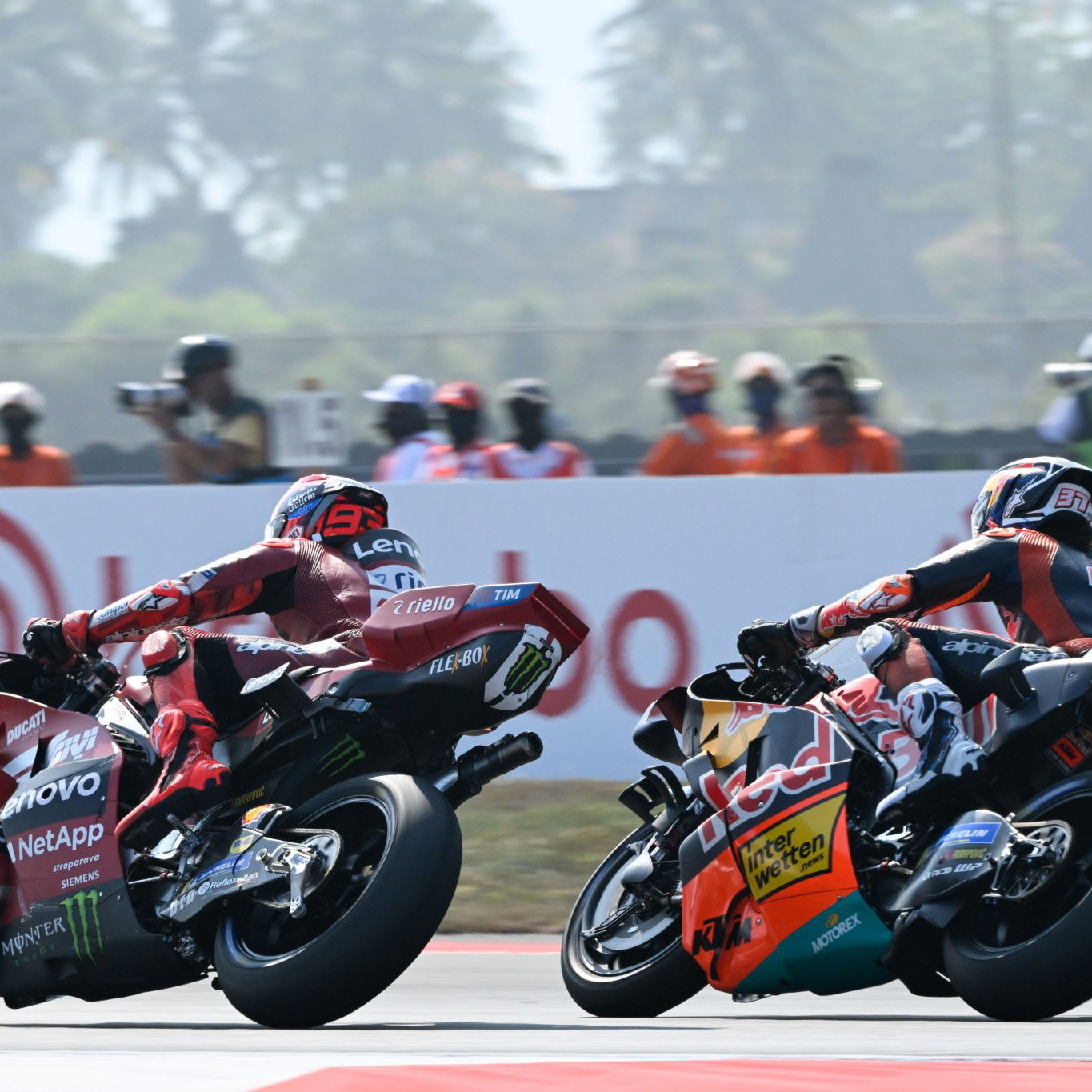
Before I tell you why it would make sense, Pramac Racing rider Jack Miller recently gave a good example of how the V4 configuration is different. He said that because of how the cylinders are positioned, “everything moves back a bit more. It’s just the layout and the way everything fits. That’s the way it works with the V4 versus an Inline.”

What Miller is saying is that by having more focus shifted to the rear of the bike, it should allow Yamaha to get the best out of the rear grip that’s available, rather than being front-heavy when it comes to how it generates its lap time and overall performance.
That’s where other brands have had an advantage over Yamaha at times during the last few seasons.
Massimo Bartolini, Technical Director at Yamaha Factory Racing, shared similar views as Miller regarding the V4, saying:
"The shift to a V4 configuration is equally strategic, as it allows us to position ourselves for the 2027 technical regulations, when this engine layout will offer an advantage in terms of bike layout and aerodynamic development."
Now, back to why it would make sense for Yamaha to filter its V4 engine down to other bikes. You see, if Yamaha switches the YZF-R1 to a V4 in WorldSBK, it would likely give it the same advantages that it hopes to find in MotoGP next season.

And if the WorldSBK-spec R1 was to gain a V4 engine, then that would all-but spell the end of a new R1 keeping its crossplane inline-four power unit as well.
In February 2024, Yamaha revealed it was discontinuing the R1 in the European market, although it would still be available as a track-only bike alongside the RM1.
However, it’s recently been suggested that a new road-legal R1 could be coming soon, which, if true, would make it an obvious choice to bear the new V4.
Then there’s the track-only R1 GYTR, which currently resides in Yamaha’s European model range. It features a 998cc four-cylinder CP4 crossplane engine, which Yamaha says “is a direct descendant of the MotoGP winning M1 race bike”.

In some ways, that statement is begging to be changed now that Yamaha is moving on to a V4 in MotoGP. Why, you might ask? Well, any new R1 models would be unable to reference the M1 as a bike it takes after in that way, at least in modern form, as the inline-four M1 would clearly be outdated due to it being replaced.
Find the latest motorcycle news on Visordown.com.
%20(1)_0.jpg?height=270&format=webp)
After graduating with a sports journalism degree, Robert joined Crash.net to lead the WorldSBK coverage in 2021, while also providing MotoGP coverage. Fulfilling that role for over three years, Robert was able to put his knowledge about all things racing to the test.