Best Honda CB motorcycles ever
From the revolutionary CB750 to today’s bargain-blitzing Hornets, Honda’s CB range has helped shape motorcycling for more than six decades. But which machines truly stand above the rest?

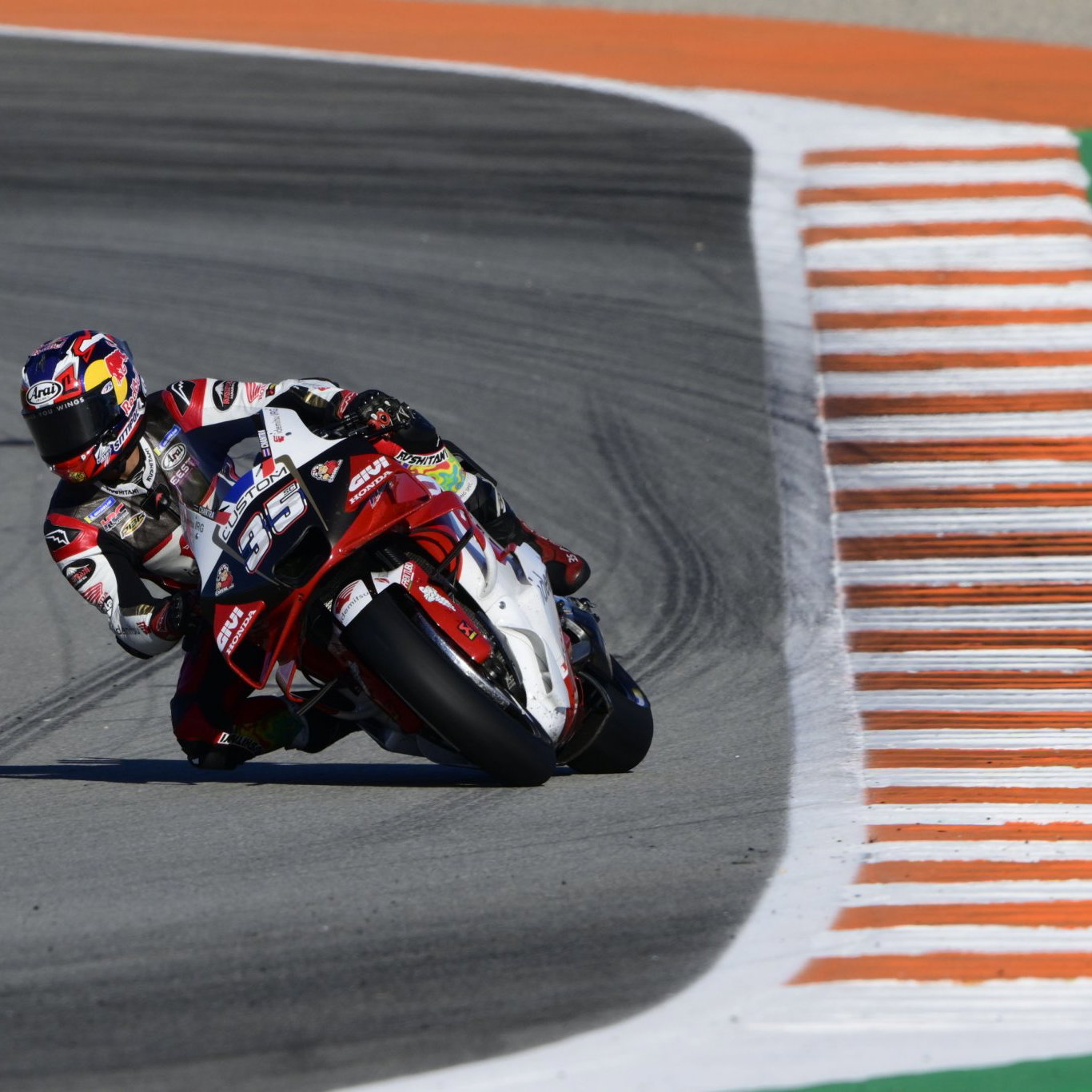
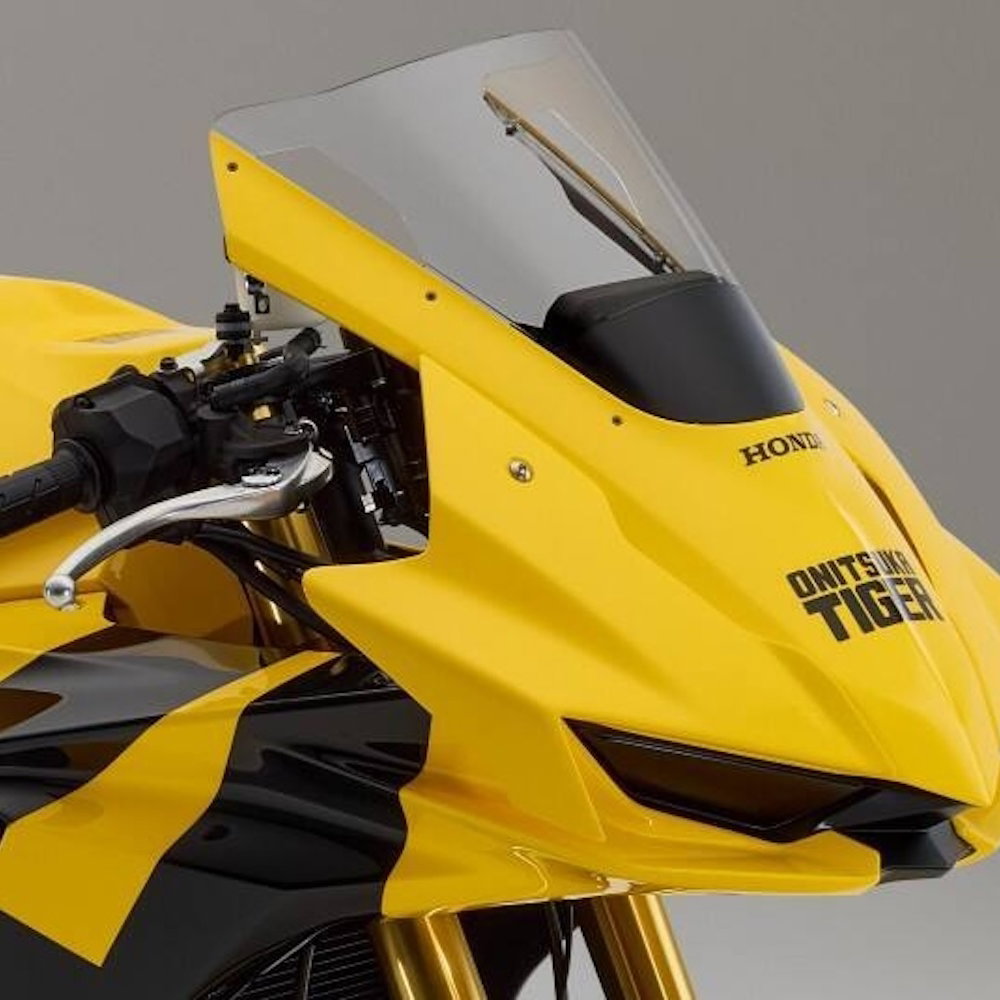
With Honda’s imminent launch of its mouth-wateringly retro-styled, ‘Freddie Spencer’-inspired (although this is debatable) CB1000F, which follows hot on the heels of last year’s best-selling, bargain-priced CB1000 Hornet and, before that, the equally impressive CB750 Hornet, it got us thinking – which have been the best Honda CBs – ever.
After all, the ‘City Bike’ family, as the backbone of Honda’s range from pretty much the outset, has been an intrinsic part of Honda’s success for over 60 years. While in that time there have been, literally, dozens of iconic CB models, ranging from the groundbreaking first superbike, the 1969 CB750 four, to 2018’s Fireblade-based CB1000R with a variety of twins and fours in-between.
But which have been the most significant, successful and droolworthy over all of that time? Here’s our ‘Top 10’ pick of the best, in chronological order…
1965 CB450

Although the very first mass production CB was the 1959 CB92 125, which Hajime Kitano rode to victory in the Mount Asama Volcano Race so putting Honda on the performance map, followed by the 1960 250cc CB72 which cemented its reputation as a high-performance machine, the bike that truly put Honda on the WORLD map was the DOHC, twin cylinder 1965 CB450.
Developed primarily for the American market. Its high-revving 450cc twin had the performance of the then dominant European 650 twins but with 200cc less, Honda’s then flagship made significant inroads into the heritage brands, became popularized by the likes of Steve McQueen and paved the way for all bigger CBs to come.
1969 CB750

The bike that changed everything was not only the first mass-production motorcycle with four cylinders but also the first with a disc brake and electric starter, the most powerful, fastest and sophisticated bike of its day, became known as the world’s first ‘superbike’ and ushered in an era of Japanese dominance.
Unveiled October 28, 1968, at the Tokyo Show, Honda’s revolutionary CB750 was conceived by Soichiro Honda himself, inspired by Honda’s 1960s GP ‘multis’, developed by Soichiro Irimajiri (who’d created those racers) and, proved such a success on road and track it helped set the template of 750cc, and four-cylinders for all superbikes which followed. It also remained in production for almost a decade by which time nearly 500,000 had been built.

The CB750 wasn’t Honda’s only significant early four-cylinder ‘CB’. A 500 (which later became a 550) followed in 1971 (which was also the basis for Benelli’s 1973 six-cylinder 750 ‘Sei’) while a smaller still CB350 arrived in 1972. The latter, once increased to 399cc, given a restyle including saucy ‘Siamesed’ header pipes and unveiled at the Cologne show in the autumn of 1974, proved one of the most inspirational bikes of the 1970s – especially in the UK. With ‘mini-superbike’ power, sweet handling and great styling it was a huge hit in Britain (if not elsewhere), introduced a whole generation to affordable four-cylinder Japanese fun and remains a brilliant ‘starter classic’ to this day.
1978 CB250N SuperDream

No Honda CB of the 1970s was as popular – or at the same time as derided – as the CB250N Super Dream.
Commonly mocked as the ‘Wet dream’, Honda’s successor to the short-lived Dream 250 was a SOHC four-stroke twin aimed at the then hugely popular learner 250 market. It got a new six-speed transmission but, more significantly, swoopy, new ‘Eurostyling’ which soon carried through the 250’s bigger brother, the CB400N, and, most mouthwateringly, Honda’s forthcoming CB750F and CB900F fours.
In truth, the 250 wasn’t as ‘Super’ as all that suggests. It was heavy, its SOHC twin capable of only 27bhp, and it was outpaced by sportier, 100mph, two-stroke 250s such as Suzuki’s GT250X7 then Yamaha’s 1980 RD250LC.
But in many ways that didn’t matter. It also looked great, was a substantial, credible and versatile ‘first big bike’ and, being a Honda, it had an impeccable reputation for reliability and availability, enough to make it the most popular learner 250 of all, selling 70,000 in the UK up to 1983 and 17,000 in 1980 alone.
1979 CB750/900F

Hard on the heels of the CB250 was Honda’s new CB 750 and its 900 bigger brother. By the late 1970s, Honda’s original 1969 SOHC CB750 had been thoroughly eclipsed by Japanese rivals such as the Kawasaki’s Z1, Suzuki GS750 and GS1000 and even Yamaha’s XS750. Honda’s initial response was unconvincing. The restyled 1975 CB750 Super Sport was a stopgap and the 1978 CBX1000 six too expensive. But alongside the CBX Honda had been developing an all-new four which revolutionized the class. Launched 1979, the DOHC CB900FZ was not only the world’s first 16-valve, four-cylinder production bike but its chassis also raised the handling bar and it was given the new swoopy ‘Eurostyling’.
The 900 arrived in Europe first, immediately making the heavier, more expensive CBX irrelevant, while the US got the 750, as famously raced in AMA Superbikes by ‘Fast’ Freddie Spencer so inspiring the new CB1000F.
In truth, neither remained on top for long, with Suzuki’s four-valve GSX1100 arriving in 1980. But the F also gave Honda’s CB a big fillip which spawned the CB1100F and R and more…
1992 CB1000 ‘Big One’ (then 1300s)

A slightly bizarre one, this, and never a big seller, but the 1992 CB1000 ‘Big One’s significance should not be underestimated.
Basically Honda’s response to the ‘big retro’ then fashion as characterized by Kawasaki’s Zephyr 1100, the CB1000 stood out not just for a silly name but by having the huge, detuned, liquid-cooled engine from the CBR1000F sports-tourer, the monster brakes and swing arm to match and a sprinkling of ‘fairy dust’ quality from no less than HRC. The result was massive, had the price tag to match and, thanks to its massive torque, was also an absolute hoot to ride. What’s more, although perhaps inevitably, never a big seller, the CB1000 also paved the way for the much more successful CB1300 retros which followed. No CB has ever been so extreme.
1994 CB500

From one extreme… to another. If the 1992 CB1000 ‘Big One’ was probably the most extreme and niche CB ever built, Honda’s next contribution to the famous family was one of its most understated and successful.
Launched 1994, the all-new CB500 was intended as an affordable, ‘first big bike’ commuter roadster. And, with a willing 57bhp and easy, twin shock chassis it certainly delivered. But it was also much, much more. Its zesty motor was an absolute peach, its chassis was far better handling than it looked and, if its image as a little dull, a one-make race series which provided debuts to no less than James Toseland and Leon Haslam, more than made up for it. The CB500 may never have been sexy or supersonic, but it was great fun, versatile and accessible.
2010 CB1100

A CB with a difference. The 2010 CB1100 (actually introduced earlier in Japan and Australia) was built with one idea in mind: to commemorate great CBs of the past. It did exactly that, mostly with its all-new, bespoke, air-cooled engine. Inspired by both the 1969 CB750 and 1979 CB750/900F it was an air-cooled 1140cc four (at a time nobody made aircooled fours any more) with DOHC and, although not hugely powerful (88bhp) was exquisitely engineered, smooth and beautiful. The bike itself was never a great success, being pricey, with a small tank and, perhaps a little bland – even after a significant update in 2017. But it remains a uniquely ambitious retro, beautifully engineered and now something of a used bargain.
2023 CB750 Hornet

If you’ve got this far you may be thinking we missed one 1990s CB – the 1998 CB600F, or Hornet as it’s more commonly known. But that bike, a naked, budget roadster based on the CBR600F, although fun, was never as successful at the other new breed of budget roadsters such as Suzuki’s 600 Bandit and Yamaha’s FZS600 Fazer, it was designed to beat. The next CB Hornet launched in 2023, however, certainly was. Again a budget-orientated roadster, the new Hornet had an all-new 755cc twin which produced a class-leading 91bhp, smart styling, decent handling and just enough equipment to satisfy. Best of all, launched at just £6999, so undercutting the previously dominant Yamaha MT-07, it was an absolute steal and, as a result, an overnight best-seller.
2024 CB1000 Hornet

After the huge success of the 2023 CB750 Hornet, Honda went even further with its follow-up ‘bigger brother’, the 2025 CB1000 Hornet. This time based on a retuned version of an old Fireblade four-cylinder engine. With a bespoke but budget tubular steel chassis, sharp, fresh styling, decent quality cycle parts including radial brakes (with an even better equipped SP variant also available) and, again, just enough equipment, it went every bit as good as that sounds. But most impressively of all, it also cost under £10K when most rivals were well over £11,000. No wonder it sold so well. No wonder, too, that we’re so excited by the upcoming, 1979 CB750F-inspired, restyled retro version, the 2026 CB1000F!
Find the latest motorcycle news on Visordown.com

Simon (AKA Toad) has been working within the motorcycle industry for more than twelve years, and a member of the motorcyclist family since birth. Growing up around British-built single and twins, it was inevitable that a life on two wheels was on the cards, from a very early age!