Triumph Bonneville T100 (2026) review
The new Triumph Bonneville T100’s job is to feel like a classic without behaving like one. We went to California to find out if that’s still true.

* Comfortable suspension
* Detailing and finishes that are hard to beat
* Lever feel is soft
* Colour options aren't the flashiest
The first Bonneville-branded bikes rolled out of the Meriden factory in 1959, and for all but a handful of years, it’s been a mainstay of the Triumph range. That’s still the case today, with the 2026 Triumph T100 being one of seven versions of parallel-twin modern classics that exist.
It’s clear that these are much more than just models in a range; they are an ode to the machines that helped to cement the UK as a motorcycle manufacturing powerhouse.
The first rung on the Bonneville ladder will be, for many riders, the T100. It boasts all the classic looks, style and theatre of its bigger 1,200cc siblings, in a slightly more manageable and cost-effective package. For 2026, Triumph has given the T100 a plethora of updates, each carefully implemented to maintain the baby Bonneville’s classic aesthetic and easy-going charm.

Triumph chose Southern California as the backdrop for this launch, basing us in Oceanside and handing over the keys to far more than just the new T100. Lined up alongside it were the new Speedmaster, Bobber, T120 and Scrambler 900, all begging to be ridden. My time was split across a full day on the T100 itself, taking in fast, flowing mountain roads, urban stop-start traffic and a little bit of freeway.
2026 Triumph Bonneville T100 review

The most obvious change from the saddle is the riding modes. There are two, and for me, there may as well have been one. I spent 99 per cent of the day in Road, the sportier of the pair, and it’s clearly where the Bonneville wants to live. Throttle response is clean, predictable and nicely judged for the sort of riding this bike encourages.

Out of curiosity more than necessity, I flicked it into Rain on bone-dry roads, and within minutes it was obvious who that mode is for – and it’s not me on a sunny test ride. The throttle becomes overly soft, and the traction control steps in far too eagerly when there’s no need for it. Still, it’s there for riders who like the reassurance of an extra pair of invisible hands on the controls when the weather turns grim – and there’s nothing wrong with that.

One electronic system I barely noticed all day was the ABS, which is probably the biggest compliment you can pay it. This is a new cornering ABS setup and, crucially, it’s far less abrupt when it does intervene. There’s no panic, no sudden wooden lever feel – just a gentle sense that the bike has your back if you ask too much of it.

That’s just as well, because the front brake isn’t exactly razor sharp. At 233kg, the Bonneville isn’t light, and you’re going to need to use that brake with a bit of intent. The lever travels a long way back towards the bar, even when you’re not riding particularly hard. It’s not like we’ve been hammering out laps of Donington here. Still, for what the bike is, the brakes work well enough, and slapping on big, race-spec radial four-pots would look a bit daft on a bike like this.

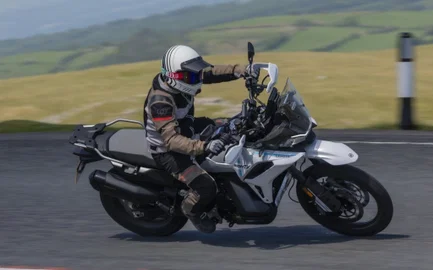
Where Triumph has absolutely nailed it is the suspension. It’s pitch perfect for this kind of bike – just on the right side of soft without ever feeling wallowy. You can push on at a decent pace, and it stays composed, only getting a bit frantic right at the very limit. Turn-in is clean, mid-corner bumps don’t upset it too much, and there’s no excessive understeer trying to run you wide when you get on the throttle. It also gives a fairly surprising amount of feedback to the rider, which isn’t something you get from all modern classics.

And then there’s the engine, which remains one of the Bonneville’s standout features. Triumph has somehow managed to bottle all the sound, feel and character of a 60s or 70s parallel twin, while stripping out the vibrations that used to come with it. That’s no small achievement. It feels authentic without being annoying, charismatic without being crude.

Power may seem modest when compared to a lot of other modern 900cc bikes, but focusing solely on how much poke a bike like this has is genuinely missing the point. It’s capable of raising a grin on a B-road without ever feeling intimidating. 64.1bhp and 59.1 lb ft isn't world beating, but on the open road, it revs slightly more freely than its bigger sibling, the T120, and that free revving nature is part of the appeal. You can ride the wheels off the T100 and thrash to within an inch of its redline, but never be quite as high up the licence-losing ladder.
It's also astonishingly vibration-free. Sitting somewhere beneath my chin are a pair of pistons 84.6mm in diameter, that are bouncing up and down a couple of thousand times a minute. But from the seat of the bike, you really wouldn't know it. There is enough of a thrum under power, and the odd pop and bang on the overrun to make the T100 feel organic, without any of the finger-numbing vibes when you sit at motorway speeds. They even managed to get it to almost sound just like a classic Brit parallel-twin from the 1960s at tickover - if it wasn't for that 270-degree crank giving it a slight V-twin tone.
2026 Triumph Bonneville T100 Verdict

You don’t need to be a motorcycle historian to understand just how important the Bonneville name is to Triumph. Like Honda and its Fireblade, and Norton with its Commando, it feels like Triumph just wouldn’t be Triumph without a Bonneville residing in its range.
And that’s part of the reason that the Hinckley brand has to be so careful with updates as it curates its legacy. One false move, and all those years of progress and the bike’s army of fans are lost.

In the end, the Bonneville succeeds precisely because Triumph hasn’t tried to make it something it isn’t. The updates are modest, and many of them only really register once you’ve spent time riding the bike rather than scanning the spec sheet. The electronics do their job quietly in the background, the chassis feels well judged for real-world roads, and the engine remains the star of the show, delivering character without the drawbacks that used to come with retro twins. It’s not the sharpest tool on the road, nor is it trying to be, but as a usable, honest motorcycle that’s comfortable covering distance and enjoyable at a sensible pace, it's still bang on the money. If you liked the Bonneville before, this version won’t surprise you — but it will quietly remind you why the formula works so well in the first place.
Find the latest motorcycle news on Visordown.com

Simon (AKA Toad) has been working within the motorcycle industry for more than twelve years, and a member of the motorcyclist family since birth. Growing up around British-built single and twins, it was inevitable that a life on two wheels was on the cards, from a very early age!