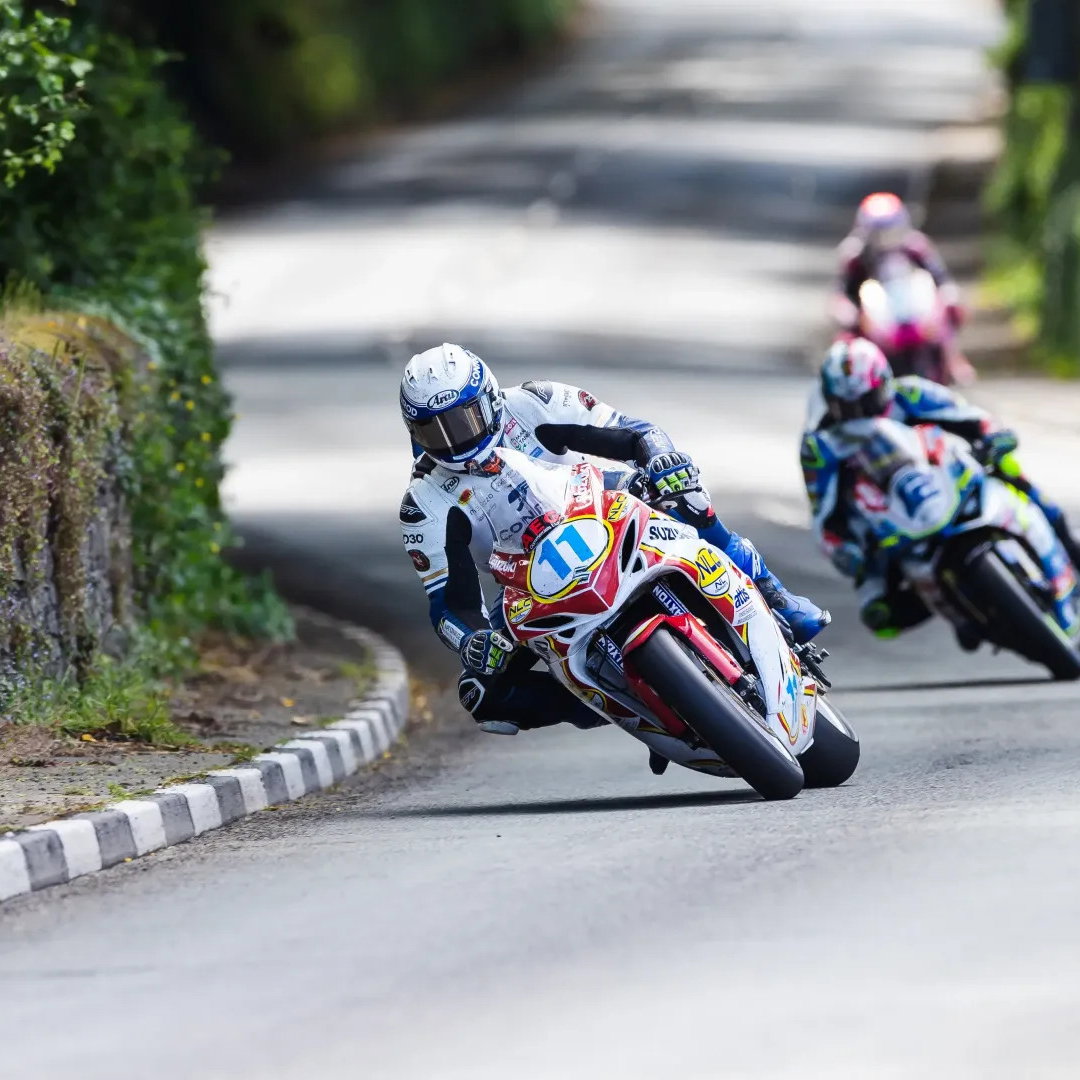
Spot the Difference - 2008 Supersport 1000 Test
The latest batch of thousand cc superbikes are so fast, efficient and similar to each other that it’s now almost impossible to tell them apart. Niall and James put forward the argument that in 2008, it really doesn’t matter which model you ride anymore...

In the never-ending quest to produce the best 1,000cc superbike there’s a chance that the Japanese manufacturers have finally defeated the purpose of having all that glorious power.
180bhp is simply a figure on a piece of paper, and it doesn’t matter how cleverly you dress it up with flat power-curves or fancy power-valves: when it comes to road riding, it’s mental power, too much for anyone. It has now reached the stage where buying a 1,000cc sportsbike is simply down to which one you find the most visually appealing. Niall and James have both suspected this for a while, so gleefully took on the task of trying to split the latest on the road. And as part of the test, we disguised each bike and then let owners of existing models ride them to see if, when all other elements are factored out, it really is just a case of buy the one you like the look of most…
In 1985 when the original Suzuki GSX-R750 was launched, it was a quantum leap forward, way in front of the opposition at the time in every respect. It was the same with Honda’s RC30 in 1988, the first FireBlade in 1992, the Ducati 916 of 1994 and the original Yamaha R1 in 1999. Back then it was possible for a new model to come along every four years and properly raise the bar overnight as far as performance or chassis design was concerned. This genesis was entirely in keeping with the four-year cycle it takes (or took) to develop a brand new model. See what’s out there, develop your new bike to better than the others, build-in three years of future-proofing, and release it.
But since the advent of the ZX-10R in 2003 that’s all changed. With the quartet of supersport thousands completed, the Japanese Big Four have engaged in a bitterly-fought battle of technical leap-frogging every 18 months. Today all the large capacity superbikes, regardless of who makes them, are so capable in terms of power-to-weight, handling and braking ability that it’s actually impossible for the vast majority of road riders who will buy them to tell if any new model that appears is an improvement on the one it’s replacing. The Japanese know this and the focus is now not on outright power (that they can do) but more on rideability and an exciting feel at the handlebars without scaring the living shit out of the rider. It’s all well and good to go to a track day and push these machines to the limit, in circuit conditions with professional riders, just so you can say one is a little faster in a lap or turns in slightly quicker than the rest. Motorcycle magazines have done this for decades now – they’ve just done it again - but how much relevance does it really has for the road rider who buys these bikes? We’re not convinced.
Personally, I’m not much of a Honda man. You either are or you aren’t and I’m one of the aren’ts. There’s nothing at all wrong with their bikes, in almost every situation they are supremely capable, very fast and beautifully made, but that’s the problem that grates for me. I like a bike with character, a touch of spice, an X-factor and, quite frankly, I’ve not really found a Honda with this in many years. Which is why I fancied a pop on the new Fireblade, because from what I’ve read in other magazines, this is a Honda with some soul injected into its cylinder heads.
Hop on it and the Blade is certainly the smallest and most compact of the group, something you could have guessed with a visual check over the four bikes. Everything seems miniturised by about 10% over the other models here. The riding position is high and forward and you you’re sat very much on top of the Blade as opposed to sitting in it like the R1 or the GSX-R. Like the CBR600RR there is more than a hint of the racetrack in the riding position. In fact the Blade feels remarkably like the 600 ergonomically.
From any angle the expected Honda build-quality is evident, every component blends perfectly with the next one with no wasted space in between, almost like it’s been fashioned from one piece of material instead of being built up from a thousand separate parts. When I first saw the bike in the flesh I thought the Honda’s seat was too small for the rest of the bike. But I have to say it’s growing on me.
Hit the starter button and… wow! Where the hell did that roar come from? The Fireblade no longer apologises through its whispered exhaust note and muted airbox that it’s a rip-snorting 1,000cc sportsbike, but now shouts the fact from the top of its voice. Unlike any other Honda the new Blade has a genuine induction rasp that is deep, throaty and suggestive of a menacing motor. At this stage, I’m genuinely excited. But once underway and on the power, when the engine does deliver it does so in a sterile way. It has all the torque and power you’ll ever need (and then some), but it’s just too smooth for me. If you like your superbike with that Swiss-watch feel you’d enjoy it, but for that kick in the pants “fookin’ hell this is what I paid my £9,000 for” feel it doesn’t deliver. The steering is pin-sharp, the brakes have loads of power (some reckoned a bit too much) and everything else about the Blade works well. But on the road I was left wanting more. So there was only one obvious direction to turn...
��
If it’s green and has a large capacity you just know you will be in for a hell of a ride. Sometimes this can be a good thing but, as with previous incarnations of the ZX-10R, quite often it can all get a bit too much. I’ve never been a particular fan of any of the previous 10Rs, but I I’ve had to reset my compass where the new bike is concerned for road-riding. It’s a belter. It isn’t significantly better in any one area than the other bikes on this test, but as a package it’s by far the most fun to ride. The motor is so free-revving for a one litre and just produces more and more and more power as the revs build, but it does so in a predictable way so you never feel like the whole thing is getting away from you. Well, not until the needle gets into the revs north of 9,000rpm, at which point things get a bit silly.
That belting engine is married to a chassis that steers quickly and precisely and brakes with loads of feel (the best on test). All of this made the Kawasaki the bike I enjoyed riding the most by a fair margin. It’s not as stable nor as comfortable as the Suzuki, it’s not as smooth as the Honda, it takes more physical effort to ride than the Yamaha and it definitely has a little bit of attitude that keeps you on your toes. But for me it was by far the most rewarding. I like the fact you have to work to get the best from the 2008 ZX-10R, it focuses your mind and rewards you for effort. We are of the thinking that riding a 1,000cc superbike properly is not automatically your right just because you have a bike licence, it’s something you have to aspire to and work towards. Not everyone will like this, but there are options for you if you can’t be bothered to wait: like the Suzuki.
Considering the GSX-R name is rightly associated with hooliganism and generally anti-social behavior the 1,000 feels remarkably civilized to ride. The big GSX-R is packed with cutting-edge electronics, even allowing you to change ECU maps as you ride, and for me it has the most ‘traditional’ feel of all the bikes here. And that is meant in a good way. I’m an old-fashioned bloke who likes to feel cradled when I’m riding, part of the bike, not perched on top of it and the Suzuki’s seating position is perfect. In fact despite the fact that its design is now two years old, everything about the GSX-R1000K7 just feels right.
The chassis is very sure-footed and, although it’s marginal, it steers slightly steadier than the competition. Get the Suzuki in a fast bend and it’s solid, transmitting a feeling of confidence right from the first turn, with beautiful balance and a feeling being thoroughly well-developed. There’s real DNA in the GSX-R and this bike was always developed even back in 2001 as a roadbike first. Suzuki knew they could make it a race-winner, that was never in question, so they employed European test-riders to make sure it worked well on the road. Two bikes stood out as having the strongest midrange: the Yamaha and the Suzuki. On the GSX-R1000 you don’t feel you have to rev the nuts off it to make it go. Just keep it in a higher gear and ride on the throttle or short-shift through the box, it’s still exciting and involving to ride regardless of speed. Unlike the Yamaha it doesn’t have any fancy gizmos, just clean, crisp and precise power. And also unlike the Yamaha it doesn’t look dated either.
Two years ago the R1 looked by far the most modern of the 1000s, and now it looks like the oldest. Most of this is because the Yamaha still sports under-seat silencers. Just about every other manufacturer has now ditched this once essential selling point in favour of more practical belly-pan exhaust ’boxes’ and stubby MotoGP-esque tailpipes. That said though, the R1 can still hold it’s own.
Since Yamaha adopted a four-valve cylinder head instead of the five-valve arrangement they persevered with for years, the R1 has had more midrange grunt while the variable inlet trumpets allow the motor to keep pulling your arms off up towards the red-line. The feel of the engine is most similar to the Suzuki, especially in the middle of the rev range where it’s equally as strong. A bit disappointing low down, but it makes up for it once the revs rise. And while the steering isn’t as sharp as either the Blade, it's as good as you’re ever going to need. The R1 is a stable bike with the most compliant suspension of the bunch, especially when the roads get bumpy. And like the GSX-R, the R1 is a capable all-rounder that’s at home in most applications, although it hasn’t aged as well as the Suzuki and could do with a facelift. But that’s exactly the point we are proving here.
All these bikes are so damn good it’s impossible to get anywhere near their limits. Even if you do track days these models are all within 4% of each other’s lap times, while their power and torque curves are separated by little more than a hair’s width. Japanese efficiency wouldn’t have it any other way. Litre superbikes aren’t about power or lap times any more, they’re about how they make you feel. They all have their own characters and it’s the one that you feel most confident with, or just like the looks of most, that you’ll enjoy riding the most. Kawasakis are fast and wild. Hondas are smooth, refined. Yamahas are for urban posers and tuners and Suzukis mean plenty of bang for your buck. Never before has the name on the side of the petrol tank meant so much.
��
MACKENZIE RECKONS - HONDA
He likes: The styling, build quality
He hates: The engine
Its minimalist styling makes this easily the best-looking bike here and I have to say the white version is even better. The Fireblade is also the most nimble handling (helped by the brilliant electronic steering damper) with the best brakes, however you do feel like you are perched quite high compared to the others so are more exposed to the elements. As usual the finish on the Honda is first class and as always this carries on way beneath the surface so you’ll struggle to pick a fault no matter how adventurous you get with the toolkit. The engine has a raspy feel making it feel rough and harder work to ride compared to previous silky-smooth Fireblades. Maybe a Power Commander, re-map and pipe would cure this but that all costs a great deal of money. If only the 2008 Blade had the ZX-10R engine, now that would be a very special bike...
MACKENZIE RECKONS - KAWASAKI
He likes: The engine, riding excitement
He hates: The ugly styling
Boss-eyes and a hook nose spoil the front view of the new Kawasaki. However from every other angle it looks stunning, unlike the Visordown staff on this test who were as ugly as sin. Like last year’s 10R I still found the front end quite flighty especially under hard acceleration, but I suspect nothing that couldn’t be cured with a stiffer rear end and a few clicks on the Öhlins damper. All of this pales into insignificance when the starter button is pressed. The free-revving motor feels like a two-stroke. It has a light feel and although blisteringly fast, should you be in the mood it is the smoothest and has the best fuelling at any rpm out of the four. Kawasaki has succeeded in building an engine that you instantly fall in love with. And riding it? Well this has to be experienced. It can be ridden very easily at low speeds or it can be mental at high speeds.
MACKENZIE RECKONS - SUZUKI
He likes: The package
He hates: The tall first gear
If I had to choose a standard 1,000cc sports bike to race at the TT or ride to work tomorrow this would be the one. After just a few miles the GSX-R feels immediately at home on fast road rides. It seems to deal with any kind of terrain or surfaces easier than the opposition, inspiring plenty of confidence while keeping you safe. The front end feels planted at all times and it drops into corners nicely through all the slower twisty roads on our test. In the classy all-black livery it reminded me of a muscle-bound Mike Tyson with explosive power, just a bit more predictable. Strong midrange has always been the big Suzuki’s trademark and it’s most noticeable when cresting any dips in the road as the front wheel will lift at lower revs than the rest. First gear is taller than the others making it more of a handful in town, but the other ratios are fine.
MACKENZIE RECKONS - YAMAHA
He likes: Balance under hard acceleration
He hates: Dated styling
Apart from the nasty graphics, I remember thinking that this bike had taken the lead in the 1,000cc sector and would probably stay there for a few years. It has a razor sharp chassis and brakes plus advanced engine electronics that make it a joy to ride. And it still is a great bike, but its bulky front end with wide lights and the underseat pipes make it look dated. The riding position is the most front-biased out of the four and the bars are wide. The motor might not have the grunt of the GSX-R nor the top end of the ZXR, but with its slick transmission and handling some (not me) argue it makes the best 1,000 for the road. Amazingly, the sleek R1 now looks dated next to the rest! It's a tough industry...
RIDING BLIND
Just to prove it really doesn’t matter what you ride, we covered up all four bikes and invited readers to cock a leg over the latest technical marvels, entirely unaware of what they were riding…
Name: Steve Smith
Bike: 2001 Suzuki GSX-R1000
Why a 1000: “I used to have an R6 but wanted more. I considered an R1 but got the Suzuki. It’s down to the rider how you use the power on a 1,000. I use the power when I want it, rather than thrash the bike the whole time like I was with the 600.”
Comments after ride: “The first bike was very easy and planted on the road. Could have done with a bit more torque low-down but was smooth to ride. The second one felt revvy, it needs a bit more grunt but once it got to the top of the rev-range it really went but I found the front end heavy to turn. The third bike felt similar to the first, they both turned really easily and I felt confident riding them. The fourth one really stood out. Masses of power low down and when I revved the engine, it just wanted to go and keep going. It wasn’t as smooth as the first one or generally as nice but what a motor. In all honesty there wasn’t a huge difference between them all, but I’d have the first, it was easiest to ride.”
Name: Jim Grummit
Bike: 2007 Yamaha YZF-R1
Why a 1000: “I’m a big bloke, so I’m not exactly going to kick anyone’s arse on a RS125! They have loads of power and handle fantastically.”
Comments after ride: “It really plays with your head not knowing what you’re riding. I thought the first bike was the ZX-10R, it felt smooth but was very quick and the suspension good. It worked great down bumpy lanes. Bike two felt less composed, a bit more twitchy, I wasn’t going as quick but it was more thrilling to ride. Bike three in a way mirrored bike two, it felt physically smaller than the others, like a 600 with litre performance. I was prepared to go a bit quicker than on bike two, it gave me confidence. And bike four, straight away I knew it was an R1 because I have one. Performance-wise there is absolutely nothing splitting these bikes.”
Name: Steve Abbott
Bike: 2008 Fireblade (on order)
Why a 1000: “I’ve been riding since I was 16 but for the last 15 years I have been on 1,000s."
Comments after ride: “Bike one was everything. Superbly smooth, light and nothing seemed to upset it on the road, it was very easy to ride. The next bike seemed wide and a bit wallowy. They all have good performance and brakes but I did feel it was more bouncy that the first bike. Number three was sweet, I really liked that one. It was light and the performance was fabulous. Four had awesome power and it was hard to split three and four but I felt four was a bit firmer. The first was my favourite."
Name: Andy Hamlton
Bike: 2007 Kawasaki ZX-10R
Why a 1000: “I used to have a 600 and I upgraded to a 1,000. When I first rode my ZX-10R it was a baptism of fire. I shat myself and honestly thought I had done the wrong thing, but you develop a mental stop switch.”
Comments after ride: “I really liked the first bike, it was so settled, comfortable and the gearbox was great, but I wasn’t so keen on the second. I found I really had to work the engine, felt like it had two motors, one low down and another that came in up the revs! But the third one I adored, I went on a longer route because I was having so much fun. The fourth bike was weird, I just didn’t get on with it. I found I really had to work the engine and it vibrated loads, it was great low-down but the riding position was too upright. I honestly couldn’t tell you which the first two were, but I’m sure the third was a Kawasaki. The engine put it head and shoulders above the others, absolutely stunning. If I had to put money on it I’d go for R1 first, Blade second and fourth Suzuki, but I honestly don’t know, they all feel similar.”
��