Road Test: 2005 1000cc Superbike Review
There's a stretch of autoroute south of Clermont Ferrand that is the perfect tonic to the preceding several hundred miles of motorway monotony - if riding four of the world's finest litre bikes can ever be considered monotonous.

 |
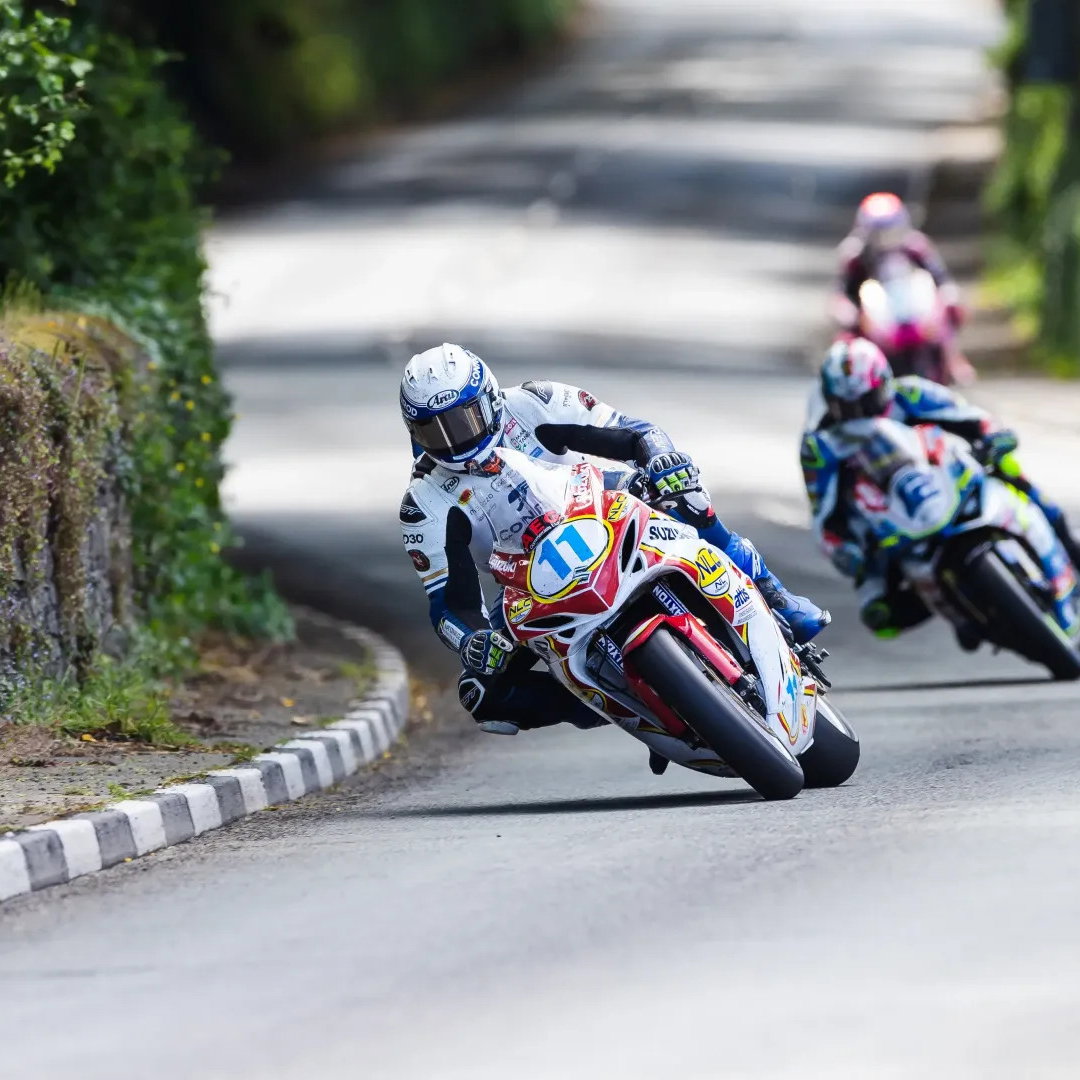
As the A75 runs south alongside the meandering river Allier just north of Issoire, it snakes left and right in a succession of fast, 140mph kneedown fast, right-left-rights.
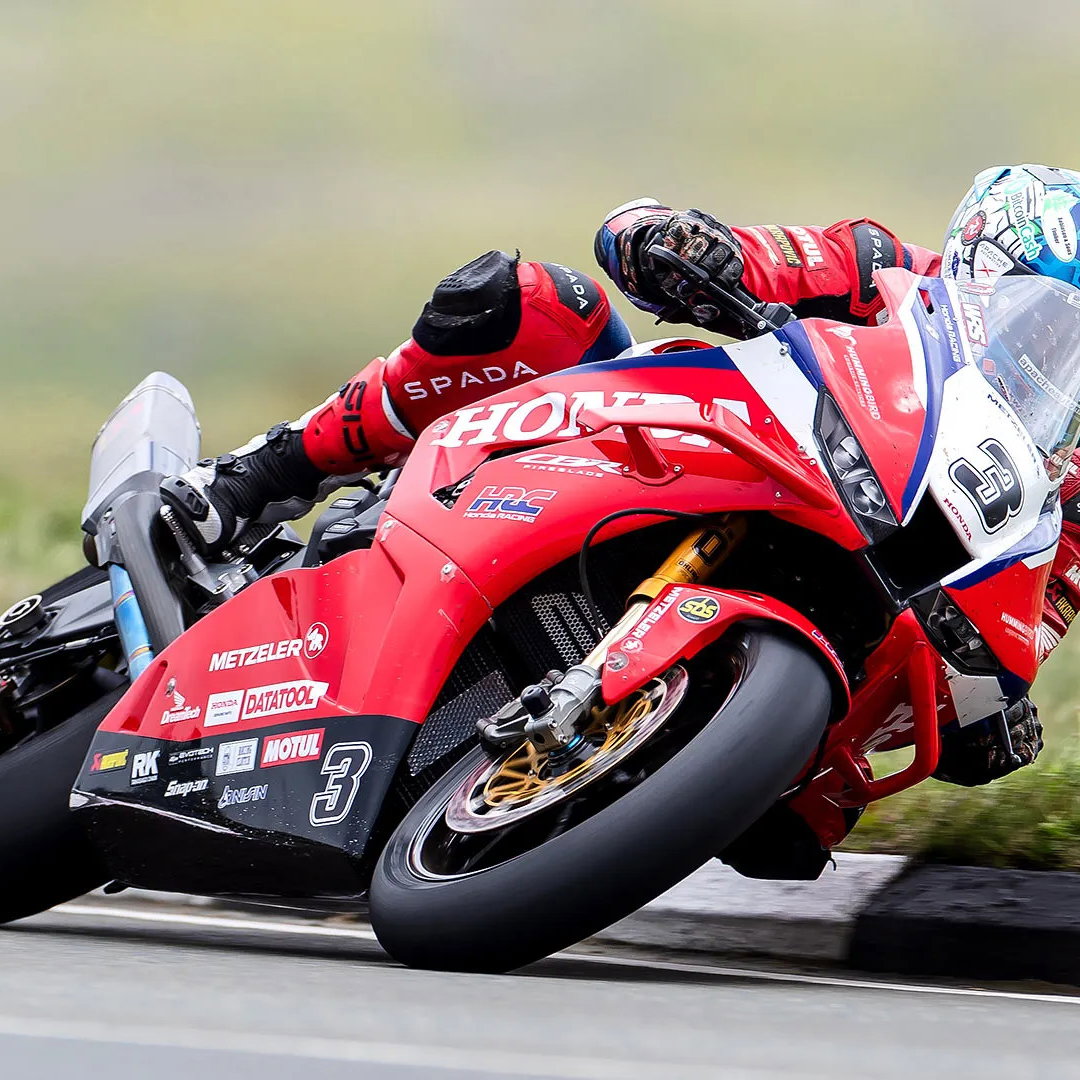
Riding the luggaged-up Repsol-rep Fireblade I'm first into them, warning the traffic ahead that we're coming through, and the ever-obliging, bike-mad French motorists part like the Red Sea as we sweep, Moses-like, through turn after turn of high speed sportsbike nirvana. Having been on the road for five hours since we got off the ferry in Le Havre at 8am with just four hours fitful sleep to our name, it's the perfect wake-up call.
And that's not even the best bit. Later on there's an even better set of uphill twists and turns, then the jaw-dropping new viaduct - the world's highest, or longest, or most expensive, or something - near Millau, and the even twistier downhill section of A75 south of Le Caylar. And blow me, this is just the motorways.
And why are we here? Well, 'why not?' is as good an answer as any, but this time we are heading south to Barcelona for the pre-season MotoGP test at Barcelona. We needed an excuse to ride this year's headline-grabber, the new GSX-R1000, up against the Fireblade, ZX-10R and R1, and that seemed to fit the bill. An overnight P&O ferry from Portsmouth to Le Havre, a hard day's riding to Barcelona, chill out for a day, a day at the circuit then a day's ride back to the overnight ferry and home. But on sports 1000s? Doesn't that sound like too much hard work? No way. Bring it on.
It just takes a bit of discipline. The maximum mileage you can cover in a day is largely determined by fuel stops. It's all very well nailing it at 150mph but stopping every 35 minutes kills your average speed, and the more bikes you have with you the longer it takes to refuel. Each extra rider means more time spent refuelling, chatting, smoking, eating, drinking and going for a wee. It all adds up, and every additional person can knock 30 to 40 miles off your day's total.
With reserve lights coming on around the 105-mile mark, our hastily configured routine went like this: cruise at 115-120mph for 95 miles, then knock the speed off to conserve fuel until signs told us how far it was to the services. Close by - say 10km - and we'd pin it; 35km or more and we'd take it easy. Worked every time, except when the R1 ran dry at 127 miles and coasted the final 200 yards to the pumps, then (nearly) again with all four bikes running on fumes late on Sunday night an hour short of Le Havre. The BP station in Louviers saved our bacon.
The limited tank range highlights a personal bugbear of mine. Why do sports bikes have inverted forks? Because racers have them. Radial brakes? Because racers have them. Multi-adjustable suspension, super-sharp chassis and massively powerful engines? You get the idea. Right, Rossi has a 22-litre fuel tank. I want one of those too, not the 17 litres or so we get. BSB racers have 24-litres - that'd be even better. Sod weight, if you don't want to lug 24 litres of fuel around don't put 24 litres in, but if you had the choice it'd make trips like this a damn sight easier. Rob and Jon didn't agree. Colin did. I was growing to like him.
Fuel range aside, it's surprising how well these bikes lent themselves to country-munching all-day riding. They even take a fair bit of luggage. The baby-eating ZX-10R has a metal tank for magnetic bags and loads of bungee hooks for tailpacks, while the GSX-R has a metal tank, although no rear bungee hooks, and integrated indicators mean you have to get a bit Heath Robinson strapping on a tailpack. Both bikes have enough underseat storage for a decent-sized lock, chain and Lion Bar.
The R1 has just enough metal tank to stick a tankbag to, while the underseat exhaust means tailpacks need careful fitting to avoid melted bungees, and there's room for nowt under the seat. The Blade fared least well; its plastic tank cover meant no magnetic bags (although Baglux do a fitting kit, and even one in Repsol-matching colours), while the underseat pipe again means no storage and careful tailpack fitting. All four bikes take at least half a roll of duct tape to prevent scratched bodywork.
But to tankbag or not to tankbag? Now that is a question. "They're bloody rubbish," surmised Rob. Urry, obviously an experienced tourer ("to save weight he left his razor at home and wore shirts with holes in them," noted Colin), hates tankbags with a passion and avoided riding a bike with one fitted at all costs. "I never want to tour with one again," whined Jon. "If you need more storage you're either vain or have an obsessive cleanliness disorder. Smelling and touring go hand-in-hand."
I prefer to ride with a tankbag than without on long journeys, provided it's not too big - the Oxford Humpbacks were spot-on for resting my chest and keeping toll tickets in, but it depends on the bike and rider. Admittedly both the ZX-10R and R1 were literally pains in the neck with tankbags because their screens are so low.
"I nearly chucked the thing in a field," said Colin, after an hour-long 120mph-plus stint on the ZX-10R. "It didn't have anything of mine in it anyway." Lovely bloke, Colin.
Anyway, surely these things can't be comfortable over distance? Actually not that bad. Okay, at low speed there's too much weight on your wrists and none are as cosseting as a Pan European or R1200RT, but I know which I'd rather have with me on the roads at journey's end. And with fuel stops every hour or so it's never long before you can stretch arms and legs.
The R1 and Blade have the lowest pegs; the GSX-R and Blade the tallest screens. The R1's wide seat was the most comfortable (but Rob thought it too hard), the ZX-10R's a close second, although angled more steeply forward. The Honda's seat must have been about okay as it drew no comment, while the GSX-R's was too narrow unless you slid far back onto the wide bit at the rear.
Other points? The Fireblade and R1 have the best mirrors, the GSX-R's are about okay, the ZX-10R's barely that. The Suzuki's clocks were easily the best, topped off with a gear position indicator - "a stroke of genius," thought Jon, and more useful than you might think with a slipper clutch and relatively conventional gear ratios.
Blimey, that covered a lot of ground. Which is funny because, along with counting the tenths of miles click by, going from sixth to second on the autoroute without losing any speed and noticing that the ZX-10R's indicator idiot light almost matches its paintwork, it's precisely little details like those that you find yourself pondering when you're covering a lot of ground.
And cover ground we did. "I used to say to people that there's no point in buying a 1000 because a modern 600 is enough for the road," said Colin. "But I was talking rubbish. The French roads are so empty and the distances so great that 1000cc and 150bhp is just about right." Exactly.
You could argue that all that power is a pointless extravagance, but it's certainly nice to have. My parents live in a four-bedroom house. They don't need to, but it's nice to have. My wife's got a laptop with more processing capability than NASA. She doesn't need it, but it's nice to have. And these bikes have more horsepower than most of us could ever hope to make use of. We don't need it, but it's nice to have... It also makes all four bikes incredibly flexible and easy to ride. Leap-frogging lorries on the route nationals heading south from Le Havre, it's easy for the four of us to keep in convoy and not get split up. As long as the lead rider isn't actually trying to get away (ie, as long as it's not Rob), it's a piece of piss for the following three to keep together.
Now, all of these bikes have got astonishing motors, and some more astonishing than others. If you haven't ridden a 1000cc sportsbike recently, twisting the throttle on one can come as a bit of a shock. The combination of 160-odd bhp and not very much weight equals staggering performance. But what really brought home these bikes' collective excesses of horsepower was Rob, on the fully-luggaged ZX-10R, bimbling along at our chosen 120mph cruising speed and picking the Kwak's front wheel up and holding it there. For ages. That and the near-vertical, 110mph three-and-half-miler he did on the R1. Irresponsible? Maybe, but very, very impressive. And the locals love it. When was the last time you saw a coach driver in the UK begging a group of bikers to do wheelies? Or got the, 'go on mate, hoist a monster' hand signal from a businessman in the car beside you at a set of traffic lights?
It's odd, though, how each of the bikes can feel so different. Wind up the R1 and there's an astonishing rush of power in the last 2000rpm to the 13,500 redline, giving it a kind of runaway freight train feel, but below that it feels refined and very smooth. The ZX-10R feels raw and vicious, thanks to very definite steps in its power curve. Crack the throttle and it squats and lunges where the others just drive forward. Despite that though, it's a pussycat when you want it to be. "It's massively powerful but you kind of get blasŽ about it," said Jon, "which surely isn't right. The cure is to accelerate as hard as possible onto motorways just to remind you how bloody fast it is." It's also important to note how the R1's and ZX-10R's massive first gear ratios - each good for almost exactly 100 genuine miles per hour - dominate the feel of the bikes at lower speed and around town. It actually goes some way to taming the delivery and making them less of a handful. But only just.
In contrast to the Kwak, the Fireblade's 998cc lump is like an electric motor. "It just doesn't feel like a 150bhp bike," said Jon. "Until you look at the speedo." It sounds daft, but it's true. The Honda's combination of silky power and rock-solid stability border on sanitising the litre-bike experience; winding the Blade up on a, er, private section of Spanish motorway, I was astonished to look down and see the speedo reading 183mph.
No such deception with the awesome GSX-R1000: it's raw, harsh and very, very fast. But while the rasp of exhaust and airbox give the impression of brutal, untethered horsepower, it's actually very smooth and usable. It's the speed at which the horsepower is delivered, not the shape of the power curve, that defines the experience.
To be honest, as mind boggling as the power of these bikes is, what's equally amazing is just how flexible they are. While it was fun caning them down empty autoroutes, there were times when, knackered, cold and hungry, we just wanted to get where we were going. Plugging away all day, settled into a routine of fuel, tolls, food, fuel, fuel, tolls and more fuel, we hit the Spanish border at dusk.
Crawling through Barcelona's late rush-hour traffic looking for our hotel, all four bikes were as calm, docile and easy to ride as a Hornet or Fazer. At least that's how they felt after a day's motorway madness. Twelve-and-a-half hours and 770 miles after rolling off our ferry and heading south from Le Havre that morning, we rocked up at our hotel in Barcelona, stiff, a bit saddle sore, but otherwise fine. "Twelve hours on a sportsbike shouldn't be this much fun," said Rob. "My back hurts, my neck aches, but I really don't care."
A pizza (shouldn't that have been paella? Sorry, it was late, we were hungry and it was the closest eaterie to our hotel) and a welcome night's sleep later and we had a day to ourselves to lark about, leathered-up and luggage free, on some of Spain's finest blacktop. A day on a motorway is fine for getting a feel for a motor but, apart from those 140mph sweepers and the occasional swooping service station exit slip, it doesn't tell much about a bike's handling or how the engine and chassis work together.
In the name of 'work', and with a day to kill before heading to the MotoGP test, we headed up the coast from Barcelona to some roads we knew near a town called Tossa. Oh, aren't foreign place names funny...
The roads raise a smile too. It's no wonder Spain produces so many world-class riders if they grow up with a playground like this on their doorstep. Endless switchbacks, fast open corners, the odd hairpin and all wide, grippy, well-surfaced and largely traffic-free - at least they were on the sunny mid-March Friday afternoon we were there.
The bikes. Honda first, then. It is, frankly, remarkable just how easy the mass-centralised Fireblade is to ride. It turns, leans and changes direction with incredible, unflinching neutrality, which perfectly matches its linear, turbine-like power delivery. On very fast corners it tracks like it's on some kind of pre-programmed trajectory, which actually means you can hustle it through fast corners at an astonishing rate with a minimum of fuss. The HESD electronic steering damper must be playing a part here, increasing its steering damping-ness as speed increases. This level of downright competence can be, quite unfairly, labelled blandness. If it is possible to push the Blade hard enough to generate the same kind of misbehaviour we experienced with the ZX-10R, then we simply weren't riding it hard enough. I can assure you we tried. The Blade also has extremely good brakes, which can get you out of a lot of trouble. Ironically, this is the bike on which you're least likely to get into any.
A complete contrast to the ZX-10R, which allies its manic, lunging mentalist motor to a slightly top-heavy feel and nervous steering. Of all the bikes here this is the hardest to ride smoothly and quickly on unfamiliar roads. On the exits of corners, under acceleration, when the steps in power unsettle the tyres and suspension, there's often a simmering threat of impending tankslap. It's the only bike here without a steering damper as standard, and it's the bike most in need of one. On the previous day's fast, open motorway sweepers it felt relatively composed and stable, but flicking into and driving out of slower, bumpier stuff the ZX feels awkward and tetchy.
The way it pitches back and forth on the throttle and brakes kind of adds to the experience, and probably contributes some way to making it feel like you're going even faster on the Kwak than you really are - a bit like riding down an unlit back lane at night with just your parking light on.
The trick with riding any of these bikes fast, but particularly the ZX-10R, is knowing how little horsepower to try and make use of, not how much, and especially so between corners. It's on the gas out of turns, from mid-lean to upright, where the Kwak acts like it's the boss, not you, and it's here where a steady throttle hand is vital. As often as not on a bike like this, on an unfamiliar road, you're going to find yourself going far faster than you wanted/expected/imagined just as - or, worse, just after - you need to brake for the next corner. And it's here that the ZX-10R was letting us down, its stoppers lacking real bite and feeling spongey at the lever.
The R1 at first feels like it's lacking a bit in the chassis department. Out on the open road it's stable and supple, but attack a set of medium speed bends half-heartedly and it seems uninterested; the front wants to run wide, and Urry thought it felt like the steering damper was slowing it down on turn-in. But push harder and it makes a bit more sense as everything starts working properly. The Yamaha feels like it sits quite flat on its suspension with a neutral front/rear bias, so turn-in becomes more accurate if the front is nailed down hard, and it tracks and holds a line with masses of feel and confidence. The suspension is firm but nicely compliant with loads of feedback. Excellent brakes, too, second only to the Honda's.
Finally, then, the GSX-R. Suzuki have a pulled a very neat trick here and almost out-Honda'd Honda. They haven't made so much of a song and dance about it, but a lot of weight has been shifted around to get as much as possible in one place, and the GSX-R now shares much of the Honda's near-ethereal balance, neutrality and ease of use. Except it's got that awesome motor bolted in place, too. Like the R1 the GSX-R sits quite flat, and on standard suspension settings there's a bit of front/rear weight transfer under braking and acceleration, but nothing that can't be dialled out. Ergonomically it pulls another neat trick by feeling tiny yet having enough room on board for even the tallest of riders to move around and get comfortable. The bars are placed forward, the tank is short and squat and the seat hump sited well back.
"It's brilliant," reckoned Jon. "Despite being the most powerful and sharpest handling, it never feels too much. It has the best bits of all the rest combined in a very usable package."
And that's exactly what it is: for such an outrageously powerful and fast motorcycle it is fantastically usable. Don't be fooled though, in the wrong hands the GSX-R - along with any of the others here - has the capability to bite back very, very hard if used without a considerable degree of self restraint and a measured respect for what's being unleashed, but to make so much performance this easy to use and still inject it with such a level of raw character is quite a feat. Yes, very good. Well done.
It makes a top tourer, too. Bet Suzuki never planned on that. Though to be fair, all four bikes here coped with our 2000-mile, four-day odyssey far better than we or their respective makers could have imagined.
Our return journey was pretty much a reverse repeat of the trip down, made more interesting by my sunburn-induced, swollen-headed cross-eyed delirium, much to the others' amusement. Despite that, and with no wrong turns, we made the trip back from Barcelona to Le Havre in 11 hours 58 minutes. Job nearly done. Another fitful night's sleep in a four-berth cabin the size of a toilet cubicle, chest deep in helmets, leathers, rucksacks and tankbags, and we rolled off into the misty-grey half-light of a Portsmouth dawn. "It's like coming down off a good night out," muttered Rob.
But trips like these create memories. "There's riding and there's watching," said Colin. "Even though the IRTA test was mega [see page 45], the high point of the trip was the trip itself." Well said that man.
Hold on though, we've missed a bit. Which bike is best? They all rock, and as do-it-all tools they come far closer than you might expect to fulfilling a number of roles - although taking the missus out on the back for a relaxing ride isn't one of them.
However, buying one of these and only using it on sunny Sunday runs and a handful of track days is, frankly, a waste of money. To really stretch these bikes' legs you've got to hop over the Channel first. If you don't, you're missing out on a whole world of fun and adventure, and any of them will provide a near unique thrill. Okay, so they're not cheap to buy or run - and insurance costs may price you out of the market altogether - but as a bargain price adrenaline fix, none of these machines can be beat.
So if you want the maddest green meanie on the road, it's got to be the ZX-10R but, and we mean this, be careful out there. None of these bikes are for beginners, but Kawasaki themselves are sensible enough to admit that the ZX-10R is for 'experienced riders only'. We tend to agree. You need your wits about you if you want to ride one of these things fast, and near inhuman self restraint to ride it slowly.
In contrast, the Fireblade marries astonishing performance to bewildering civility, wrapped in a classy, superbly-finished package, while the Jekyll and Hyde R1 combines impressive build and sharp looks with a sharper chassis and an insane top end rush. But if you want this year's bestest, baddest but easiest to use sports bike, get yourself a GSX-R1000.
SPECS - HONDA
TYPE - SUPERSPORTS
PRODUCTION DATE - 2005
PRICE NEW - £8500
ENGINE CAPACITY - 998cc
POWER - 153.8bhp@11,110rpm
TORQUE - 79.5lb.ft@8384rpm
WEIGHT - 179kg
SEAT HEIGHT - 820mm
FUEL CAPACITY - 18L
TOP SPEED - 177.1mph
0-60 - n/a
TANK RANGE - 125
SPECS - KAWASAKI
TYPE - SUPERSPORTS
PRODUCTION DATE - 2005
PRICE NEW - £9000
ENGINE CAPACITY - 998cc
POWER - 160.6bhp@11,600rpm
TORQUE - 82.3lb.ft@9300rpm
WEIGHT - 170kg
SEAT HEIGHT - 820mm
FUEL CAPACITY - 17L
TOP SPEED - 178.9mph
0-60 - n/a
TANK RANGE - 120MILES
SPECS - SUZUKI
TYPE - SUPERSPORTS
PRODUCTION DATE - 2005
PRICE NEW - £8799
ENGINE CAPACITY - 999cc
POWER - 164.7bhp@11,000rpm
TORQUE - 82.4lb.ft@8300rpm
WEIGHT - 166kg
SEAT HEIGHT - 810mm
FUEL CAPACITY - 18L
TOP SPEED - 179.2mph
0-60 - n/a
TANK RANGE - 125MILES
SPECS - YAMAHA
TYPE - SUPERSPORTS
PRODUCTION DATE - 2005
PRICE NEW - £9399
ENGINE CAPACITY - 998cc
POWER - 150.8bhp@11,800rpm
TORQUE - 74.5lb.ft@9800rpm
WEIGHT - 172kg
SEAT HEIGHT - 835mm
FUEL CAPACITY - 18L
TOP SPEED - 177.5mph
0-60 - n/a
TANK RANGE - 125

There's a stretch of autoroute south of Clermont Ferrand that is the perfect tonic to the preceding several hundred miles of motorway monotony - if riding four of the world's finest litre bikes can ever be considered monotonous. As the A75 runs south alongside the meandering river Allier just north of Issoire, it snakes left and right in a succession of fast, 140mph kneedown fast, right-left-rights.
Riding the luggaged-up Repsol-rep Fireblade I'm first into them, warning the traffic ahead that we're coming through, and the ever-obliging, bike-mad French motorists part like the Red Sea as we sweep, Moses-like, through turn after turn of high speed sportsbike nirvana. Having been on the road for five hours since we got off the ferry in Le Havre at 8am with just four hours fitful sleep to our name, it's the perfect wake-up call.
And that's not even the best bit. Later on there's an even better set of uphill twists and turns, then the jaw-dropping new viaduct - the world's highest, or longest, or most expensive, or something - near Millau, and the even twistier downhill section of A75 south of Le Caylar. And blow me, this is just the motorways.
And why are we here? Well, 'why not?' is as good an answer as any, but this time we are heading south to Barcelona for the pre-season MotoGP test at Barcelona. We needed an excuse to ride this year's headline-grabber, the new GSX-R1000, up against the Fireblade, ZX-10R and R1, and that seemed to fit the bill. An overnight P&O ferry from Portsmouth to Le Havre, a hard day's riding to Barcelona, chill out for a day, a day at the circuit then a day's ride back to the overnight ferry and home. But on sports 1000s? Doesn't that sound like too much hard work? No way. Bring it on.
It just takes a bit of discipline. The maximum mileage you can cover in a day is largely determined by fuel stops. It's all very well nailing it at 150mph but stopping every 35 minutes kills your average speed, and the more bikes you have with you the longer it takes to refuel. Each extra rider means more time spent refuelling, chatting, smoking, eating, drinking and going for a wee. It all adds up, and every additional person can knock 30 to 40 miles off your day's total.
With reserve lights coming on around the 105-mile mark, our hastily configured routine went like this: cruise at 115-120mph for 95 miles, then knock the speed off to conserve fuel until signs told us how far it was to the services. Close by - say 10km - and we'd pin it; 35km or more and we'd take it easy. Worked every time, except when the R1 ran dry at 127 miles and coasted the final 200 yards to the pumps, then (nearly) again with all four bikes running on fumes late on Sunday night an hour short of Le Havre. The BP station in Louviers saved our bacon.
The limited tank range highlights a personal bugbear of mine. Why do sports bikes have inverted forks? Because racers have them. Radial brakes? Because racers have them. Multi-adjustable suspension, super-sharp chassis and massively powerful engines? You get the idea. Right, Rossi has a 22-litre fuel tank.
I want one of those too, not the 17 litres or so we get. BSB racers have 24-litres - that'd be even better. Sod weight, if you don't want to lug 24 litres of fuel around don't put 24 litres in, but if you had the choice it'd make trips like this a damn sight easier. Rob and Jon didn't agree. Colin did. I was growing to like him.
Fuel range aside, it's surprising how well these bikes lent themselves to country-munching all-day riding.
They even take a fair bit of luggage. The baby-eating ZX-10R has a metal tank for magnetic bags and loads of bungee hooks for tailpacks, while the GSX-R has a metal tank, although no rear bungee hooks, and integrated indicators mean you have to get a bit Heath Robinson strapping on a tailpack. Both bikes have enough underseat storage for a decent-sized lock, chain and Lion Bar.
The R1 has just enough metal tank to stick a tankbag to, while the underseat exhaust means tailpacks need careful fitting to avoid melted bungees, and there's room for nowt under the seat. The Blade fared least well; its plastic tank cover meant no magnetic bags (although Baglux do a fitting kit, and even one in Repsol-matching colours), while the underseat pipe again means no storage and careful tailpack fitting. All four bikes take at least half a roll of duct tape to prevent scratched bodywork.
But to tankbag or not to tankbag? Now that is a question. "They're bloody rubbish," surmised Rob. Urry, obviously an experienced tourer ("to save weight he left his razor at home and wore shirts with holes in them," noted Colin), hates tankbags with a passion and avoided riding a bike with one fitted at all costs. "I never want to tour with one again," whined Jon. "If you need more storage you're either vain or have an obsessive cleanliness disorder. Smelling and touring go hand-in-hand."
I prefer to ride with a tankbag than without on long journeys, provided it's not too big - the Oxford Humpbacks were spot-on for resting my chest and keeping toll tickets in, but it depends on the bike and rider. Admittedly both the ZX-10R and R1 were literally pains in the neck with tankbags because their screens are so low.
"I nearly chucked the thing in a field," said Colin, after an hour-long 120mph-plus stint on the ZX-10R. "It didn't have anything of mine in it anyway." Lovely bloke, Colin.
Anyway, surely these things can't be comfortable over distance? Actually not that bad. Okay, at low speed there's too much weight on your wrists and none are as cosseting as a Pan European or R1200RT, but I know which I'd rather have with me on the roads at journey's end. And with fuel stops every hour or so it's never long before you can stretch arms and legs.
The R1 and Blade have the lowest pegs; the GSX-R and Blade the tallest screens. The R1's wide seat was the most comfortable (but Rob thought it too hard), the ZX-10R's a close second, although angled more steeply forward. The Honda's seat must have been about okay as it drew no comment, while the GSX-R's was too narrow unless you slid far back onto the wide bit at the rear.
Other points? The Fireblade and R1 have the best mirrors, the GSX-R's are about okay, the ZX-10R's barely that. The Suzuki's clocks were easily the best, topped off with a gear position indicator - "a stroke of genius," thought Jon, and more useful than you might think with a slipper clutch and relatively conventional gear ratios.
Blimey, that covered a lot of ground. Which is funny because, along with counting the tenths of miles click by, going from sixth to second on the autoroute without losing any speed and noticing that the ZX-10R's indicator idiot light almost matches its paintwork, it's precisely little details like those that you find yourself pondering when you're covering a lot of ground.
And cover ground we did. "I used to say to people that there's no point in buying a 1000 because a modern 600 is enough for the road," said Colin. "But I was talking rubbish. The French roads are so empty and the distances so great that 1000cc and 150bhp is just about right." Exactly.
You could argue that all that power is a pointless extravagance, but it's certainly nice to have. My parents live in a four-bedroom house. They don't need to, but it's nice to have. My wife's got a laptop with more processing capability than NASA. She doesn't need it, but it's nice to have. And these bikes have more horsepower than most of us could ever hope to make use of. We don't need it, but it's nice to have... It also makes all four bikes incredibly flexible and easy to ride. Leap-frogging lorries on the route nationals heading south from Le Havre, it's easy for the four of us to keep in convoy and not get split up. As long as the lead rider isn't actually trying to get away (ie, as long as it's not Rob), it's a piece of piss for the following three to keep together.