Honda CBR600RR C-ABS launch test review
Honda’s mostly-under-the-skin revised CBR600RR has one very significant addition for 2009 - an ABS braking system. But can ABS really sit comfortably on a supersport bike?


Click to read: Honda CBR600RR owners reviews, Honda CBR600RR specs and to see the Honda CBR600RR image gallery.
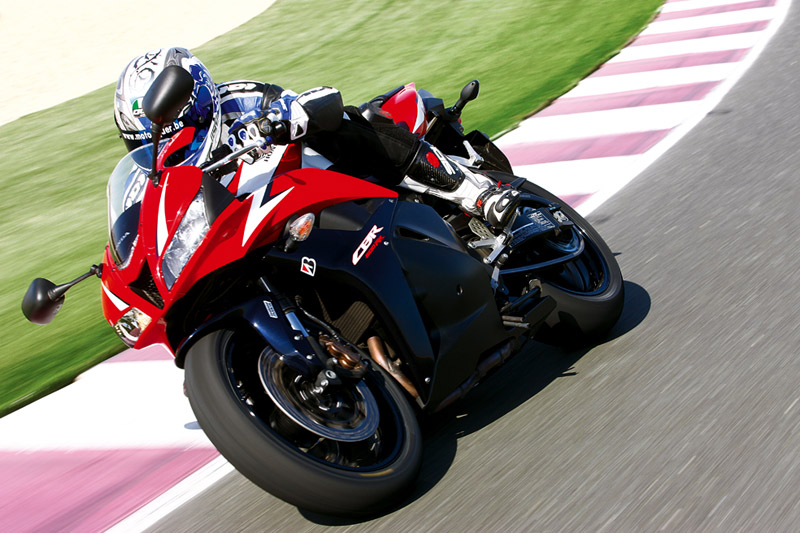
It’s already two years ago since we first laid eyes on the current version of the CBR600RR. By Honda tradition, this means we’re due an upgrade to their popular supersport bike. Normally we’re given a mild facelift, to guarantee the preservation of the value of the outgoing model. So we are treated to different colours, and two very subtle changes to the lines of the fairing. And that’s it for the styling queues. To be honest, it still looks fresh after two years of service, even if the under seat muffler is becoming a bit ‘old school’.
Thumbs up for Honda for treating us to nice colours though, because there’s no dull one, even if the green looks a bit Kawasaki and the white-blue limited edition (only available in the non-ABS version) has a glorious ‘80s edge to it. Under the skin there has been some serious work conducted, but for spectacular news, the ’09 CBR600RR is the wrong place to be.
Thanks to an improved midrange, the new CBR should fire out of corners faster and improve usability on your daily blast to work. Chassis-wise, the monobloc calipers - identical to the ones on the ‘Blade – are the only thing that are new. The frame and suspension remain exactly the same as before. Do you feel disappointed by this lack of innovations? Don’t stop reading. Because the big news is the ABS option now available.
ABS might be a three letter abbreviation that shines by its very absence in the great dictionary of motorsports at the moment, but it’ll soon be written in there. In capital letters. Before the CBR, I - and every sportsbike rider with me – considered ABS as inadequate and totally unnecessary. This test will soon prove me wrong.
First of all, there’s a guy called Andrew Pitt. The reigning world Supersport champion did a couple of laps on the new CBR and when he came in a Honda engineer asked him what he thought about the new ABS. His answer: “What ABS?” Says it all. Honda has accomplished their goal to develop the ultimate ABS. Not to make Pitt and Rea do quicker lap times, but to increase safety on sportsbikes, without letting the sporty potential of the bike suffer.
When I first got word of Honda equipping their supersports with ABS, I had more than a few questions. Will it not increase braking distances? What about the extra weight? And most of all, what about the fun? Will the ABS not cut in too soon, thereby killing the adrenaline rush that comes with riding a bike? “You’ll get an answer to all of these questions when you actually ride it,” is how the Honda representative tried to comfort me.
To add strength to his words, they actually transformed the parking lot of the track into one giant ABS proving ground. The first braking strip on normal, dry tarmac, the second one totally soaked and the third one covered in a nice little layer of sand. Great. Gassing a CBR to over 100 mph to then braking with all you’ve got on a strip of sand is something I’ve been trying to avoid for years. And now I have to. I tighten the chin strap of my helmet and seriously regret signing that responsibility waiver five minutes ago.
The nice warm asphalt of the first brake area in combination with the hot Bridgestone BT-015 appears to be an exceptional situation for a first fierce brake attempt. With the throttle halfway to the stop in third gear, I yank the brake lever with full force. The result is a CBR that sheds speed fast, yet remains perfectly stable during the process. Was that it then? Convinced that my brain has beaten my courage in the quest to brake as hard as I intended, I decide to give it another shot. This time with some serious over acting, Jim Carey style.
The result is the same, but I noticed that the bike automatically engaged the rear brake, without me tapping on the pedal, making the bike even more stable. Magic? No, a first sign of the intelligence of the new C-ABS. The dynamic weight transfer during heavy braking normally results in excessive nose diving of the front, with the rear threatening to lose contact with the road. So you can only add a very limited amount of braking force to the rear tyre and in addition to that, it also has problems staying in line with the front.