Mount Everest vs. The Isle of Man TT

A few thoughts for your consideration


Every year the topic of banning the TT comes up but did you know that the average deaths per year on Mount Everest are higher than the TT?

Social commentators and ill-informed journalists who think that the world should be a place where no-one is allowed to die of anything except old age put their tuppence in every time there's a death at the TT but it's not just the Daily Mail-reading stereotype that dabbles in a bit of anti-TT either; I hear more and more bikers talking about it too.

It struck me the other day that the TT is one of those great feats of human endurance and when I think of the feat of human endurance; it's those who try and reach the peak of Mount Everest.

Despite huge advances in technology, climbing Mount Everest remains one of the signatures of what makes us human. A massive feat that pushes the people who try it to the limit of their own mental and physical endurance and often beyond.

A lot has changed since George Mallory and Andrew Irvine died while trying to reach the peak in 1924. Today, the technology used in clothing, for navigation and the knowledge of the ascent built-up over the years means that climbing Everest is now safer than ever. It is however, far from being safe.

In 1953 Edmund Hillary, a New Zealand beekeeper, and Tenzing Norgay, an acclaimed Sherpa became the first to reach the roof of the world, 15 people before them had died trying. Since Hillary and Norgay climbed to the summit, over 2700 people have made it to the top, however 224 people have died trying, too.

That's one person dying for every 12 who have climbed to the top of Mount Everest.

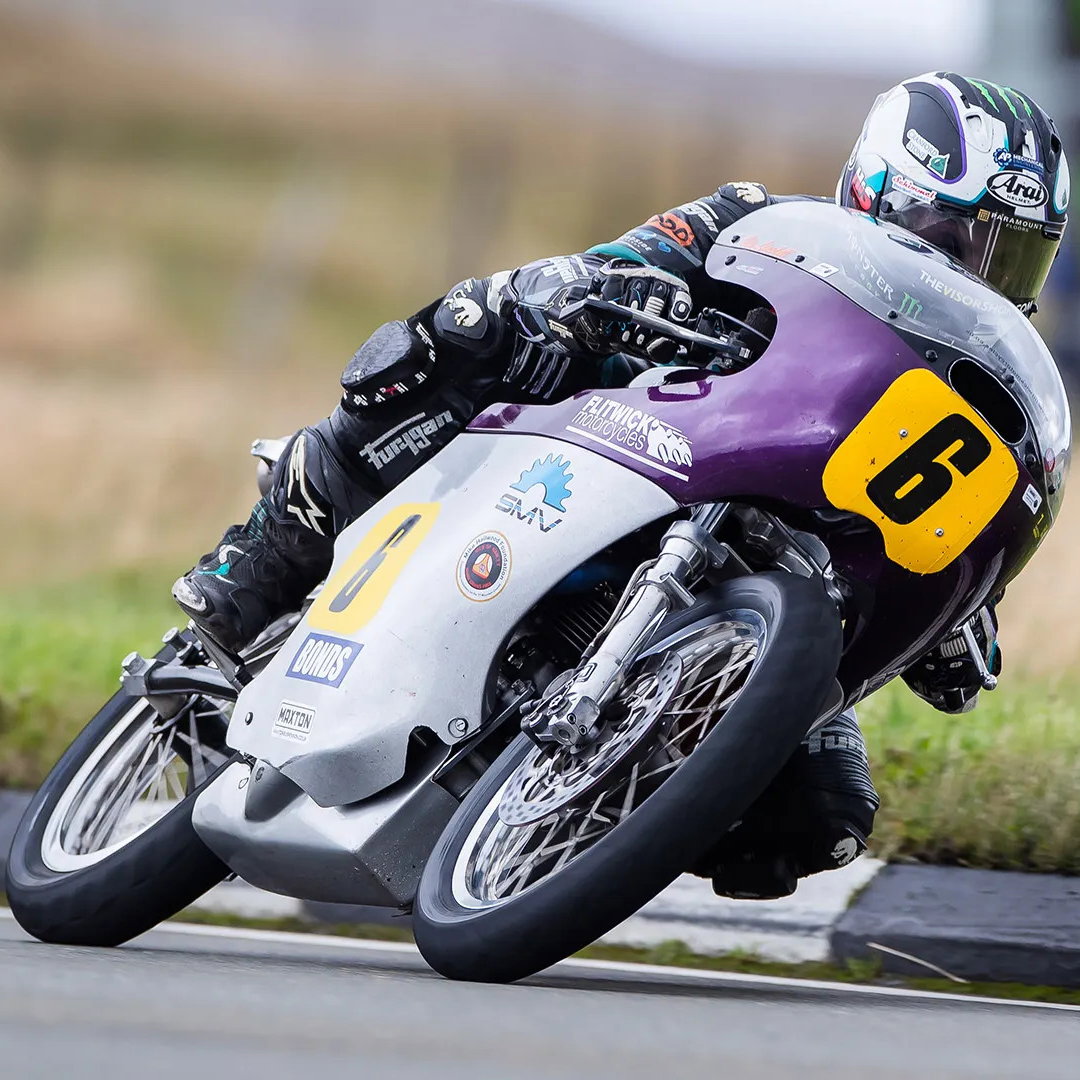
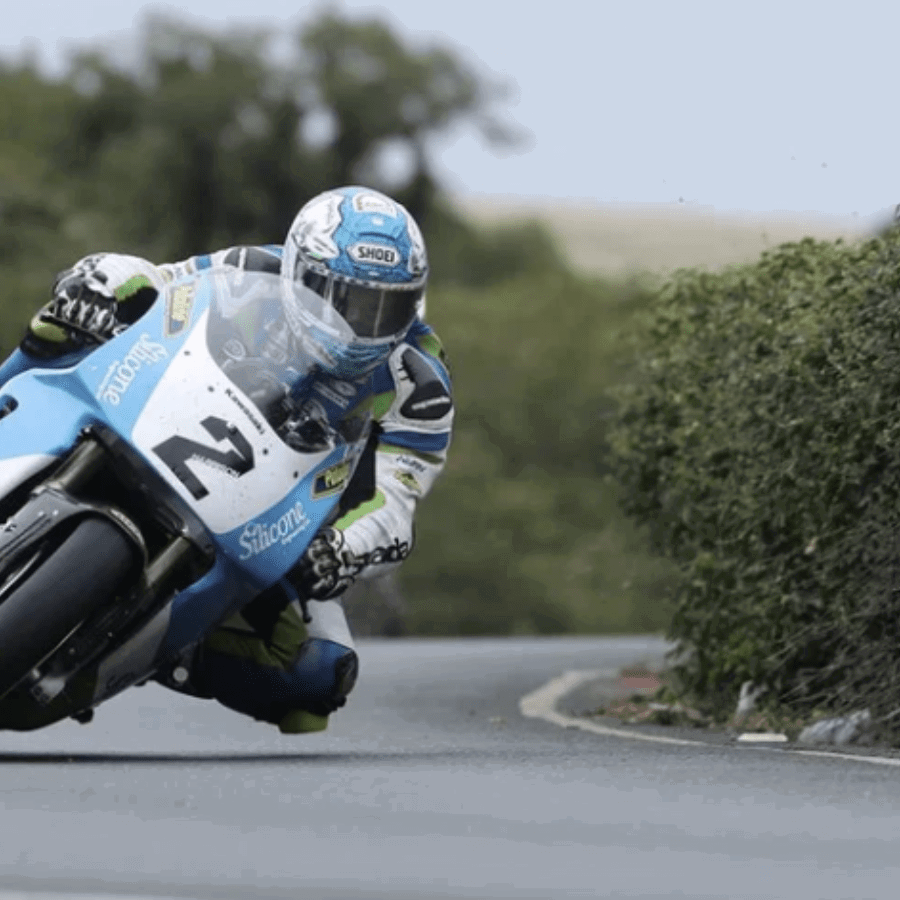
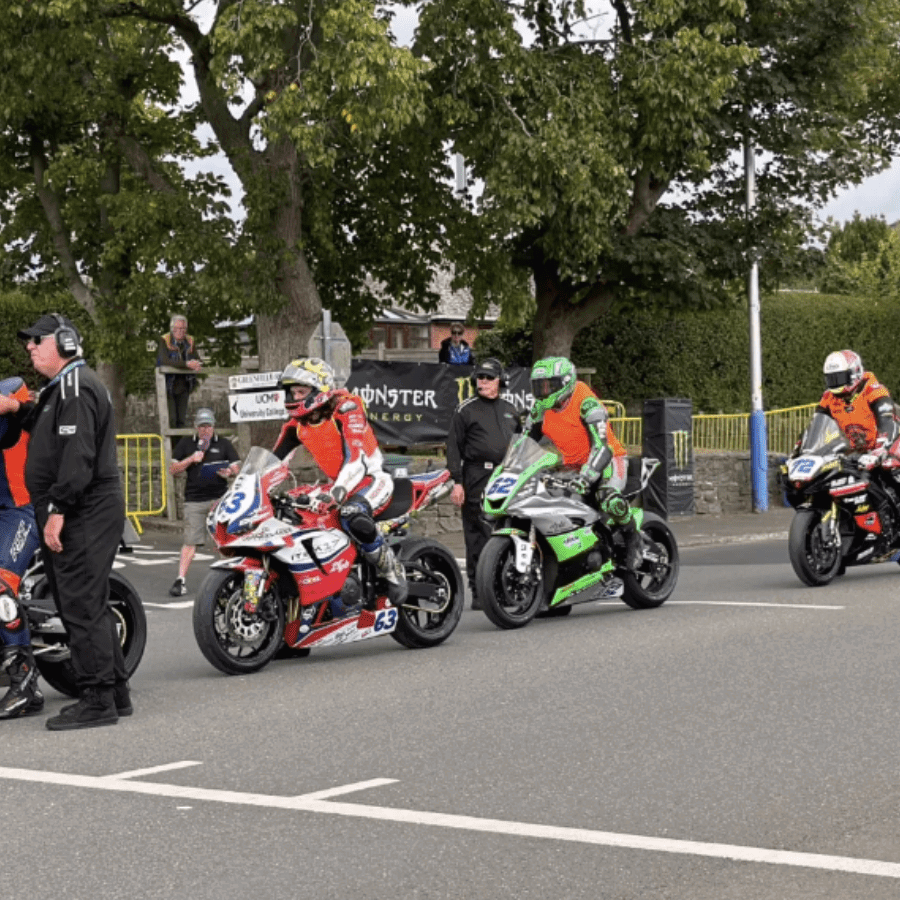
By comparison, the first Isle of Man TT race took place in 1907. The race was won by Charlie Collier at an average speed of 38.21 mph. Today a lot has changed about the TT including the lap record - which stands at 131.58mph - set by John McGuinness in 2009 on a Honda Fireblade. In 2009's Superbike TT, John McGuinness rode the 6 lap race in 1 hour, 46 minutes and seven seconds. His total distance? 226.38 miles at an average speed of 127.996mph. That's worth reading again. Two-hundred and twenty-six miles around closed roads at an average speed of one-hundred and twenty-seven miles an hour. It's a feat of endurance that makes the hairs on the back of my neck stand up.

The first person to die on the TT course was Victor Surridge in 1911 (also the first person to die on the Isle of Man in an automotive accident). In its 104 year history, 134 riders have died on the TT course, that's an average of 1.34 deaths a year. The average yearly death toll for Everest stands at 2.52 per year since 1924. However it was only after Hillary made the first successful ascent in 1953 that climbing Everest became a reality and the numbers of people attempting it dramatically increased. Since 1953, 211 people have died trying to climb Everest - that's a death rate of 3.6 people per year.

Now, all this talk of dying is very morbid and takes us away from the real reason both of these challenges remain so aspirational to so many: to climb to the highest point in the world, avoiding avalanches, ferocious storms and battling 100mph sub-zero winds could be argued as being utterly pointless. Afterall, it's been done before, you don't win anything for doing it again and yet by climbing Everest you are undoubtedly satisfying a deep-down urge to prove yourself against the elements. It's you versus The World.

When someone dies on Everest, their passing is a less brutal one than at the TT, they're hundreds of miles away from TV cameras, sponsorship deals and twitching curtains but they die none the less. Often they're left on the mountain and some of the bodies are now used as navigation points for others to pass on their way to the top. It's ruthless but that's the life accepted by those who want to live it at the edge, is it not?

Nevertheless, at the TT just like at the base camp of Everest, each person takes on the challenge knowing the full consequences. Both riders and climbers know the risks and do everything they can to minimise them. However, in order to reach their life's goal they have to face the ultimate risk but that's how they want to live. It's their life, their choice. Who are we to argue with that?

The TT and Everest: both amazing feats of human endurance that attract those who are prepared to feel the fear and do it anyway.

So the next time someone takes an easy pop at the TT, ask them why they don't want to ban the climbing of Everest instead? Afterall, it's at least twice as dangerous.

If you like my thinking please 'Like' this article to help share it.

Previous article
MT-09 or FZ-09: you decide
Next article
Mark Forsyth's Kings of Cornering


life, evertest, tt, facts, deaths, year, started, casualties, climbing, racing, how dangerous is everest, how dangerous is the tt, how many people died climbing everest, how many people died at the tt
TwitterStumbleUponFacebookDiggRedditGoogle


Discuss this story

What an excellent article.

How many people die from smoking, drinking, drugs, obesity, and other random and seemingly avoidable ways?

The obsession with safety is so skewed that it's almost comical. The TT is the pinacle of road based motorcycle sport, and is unique in it's scope and challenge. It should be applauded rather than being under constant scrutiny.

People should be allowed to choose what risks they subject themselves to, rather than having it imposed on them. As the article states, if we looked at the danger of simply living, we wouldn't leave the house.

Life is a sexually transmitted disease that has been proven to be 100% fatal over time in all those afflicted..

Posted: 24/08/2011 at 15:56

Yes nice argument to the jury mr lawyer with a funny wig on and a bulging red nose from too much whiskey, but there are counter arguments too.

How about: Everest would be getting safer and safer by the year by knowledge and skill, while bikes are getting faster and faster - though better handling I say - and thus more dangerous every year. There are places to race motorycles without curbs and trees and fences, a mountain is a mountain. I would think it more logical to rcae less powered bikes, still just as much fun, still dangerous, but not insanely so. Many races and forms of racing have been stopped due to dangers. Should GP's still race around with hay bales put in front of fences?

But on the whole i agree with your powerful argument. If you want to do it, then ok. Its one of those things which makes us human, that is rapidly diminishing in this contol freak world.

Posted: 26/08/2011 at 02:33

+1, great article

Posted: 09/09/2011 at 13:24

There's no argument in the world that will convince the nannies that putting your life at risk can be rewarding, and yes, they want to ban rock climbing etc too. Pathetic narrow-minded sissies. It's stunning that we get nannies on bikes too. Surely they should be in a Volvo ?

Weaklings aside, I enjoyed the article ! I have been to base camp (on the Tibet side -very easy to do) and the thin air makes any form exercise tough. It'd be an awesome feat to get to get to camp 4, never mind the top. Not for me though - I prefer wot on a corner exit :-)

Posted: 07/06/2012 at 16:53

Delacey you posted ----
How many people die from smoking, drinking, drugs, obesity, and other random and seemingly avoidable ways?

I've no idea on the numbers but I do know they don't have thousands of people going to watch them do it.

Posted: 07/06/2012 at 17:54

First class journalism sir.

Posted: 08/06/2012 at 01:03

Great article. Send to the IOM government as well.
I can understand safety outside of sport, in circumstances where people will do others harm(x rays for checking passengers, driving tests) or themselves unnecessarily, (hard hats on building sites)safety quantifiably in the public interest when it is not overly invasive (seat belts, motorcycle helmets). Even safety where those enticing others do not make the risks very clear (smoking). All these make sense.

However when people knowing clearly the risks involved and living with those risks each day positively choose to repeatedly do what they do (because they love it) without risk to others why on earth does anyone try to stop them.

Soldiers will be banned soon because they might get injured. uniforms will be red and white again to warm the enemy not to shoot.

Posted: 08/06/2012 at 12:16

As you point out, motorcycles have become more powerful and faster, which in theory makes them more dangerous. Whether this is more offset or less offset by advances in handling (ABS etc.) I have no idea, but I suspect the former.

Still you failed to acknowledge that not just mountain climbers, but also motorcyclists have been blessed with better equipment: Helmets & gloves & leathers, back protectors, cell phones ensuring help will get to an injured motorist quicker than ever before (a real lifesaver). Add to this better rider education, and track days to hone skills.

So while our bikes may be faster than ever, we've never, ever been as safe out there as we are now. It's the best game in town, so enjoy it.

Posted: 10/06/2012 at 19:03

The above post was an answer to Pyndman.

Posted: 10/06/2012 at 19:05

I read today that 520 people have climbed it this year? Seems like 2700 in total might be a little low?

http://www.telegraph.co.uk/news/worldnews/asia/mounteverest/10082953/Everest-waiting-time-two-hours.html

Posted: 28/05/2013 at 16:39

I read earlier that 520 have done it this year, seems like 2600 in total might be a little low?

http://www.telegraph.co.uk/news/worldnews/asia/mounteverest/10082953/Everest-waiting-time-two-hours.html

Posted: 28/05/2013 at 16:40

Joe - I think Everest is becoming increasingly more accessible every year with more and more companies running guided ascents. It's big business, so 520 sounds right, 2600 was the total number in 2010 when I researched this article.

Interestingly, 10 people died in 2012 trying to climb Everest and 8 people have already died trying this year.

Posted: 28/05/2013 at 16:54

Actually I think dying is too high a price to pay for climbing a bloody mountain. So yes, I'd put severe restrictions on those allowed to attempt it. I also think dying in unnecessary in motorsport: people would still be dying in F1 if it wasn't for Jackie Stewart. Why don't we just make it safer. Or is it the fact that people die every year racing in the TT part of its ghoulish attraction?

Posted: 28/05/2013 at 17:31

Talkback: Mount Everest vs. The Isle of Man TT