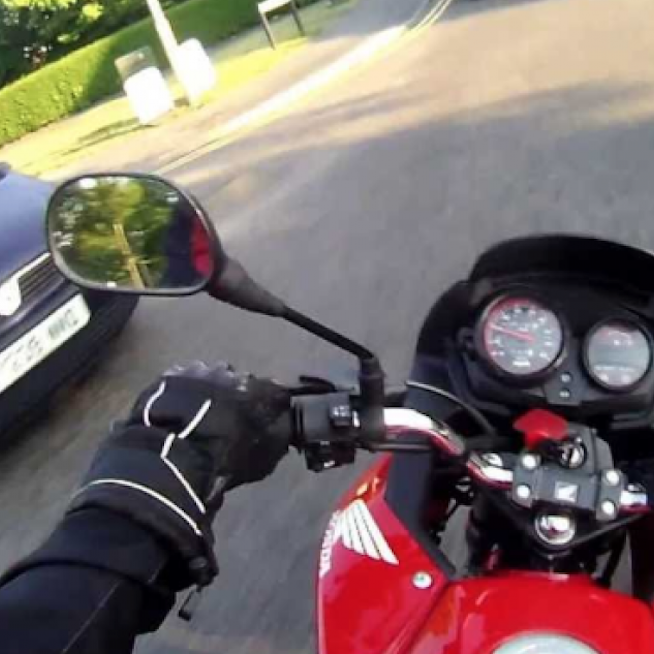
Advanced Motorcycle Riding Course: Cornering - set-up

With any corner the objective is to get through as safely as possible, and that means maximising your view ahead. Here’s how to make the road work for you

Posted: 23 August 2010
by Andy Morrison

 1 of 3 

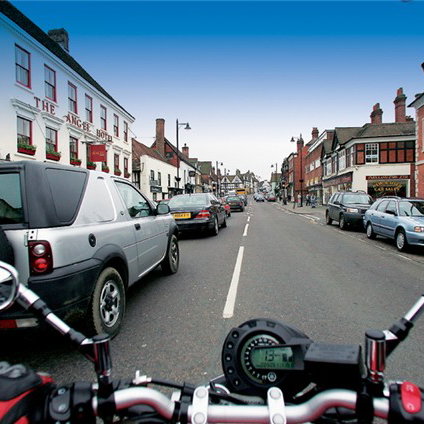
Your view of the road ahead is everything. The further you can see the more stopping distance you have available, and the more stopping distance you have the more speed you can safely use. However there are factors to consider, and where you position – where you place yourself and the bike relative to the verges and the centreline of the road – for view is always secondary to safety. For example, hugging the white lines around a left-hander will increase you view ahead, but a car coming the other way need only stray over those lines by a couple of inches to cause you serious bother. Even if you avoid a collision, chances are you’ll be rattled by the experience, prompting you to unsettle the bike.

Another advantage of a position that gives the best view is the opportunity to take a line of a greater radius through any given corner, if that option is sensible given the circumstances. This will give you the chance to increase your exit speed. It is also worthy of note here that if the speed on the approach to a corner is well below that which is safely possible then extreme accuracy will probably be completely irrelevant, in which case the overriding factor then becomes a position of complete safety. For example, there’s no point riding close to the white lines on a left-hander you could take at 60mph if it’s subject to a 30mph urban speed limit.

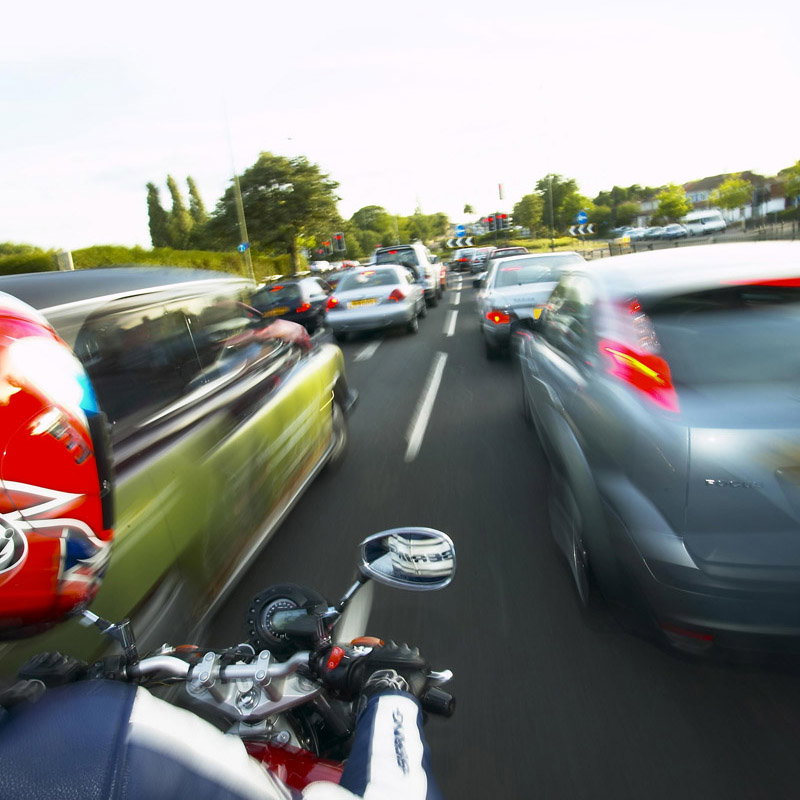
The key to opening up an unknown road is to get into the ideal position as early as possible. This gives you the chance to settle into that position over the course of several seconds. This immediately gives a huge advantage in the ability to observe everything going on around you. Because the bike is already in position, the nearside verge becomes very distinct in your peripheral vision, reducing the need to look at it directly with the focal point of your vision. In turn this leaves your direct focus free to scan the road ahead, and to look through the corner for dangers, further detail and reference points. That said, learning to monitor your position using peripheral vision does require a lot of practice, simply because sharing attention quickly between observational detail received from the focal point and peripheral area of vision is quite difficult.

As an exercise to develop this skill, scan an area with some detail, for instance a wall in your house or an area of your garden. Take in all the detail, then look at one spot and take your attention, not your focal point, to other areas of detail. If you don’t already do it, practice when you’re driving too, looking at the road ahead while taking in information from the verges, oncoming traffic and approaching side roads – the sooner this becomes second nature the better.

Continue


Previous article
18 Quick tips to boost your riding skills
Next page
Advanced cornering - Page 2


riding, corner, advanced, course, set-up
TwitterStumbleUponFacebookDiggRedditGoogle


Discuss this story

Talkback: Advanced Motorcycle Riding Course: Cornering - set-up